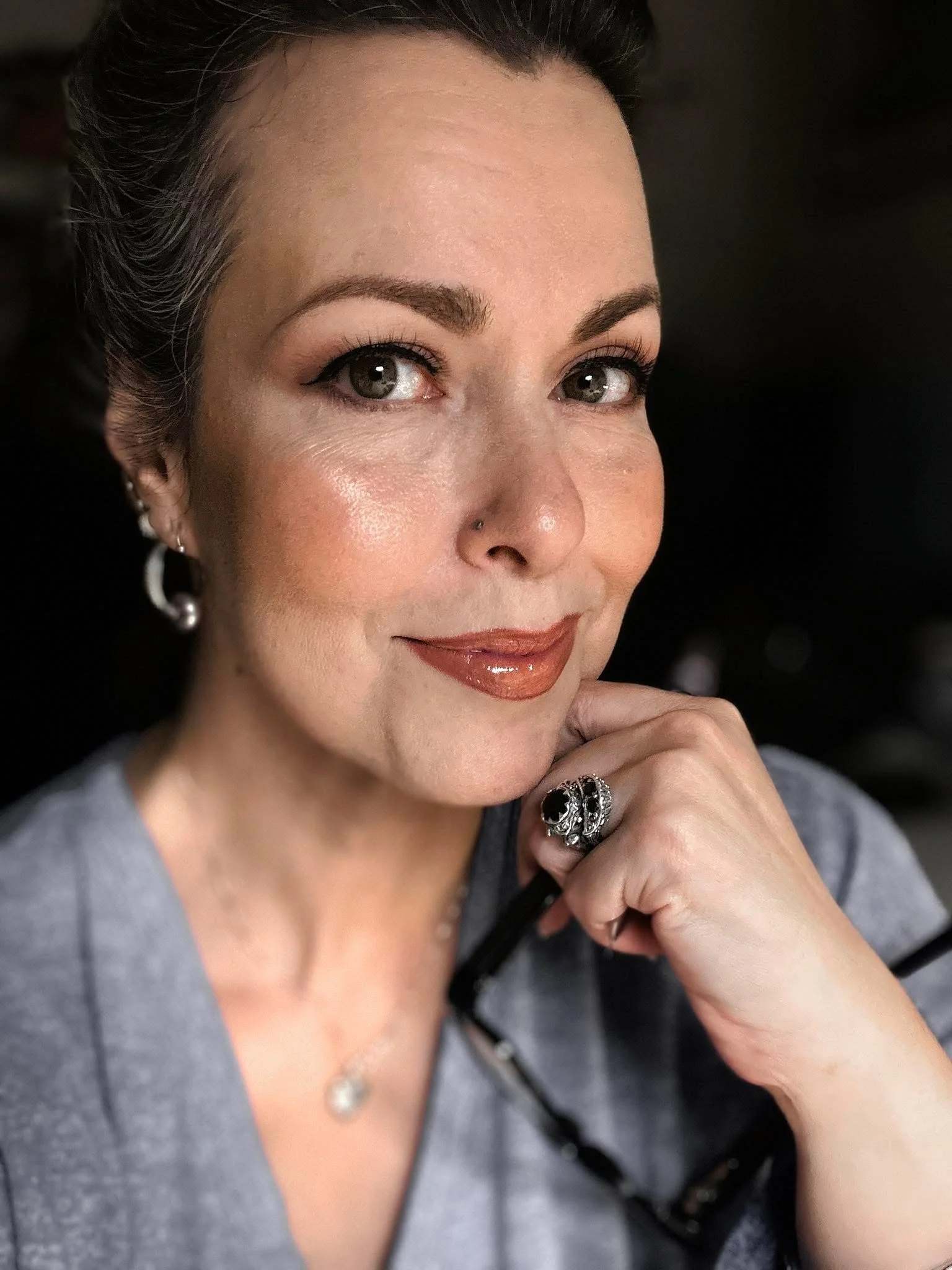
I was drawn to art and literature from an early age. My first encounters were with Japanese art, the poetry of Omar Khayyam, and the fantastical narratives of the Brothers Grimm. These early impressions instilled a lasting fascination with beauty, myth, and the human condition.
Entirely self-taught, I learned outside traditional structures, preferring independence, observation, and experimentation. As a child I sketched female figures on walls; by adolescence I had discovered a deep love of writing. At eighteen, I had read the complete works of Shakespeare and Pablo Neruda, and in my early twenties I was producing stories and poems in abundance.
My current practice includes a manuscript of 105 poems exploring the many dimensions of love, alongside new series of gold-leaf paintings and digitally composed studio photographs. I also write essays as a form of dialogue with the world—on perception, tenderness, and the intersections of art and society.
In parallel, I am developing two long-term projects: a collection of “complaint-and-blood” essays interrogating creative labor and the body, and a book of psychological horror stories that began in the 1990s.
Formative influences range widely: Persian poets Omar Khayyam and Hafez; Federico García Lorca, Pablo Neruda, and Emily Dickinson; the visual worlds of Frida Kahlo, Pablo Picasso, and Sarkis Katchadourian; and the narrative artistry of Walt Disney and global folklore. What connects them for me is not only style, but intensity; the ability to compress truth, beauty, and violence into forms that remain unforgettable. That same intensity is what I seek in my own practice.
On Creation
“Who is the hunter and who is the prey?” is hardly a question answered at the start. It is a pursuit—intent sharpened to a point, the illusion of mastery. I move through life as one moves through jungles, believing I am tracking something external: an image, a flash, a configuration of meaning that appears and withdraws. It’s just at the edge of perception, not a memory exactly, but a pressure—one like a touch or caress even—behind thought, heat behind the eyes. I follow it; my patience is a delicious skill. I circle it, again and again, rehearsing the moment of capture, convinced that proximity is proof, that closeness itself confers control. The mind arranges its frames, stretched, clean, and ready, believing the thing pursued will finally be still.
But what I am stalking has already learned my moves. It allows itself to be nearly captured, lets me believe I am the more cunning animal, lets me think endurance matters, that dominance belongs to me. When my hands finally embrace it, what I thought was distance collapses into intimacy, and intimacy becomes consumption. The heat I believed I could hold begins instead to hold me. If I am not devoured suddenly, I am absorbed gradually, dismantled by my own insistence on possession. The image does not fade—it burns, it confronts me. And in that burning, the roles finish rearranging themselves. I recognize, too late, that I have been carried along by hunger, not direction, and that the maw I feared was never ahead of me, but opening from within.
What you don’t know.
Eaten.
Marni Fraser
0104.2026