ESSAY: The Dock Among the Lilies
Back in 2007, I was living far from everything I knew, and outside my country. The person I shared a home with left early for work each morning, and by then I had begun to look forward to those hours alone. There is a particular exhaustion that comes from living beside dishonesty. It settles into the walls, silences, and into the smallest moments of the day. It’s constant.
I was lonely due to the distance between me and friends, or me and family. My friends were thousands of miles away, and my family was also thousands of miles away.
Most days I walked through the countryside, but one morning I made my way to the lake instead. I circled the entire lake’s circumference before finding a small hidden dock tucked among reeds and water lilies. It felt untouched— it was definitely protected from the world beyond it. I sat there with my feet in the water while fish nibbled at my toes and damselflies drifted through the air, moving with such ease that it seemed impossible for them to know speed.
It remains one of the most beautiful memories of my life.
A narrow band of sunlight fell across the dock while the trees held the rest of me in shade. For the first time in a long while, I felt safe. Hidden. Beyond the reach of the person who spent so much of his time diminishing me.
When I think about that afternoon now, what I remember most is not the betrayal but the relief. Even then, before I had the words for it, I was trying to return to myself.
For years I thought that afternoon belonged to an only that chapter of my life. I believed it was a refuge from one difficult relationship, and a brief sanctuary during a season and person I was trying to survive.
What I did not understand was that I would spend the next two decades repeating versions of the same lesson.
The faces changed. The circumstances changed too, somewhat. The countries changed. What remained constant was my tendency to explain away what was directly in front of me.
I have always been more interested in why people become who they are than in judging them for it. If someone behaved badly, I wanted to know what hurt them, thought maybe I can help. If they were dishonest, I wanted to understand what they were protecting. If they were cruel, I searched for the wound beneath the cruelty in an effort to assuage.
There is compassion in that instinct, but there’s also danger.
Eventually one realizes that understanding someone is not the same thing as trusting them. You can see the origin of a person’s suffering and still recognize that they are capable of causing suffering regardless. .
That difference and the lesson of it took me far longer to learn than it should have.
For a long time, I mistook access to people as connection. I believed that being available to people was a form of generosity, and that leaving the door open was evidence of kindness. Looking back, I can see how often I extended trust before it had been earned, confusing potential with character.
Part of that came from optimism, a lot of it came from loneliness. Most of it came from a genuine belief that people could become better versions of themselves if they were seen clearly enough.
And, Sometimes they did.
But, Often they did not.
The hardest realization was not that people lie, disappoint, manipulate, or betray. Human beings have always done those things. The harder realization was understanding how much energy I spent trying to explain those behaviors instead of responding to them. That I actually cared more about their pain than my own survival.
I became an interpreter of other people’s motives. I looked for context, for history, for wounds, for explanations. In doing so, I often overlooked the simple reality of what was happening in front of me.
The consequence was not anger. It was exhaustion. Pain. Sadness that reached into a heavier sorrow.
When I was younger, I thought solitude was something I sought because I had been disappointed by people. Now I think the opposite may be true. Solitude was never an escape. Instead, it was the place where I could hear myself clearly enough to recognize what I already knew.
The older I become, the less interested I am in being surrounded by people and the more interested I am in being surrounded by honesty. The two are not the same thing.
Over the last few years, my world has become considerably smaller, and I no longer view that as a failure. I have stepped away from much of social media, reduced my offline circle, and become far more protective of my attention. What had felt like isolation now feels like stewardship. Self love.
There is a difference between being alone and being at peace.
One is the absence of people. The other is the absence of noise.
At one point I removed thousands of people from my social media accounts. From the outside, it may have looked impulsive, dramatic, or even ungrateful. In reality, it was none of those things. It was the end result of a growing awareness that I could no longer distinguish genuine connection from performance. It had become toxic.
What should have been a place to share my work had become a place where I second-guessed every interaction. There were too many voices, too many projections, too many situations that demanded interpretation. I found myself spending more time wondering about people’s motives than creating the things that mattered to me.
That was never the life I wanted.
The truth is that I care deeply about people. Perhaps too deeply. I have spent my life believing compassion could bridge almost any divide, and patience could mend misunderstandings —that honesty, eventually, would be met with honesty in return.
I still believe those things are possible. But now I think it takes very special people who want to be better than they are. I simply no longer believe they are inevitable.
Some friendships last because two people are willing to meet each other in the same place. Others slowly disappear because one person continues showing up while the other remains hidden behind layers of fear, pride, performance behavior, or confusion.
There is grief to know that sometimes caring for someone is not enough to sustain a friendship.
For a long time I thought I was mourning individual people. What I was really mourning were the possibilities connected to them. The version of things I hoped might exist. The conversations that never happened, or honesty that never arrived. The friendship I believed was standing just beyond the next misunderstanding was what I wanted, but what wasn’t there.
I really thought I had a friend at last.
That sentence is more difficult to write than it should be. I’ve said it too many times, and blamed myself. I didn’t blame myself because friendship is rare, but because genuine friendship requires a level of openness that many people never reach. It asks for honesty even when honesty is inconvenient. It asks for accountability without humiliation. It asks for trust without possession. It asks a person to be known.
Not everyone wants that. Not everyone is capable of it.
And I felt wrong for seeking it.
The older I become, the less interested I am in assigning blame. Most people are carrying burdens I know nothing about. People are doing the best they can with the tools they have. Some are frightened. Some are wounded. Some are simply repeating patterns they have never examined.
Understanding that has brought me compassion. And as a gift for all the suffering my life carries, it has also brought me distance.
There are situations that cannot be fixed by insight, and people who cannot be helped by mere connection. There are stories that will never fully make sense because too many of the people involved are invested in maintaining them.
At some point, wisdom becomes the ability to stop forcing an answer.
I think what I was searching for beside that lake all those years ago was not solitude itself, but permission. Permission to trust my own perception. Permission to stop negotiating with realities I already understood. And most importantly: Permission to leave confusion where it belonged instead of carrying it home with me.
When I remember the dock, I no longer think about the person I was trying to escape.
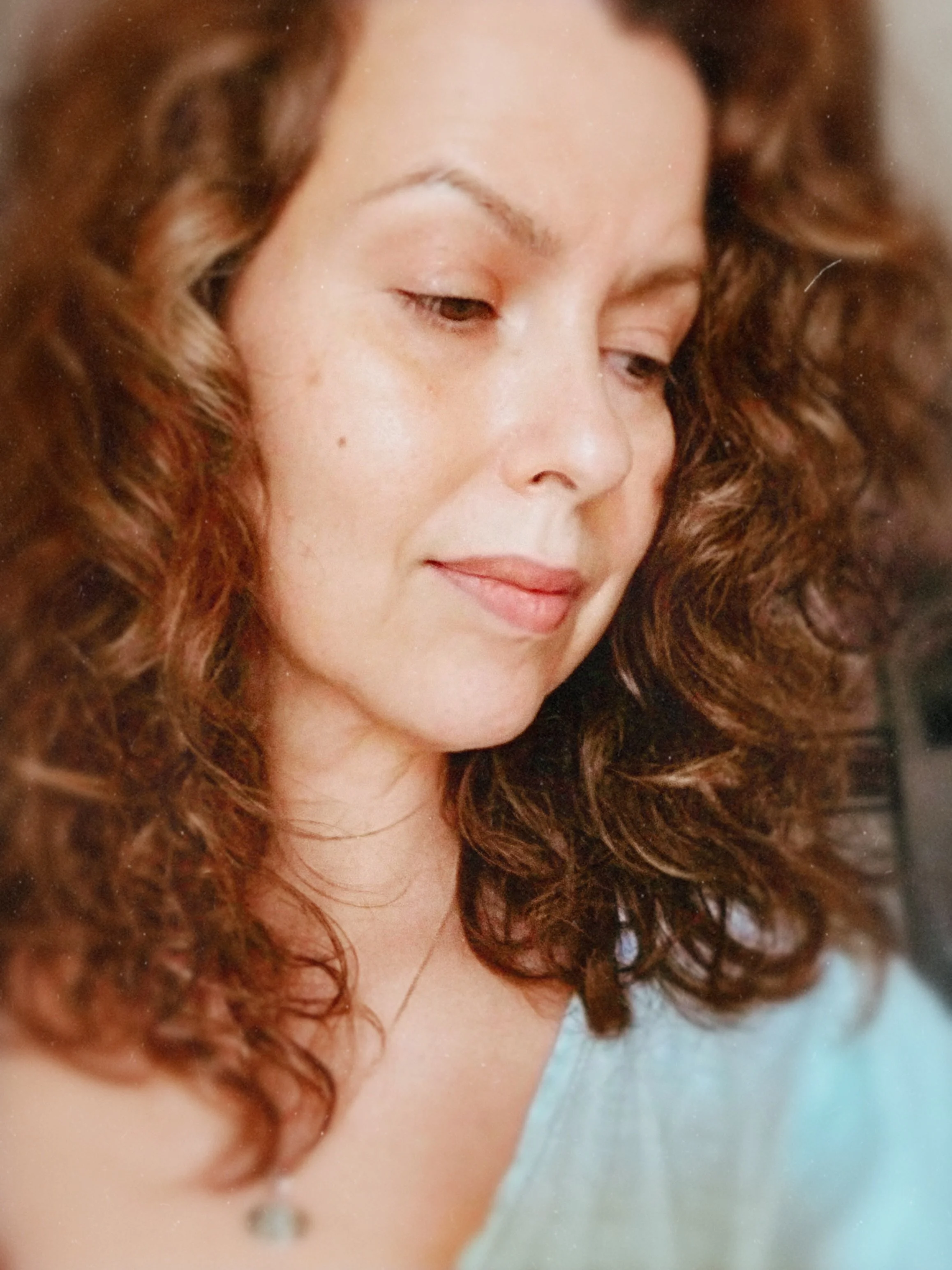
I think about the woman sitting quietly among the reeds and lilies, listening to the water, unaware that she was practicing for the rest of her life.
She believed she was hiding, but what she was really doing was learning how to remain.
And perhaps that is the lesson that took me the longest to learn: peace is not something another person gives us. It is something we learn, come to value and, protect.
Everything else is a slow corrosion, (a).
0604 | 2026