ESSAY: What We Are Willing to See
What We Are Willing to See
There is a surge of antisemitism right now, and it is obscuring everything.
Let me be precise about where I stand, because precision matters here. My issue is not with Jewish people. My issue is with Zionism as a political ideology. My issue is with the current Israeli government and what it is doing. That position will not shift until the situation changes. But to take that stance and collapse it into hatred of an entire people — that is not resistance. That is cruelty. And it is lazy. What we actually need, what this moment is crying out for, are more voices from within the Jewish community itself. Visible voices. Courageous ones.
When a crisis becomes undeniable — when you can see it, every day, in real time, on the screen in your hand — it stops being a political opinion and becomes a personal reckoning. You have to decide what you stand for. Not in theory or merely in your affiliations. But in your actions.
And if you call yourself ethical, moral, God-fearing — whatever word you use — then that belief is not a silly category. It is a demand. And demand asks something of you. The teachings people reach for in moments like this — the words of Christ, of the Prophet, of Moses — they were not written to make you comfortable. They were written as instructions. Love your neighbor. Not your convenient neighbor. Not your ideologically aligned neighbor. The one in front of you. The one bleeding from bombs or who just lost a loved one, like any of us has. The one whose name you don't know but whose humanity you cannot deny — unless you choose to.
And that choice is what we are really talking about.
Because somewhere along the way, people stopped questioning what they were being told and started letting others do their thinking for them. Someone seeming more educated. Someone seeming more confident. Someone with a better argument or a smoother delivery. And the moment you surrender your own moral reasoning to someone else's authority — whether that authority is a politician, a preacher, or a ancient text stripped of its context — you don't just become ignorant. You become useful. Useful to the people who need you to not ask questions. Useful to the machinery that depends on your silence.
And what that silence produces is not neutrality.
It produces justification.
It teaches people how to stand in front of suffering — real, human, undeniable suffering — and explain it away. How to look at women and children —and men who have no allegiance to either side, who are simply living their lives the way you and I are living ours, and decide that their lives are acceptable losses. That is not a political position. That is a moral failure. And no scripture, no ideology, no flag absolves you of it. Because at the end of the day, the people pulling these strings are human beings. Not divine. Not infallible. Not beyond question. They have the same DNA you and I have. The moment you decide they know better than your own conscience, you have handed them something you cannot easily take back.
I want to be honest about why this is not abstract to me.
I have people I love trying to survive a war right now. In different countries. I know what it means to wait for a message that tells you someone is still alive. I know what it means to carry that weight while the rest of the world moves through its day.
And long before that, I understood what it looked like when violence becomes background noise. I grew up in gang-related Los Angeles. Drive-by shootings were not news to me — they were weekly. That is a war too. A smaller one, a forgotten one, but a war. And I was asked — more than once, by more than one group — to step into it. I refused. Not because I was above it. Because I understood what it would cost. I understood that those girls on the other side had homes not so different from mine. I understood that choosing violence meant choosing to stop seeing people as people.
The same principle applies now. Just on a larger scale.
What we are watching are decisions being made from a distance, by people insulated from every consequence, treating human lives like pieces on a board. And I want to be clear — this is not chess. Chess requires strategy - it also requires you to think ten moves ahead, to understand the weight of every sacrifice. What we are watching doesn't rise to that, what we are watching is much more crude. It is a first-grade calculation in the language of geopolitics. And the most disturbing part is not the people making those decisions.
It is how many people are willing to accept them.
How quickly they explain it. How easily they look away.
To turn a blind eye is to excuse it. To excuse it is to permit it. To permit it is to become part of it.
I am not here to spread hatred. I am not here to vilify the dead on any side. I am here because I believe that a community is defined not only by what it condemns, but by what it allows. And I believe that every person reading this has a place inside them — before the ideology arrives, before the talking points, and eventual exhaustion of the news with a cycle numbing you into passivity — human beings already know the difference between right and wrong.
I am speaking to that place.
Because if we can witness this level of suffering and still choose indifference — the failure is not only out there in the world.
It is in us. Our hearts.
And we are the only ones who can change that.
Marni C. Fraser
April 16 2026, 5:51pm
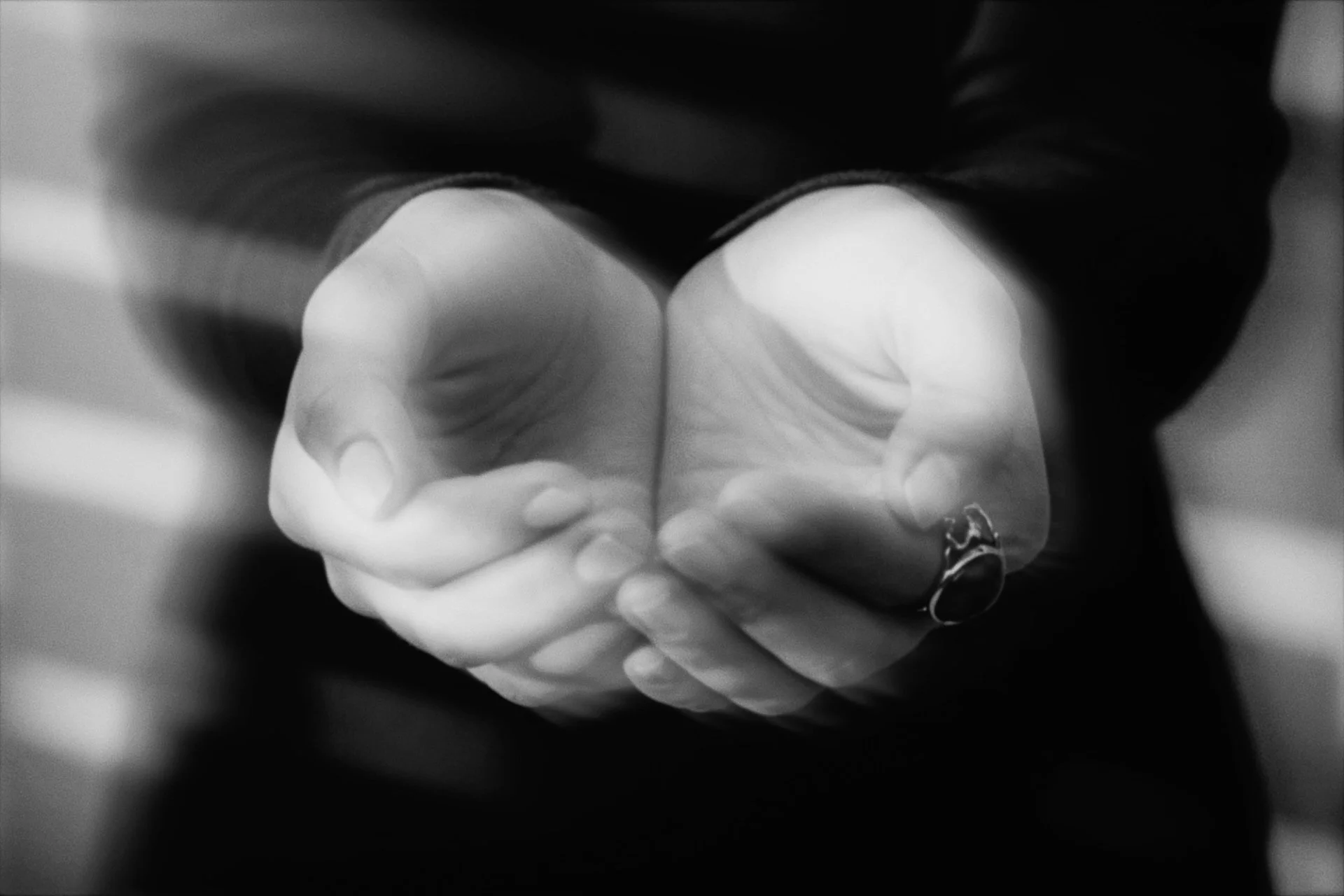
Offering by Marni Fraser April 16, 2026