The Ethics of Clarity
The Ethics of Clarity: Part I
Clarity has become strangely difficult to practice. It asks very little of language, yet more than most people seem willing to give. A sentence is enough, or sometimes only a few words. What proves difficult is not speaking them, but accepting the responsibility that comes with speaking them honestly.
Distance rarely starts at once because conversation continues for a time. Messages are still exchanged. Familiar routines remain almost untouched. The change settles somewhere quieter. Curiosity begins to disappear, then conversation does. Questions become less frequent, and the space once occupied by attention is slowly replaced with habit, until the relationship survives mostly because neither person has acknowledged that it has already changed.
Nothing appears dramatic from the outside. There is no obvious ending to point toward, no single moment capable of carrying the weight of what has been lost. The work falls elsewhere. One person continues trying to understand what no one has chosen to explain. Silence becomes something to interpret rather than simply endure. A delayed reply, a shorter conversation, an absence where warmth once lived—each small alteration begins asking for meaning.
The exhaustion comes less from the uncertainty than from carrying it alone. Ambiguity asks one person to perform all the labor that honesty might have shared. The relationship continues, but only because one mind keeps supplying explanations for what another has left unsaid.
Few people would say this is dishonesty. Most would describe it as avoidance, uncertainty, or simply life becoming busy. The distinction matters less than the result. A truth left unnamed does not disappear, it simply changes hands. One person walks away without saying what has changed; the other inherits the responsibility of making sense of the silence.
The contradiction becomes difficult to ignore for anyone whose work depends upon attention. An artist spends years learning how to notice what others overlook, how to remain with an idea long enough for it to reveal itself, and how to resist the temptation to settle for “almost” when something truer is still waiting beneath it. That discipline doesn’t end when the work is finished, but follows the artist into ordinary life, where the same attention that deepens creation begins noticing every hesitation, every omission, or every place where language has quietly withdrawn from honesty.
Perhaps this is one reason solitude appears so often beside creative work. It has been mistaken for arrogance, instability, self-importance, or even vanity. Those explanations have always been easier than considering another possibility: that some forms of solitude are not chosen against people, but in defense of clarity. There comes a point when endless interpretation asks too much of the same attention that art requires.
For women, the cost has often been greater.
The female artist has rarely been permitted the same boundaries that history has granted her male counterparts. She is expected to remain available, agreeable, emotionally fluent, and endlessly accommodating while producing work that asks for uninterrupted concentration and uncompromising honesty. The finished painting may be admired. The conditions required to paint it often are not.
Attention cannot be divided forever without consequence. Every relationship asks something of it. Every act of creation does as well. When relationships begin relying upon interpretation instead of truth, the artist eventually discovers that protecting attention is not an act of withdrawal. It is an act of preservation.
Solitude, then, is easily misunderstood. It is mistaken for a lack of intimacy when it may be nothing more than an inability to spend a life translating what others are unwilling to say.
Marni Fraser
0803.2026
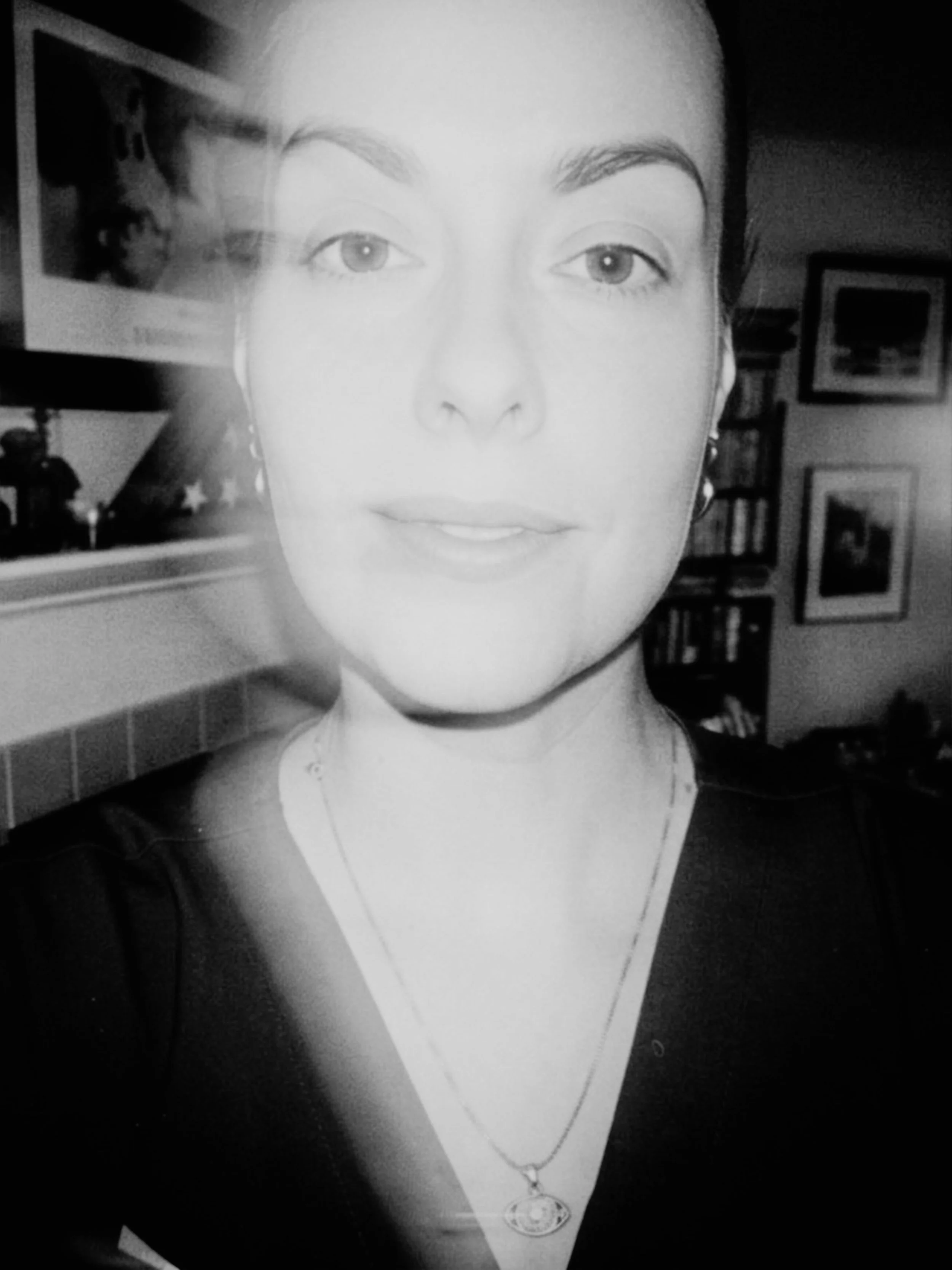
Self Portrait | 2026