The Quiet of an Inner Life
On solitude, artistic temperament, and the search for belonging
Lately, I have been giving considerable thought to the things I have spent much of my life trying to change about myself. I wonder how many of those efforts were necessary, and how many were undertaken because I had accepted other people’s ideas about what constitutes a happy, well-adjusted person.
Friendship is one of the things I have been thinking about, along with solitude and the unusual demands of living as an artist.
For many years, I believed I needed to become more sociable. I imagined there was some part of myself I had failed to develop, something that would eventually allow me to move comfortably through groups of people, maintain friendships with greater ease, and enjoy the ordinary exchanges that seem to satisfy so many others.
I was a very quiet child. I remember being intensely interested in things that could occupy me for hours, often without wanting company. Unfortunately, quiet children are not always treated with much understanding. Their reserve is interpreted in all sorts of ways, and sometimes they become convenient targets for the impatience or cruelty of others. A child’s private world is rarely given the same consideration as the more visible qualities adults are accustomed to praising.
My interests developed early. I loved music, writing, and drawing. I was fascinated by the construction of things, particularly the human body, and I learned to use architectural instruments to draw when I was very young. Anatomy interested me because I wanted to understand the relationship between structure and appearance. I could study a subject for hours, examining its proportions and details, trying to understand how something so complicated could be represented through a series of lines. These interests have remained with me throughout my life.
By the time I reached adolescence, I had begun making a conscious effort to overcome my reserve. I learned to speak in groups, attend parties, and become more comfortable around people. Eventually, I could be quite outgoing when I wanted to be. I enjoyed conversation, developed friendships, and acquired many of the social habits I once found difficult.
I could enjoy someone’s company and appreciate their kindness, yet leave an afternoon together feeling that very little of what interested me had been touched upon. I wanted to discuss science, film, literature, painting, philosophy, music, anatomy, and the strange connections that exist between subjects we ordinarily consider unrelated. I enjoyed people who were curious enough to follow an idea wherever it might lead, even when there was no particular reason to pursue it beyond the pleasure of understanding something. Those conversations were uncommon.
Over time, I began to recognize how much my artistic interests influenced what I wanted from other people. I was looking for a kind of intellectual companionship that I could not reasonably expect from every friendship. There are wonderful people whose interests and inclinations are entirely different from mine. I can appreciate them without necessarily finding the closeness I have been searching for.
I have also come to recognize the considerable difference between enjoying creative activities and devoting one’s life to developing an artistic discipline. There is nothing wrong with pursuing art for pleasure. I have enjoyed many hobbies myself. But the work of becoming accomplished at something requires an extraordinary amount of time, much of it spent repeating exercises, correcting mistakes, studying, and gradually acquiring abilities that cannot be hurried.
Anyone who has seriously pursued drawing, painting, music, or writing knows how much work remains invisible to the people who eventually encounter the finished piece.
I have spent years practicing, often returning to the same problems until I could finally resolve them. There is always something more to learn. I don’t imagine I will ever reach a point where I feel I have learned enough, and I would be disappointed if I did. The pleasure is partly in the work itself, in discovering that something which once seemed beyond my ability has gradually become possible.
I have begun to think about the amount of time I spent pursuing friendships with the same persistence I might have devoted to my work. I wanted to belong, to be included, and to experience the kind of companionship I saw other people enjoying. There were occasions when I found it, although even the better relationships sometimes left me wanting something I could not quite explain.
Perhaps I was expecting friendship to provide a degree of understanding that very few people can offer one another.
I have known genuine affection, and I am fortunate to have people in my life whose love and kindness I value enormously. But even the most loving person has a private existence that another cannot entirely enter. We bring our histories, interests, and peculiarities into relationships, and there will always be parts of ourselves that remain beyond another person’s experience.
I find this particularly interesting when considering the lives of artists.
There has been a great deal written about creativity and personality, although I am reluctant to make sweeping claims about artistic people. Artists are not all introverted, and creativity certainly does not confer some special superiority of character or intelligence. Nevertheless, I think there is something worth examining in the relationship between serious artistic work and the ability to spend long periods alone.
Much of the work requires it.
A person may spend an entire afternoon studying the movement of a hand, the proportions of a face, or the arrangement of a composition. A writer might spend hours considering a paragraph, searching for a word that expresses precisely what is intended. These are activities that require concentration, patience, and a willingness to remain occupied with one’s own thoughts.
I have always found this kind of concentration satisfying. Sometimes an observation made during an ordinary day will remain with me for hours. I might remember the expression on a stranger’s face, a fragment of conversation, or the way the light fell across a particular object. Later, something about it may find its way into a drawing or a piece of writing.
I suspect that people who spend much of their lives creating develop a habit of observing the world in this way. It becomes so familiar that they may scarcely notice how much of their attention is occupied by it.
Of course, there are difficulties associated with spending too much time alone. Human affection matters, and isolation can become painful when it is imposed rather than chosen. I know that loneliness can exist even in the presence of people we love. There is no reason to pretend that an active imagination eliminates our need for companionship.
Still, I wonder whether I have spent too much of my life worrying about the size of my social world when I might have been better served by accepting its natural proportions.
I have never required a great number of people to make me happy. What I have wanted is a particular quality of companionship, and I have sometimes gone to considerable lengths trying to find it. Looking back, I can see how much effort went into maintaining relationships that offered little of what I actually needed.
There is something pleasant about the possibility of meeting people without feeling obliged to develop a relationship with them. I can have a lovely conversation with a stranger, enjoy someone’s company for an afternoon, or exchange a few affectionate words with an acquaintance and allow the experience to be complete in itself.
What interests me most about all of this is the possibility that my natural inclination toward quietness has remained essentially unchanged since childhood. I learned to be sociable because I believed it was necessary. I became reasonably good at it, and in doing so may have persuaded myself that I ought to want more of it than I actually did.
I have been through enough in life to know that our personalities are influenced by experience, sometimes in ways that are difficult to untangle. Childhood can leave us with fears and expectations that follow us into adulthood. We learn to protect ourselves, to accommodate other people, and occasionally to behave in ways that bear little resemblance to what comes naturally.
It can take years to recognize these habits, particularly when they have become so familiar that we no longer question them.
I have worked hard to understand myself, and I continue to do so. Some of that work has involved examining experiences I would rather not have had. Other parts have been surprisingly rewarding, particularly the discovery that certain qualities I once considered obstacles have contributed to the things I value most about my life.
My quietness, for example, has allowed me to develop interests that have given me an extraordinary amount of pleasure. My tendency to become absorbed in a subject has made it possible to study and practice for long periods without becoming restless. Even my inclination to observe rather than participate has contributed something to the way I see and represent the world.
I find myself increasingly reluctant to interfere with these qualities simply to satisfy an expectation of how much social interaction a person ought to enjoy.
There are people I love deeply, and I hope there will always be room in my life for new friendships. I would be delighted to encounter more people whose interests resemble my own, particularly those who understand the peculiar devotion involved in making art. But I am no longer certain that finding them needs to occupy so much of my attention.
There are other things I want to do with my life.
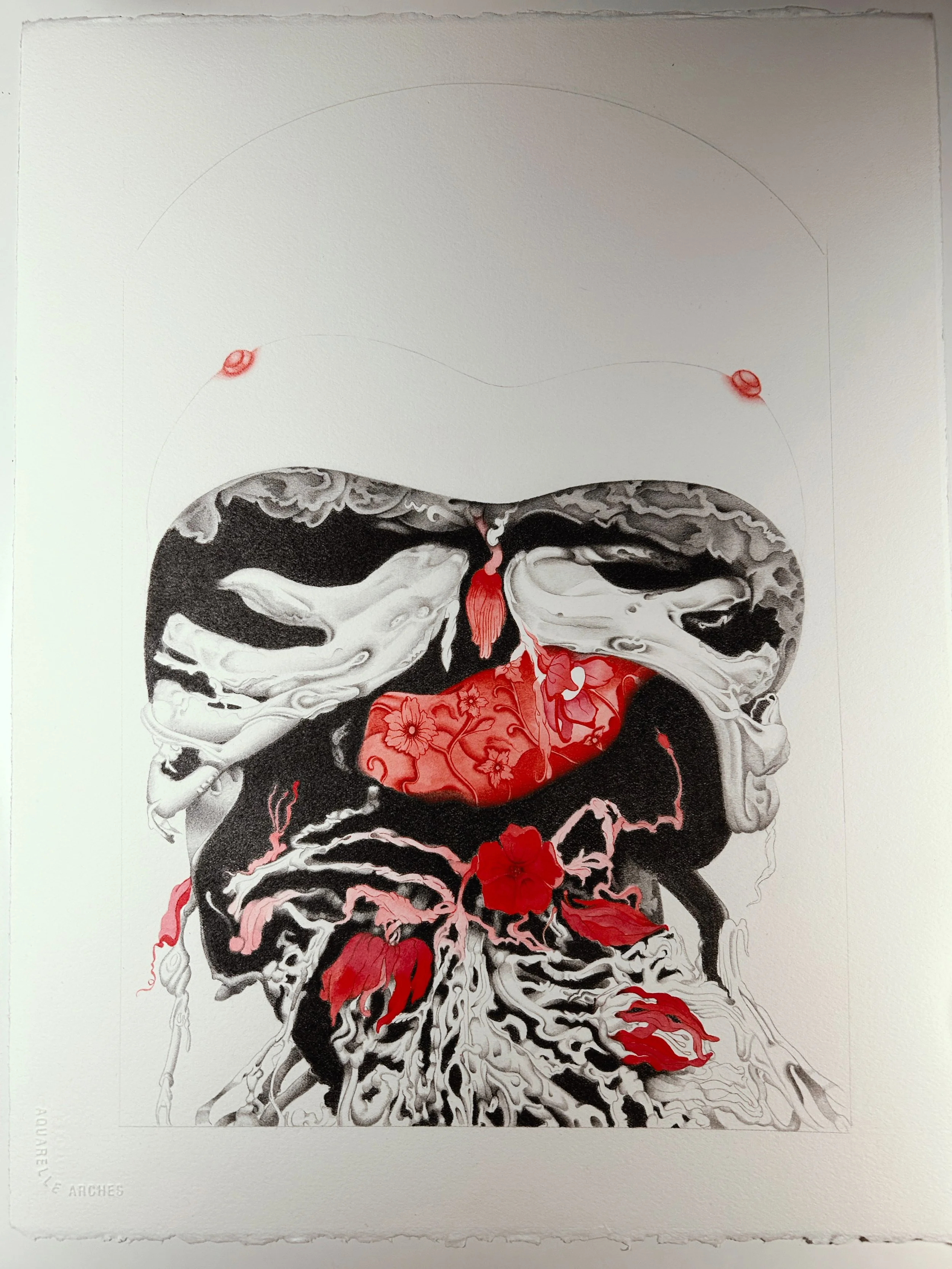
I want to continue studying the human form, improving my drawing, developing my painting, and writing essays that express the ideas I have spent years considering. I want to read books that challenge what I think I know. I want to remain curious, even about subjects that have nothing immediately to do with my work.
Most of all, I want enough uninterrupted time to do these things well. At this stage of my life, that seems a perfectly reasonable ambition.
I have sometimes wondered whether the need to be accepted by others diminishes with age, or whether we simply become more selective about whose acceptance matters. Perhaps it is a little of both. I know that I have become less interested in participating for the sake of participation, and more interested in the quality of the life I am actually living.
There is still a part of me that would enjoy having a few more close friends. I don’t imagine that feeling will disappear entirely, nor do I particularly want it to. It is a lovely thing to encounter someone who understands an aspect of ourselves that has rarely been understood before.
But I can allow myself to want that without making its absence the measure of my happiness.
When I think about the child I once was, sitting quietly with her drawings and her many interests, I wonder what she would make of all the years I spent trying to become more like everybody else. I suspect she would be puzzled. She had already discovered something that would continue to interest her for the rest of her life, although she could not possibly have known how important it would become.
I find that thought rather comforting.
Perhaps there is something to be learned from returning to the interests that occupied us before we became so concerned with how we appeared to other people. They may tell us more about our natural dispositions than the personalities we developed in order to get along in the world.
I cannot say whether artists are more inclined toward solitude than other people, or whether the work itself gradually makes solitude more appealing. I suspect the answer varies considerably from one person to another.
What I do know is that I have reached a point where I would like to spend less time questioning my inclination to be alone and more time enjoying what I am able to accomplish when I am.
There will always be people to meet, conversations to have, and friendships that may develop unexpectedly. I welcome those possibilities. But I have paintings to finish, things to study, and a great deal of writing still to do.
And I have come to appreciate the quiet in which I do them.
10|19|2026
Images | 2026