ESSAY: Manners
Manners Are Not Outdated
At some point, knowing yourself became license to inflict yourself.
We decided that irritation, exhaustion, and inconvenience entitled us to distribute those states onto everyone within range. We began treating our moods as justification rather than information.
Manners exist precisely because human beings have moods.
When I was younger I took them for imposed rules — social, religious, traditional. I've since revised that. Manners are not arbitrary. They are a structural acknowledgment that other people exist. They create a working distance between strangers and a framework for engaging with lives we know nothing about.
The person ahead of you in line is carrying weight you cannot measure. The cashier may have spent the morning in a waiting room. The customer behind you may have just received news that changed everything. You don't know. You will never know.
That not-knowing is the point.
A greeting. A thank you. Holding a door. Letting someone finish a sentence. These are not displays — they are acknowledgments of presence. They say: I register that you exist alongside me.
Contemporary culture rewards self-expression and has largely abandoned self-restraint as a value. But restraint is not suppression. The ability to pause before speaking, to extend basic courtesy when you'd rather not, to withhold your mood from someone who didn't cause it — this is not weakness. It is the minimum we can do towards one another in a functional society.
No one is owed special latitude because they are having a hard day. Everyone is having a hard day. What distinguishes civil behavior from mere reaction is the willingness to act with dignity anyway.
A greeting costs us nothing. It can change the temperature of an entire exchange.
And…Manners are evidence that we understand we are not the only ones here.
Image, 2013
ESSAY: The Human Body
Bodies
I have been interested in anatomy for as long as I can remember. At six years old I spent time in art supply stores leafing through anatomy books — cross-sections, Latin names, illustrations that looked nothing like anything alive. Other times I stayed up watching public television broadcast surgeries — open hearts, and living anatomy. The subject felt impossible then, every page had another layer; muscles over tendons over bone, and beneath everything another system waiting to be named. In school, I aced anatomy, looking back. I have no idea how I did it.
Eventually I learned anatomy as many artists do —through observation, repetition, and years of drawing the same forms until they stopped being unknown and started being structural. I thought I understood the body. Then I was invited to visit the Bodies exhibit, and I realized I had only ever understood its structure. To understand the human body means to understand exactly how it works, and why.
No textbook prepared me for the colors, and no amount of drawing the body prepared me for the forms I’d witness. What struck me first was not death. It was beauty— and I was not prepared for that either.
I kept returning to the heart, the lungs, and the brain —but not because they were the most recognizable. They possessed a visual intelligence I wasn't quite aware of, even after courses in brain health where I studied the brains structure. The branching vessels, the folds, the dense lacework of one structure meeting another, all felt strangely familiar. The roots feel familiar, or the river deltas, or the way lightning selects its path. The body doesn't organize itself in angles. It works in curves and bifurcations and circles, and standing there I found the distinction between science and art genuinely difficult to locate.
I have heard people describe anatomy as evidence of divine design, and I understand the impulse completely. The complexity of it actually resists comprehension in some ways. But what I felt wasn't directed toward a creator. It moved toward life itself, toward the long improbable chain of events required for any of us to arrive here at all.
What affected me most too, was not the organs being mere organs. It was the people who lived because of them.
I found myself constructing lives. Who were they before the exhibit made them specimen? What made them laugh with their body? What particular grief did they carry for years without telling anyone? These are questions with no answers, which is precisely what gives them their weight. I wish I could’ve asked one of them, as a ghost, while standing and looking at their body —what do they think. (Yes I’m a child.)
There was one woman whose skin remained, and looking at her I could see the evidence of age, the body's record of children carried. For a moment the specimen disappeared entirely and I was standing in front of someone's mother, wondering what she sang, who needed her, what small ordinary and very human moments made up her life.
However, it was The Fetus display, which stopped me completely.
There is a particular sorrow that lives in the bodies of women, carried quietly, rarely spoken about, bound up in the losses that belong to gestation and its failures. Standing in front of that display I felt the weight of every woman who has ever lost something that small, something that fits inside two hands and contains every possibility. That tenderness was different from everything else in the room.
The thread running through the entire exhibit was connection — not only between organs and systems, but between the living and the dead, between this body and every body that preceded it. For all our failures, all our capacity for disappointment and conflict, we have still managed to build medicine and music and friendship and art, and every one of those things began inside one of these fragile temporary structures.
I took photographs because I wanted to honor the experience, to witness it properly — giving my attention is a form of respect. These were not mere objects. They were people who agreed to remain, to keep teaching after everything else had stopped.
That is not a small thing. It is everything.
Marni Fraser
____________
Las Vegas is currently home to two permanent exhibits featuring real human bodies, both using plastination — a process in which bodily fluids are replaced with liquid silicone rubber, allowing tissue to hold its form indefinitely.
REAL BODIES at Horseshoe Las Vegas features over 20 specimens and 200 anatomical artifacts, with an emphasis on the relationship between the body’s systems and the emotional life running through them.
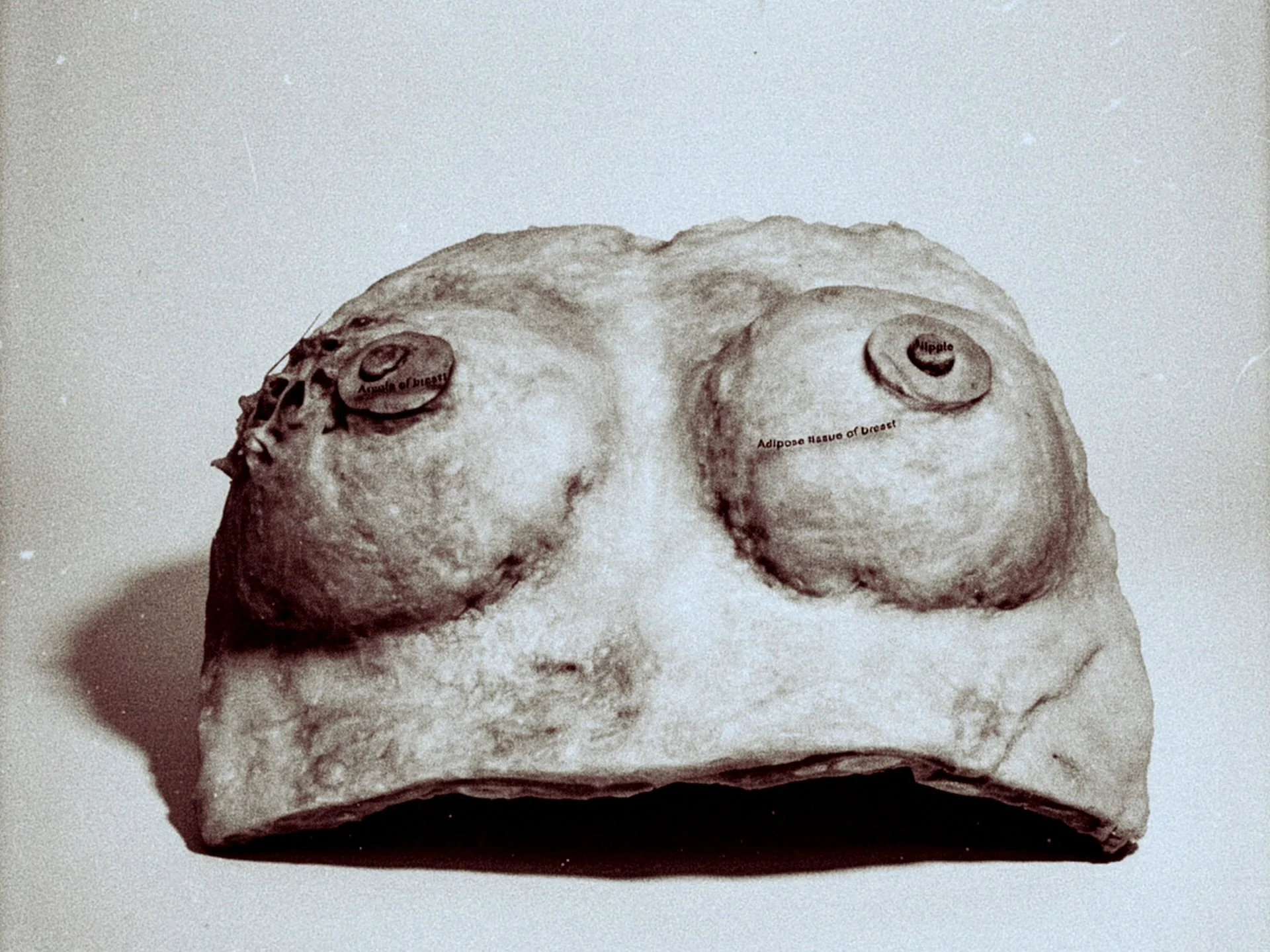
Breast Specimen — Adipose Tissue
Marni Fraser, 2026, Canon
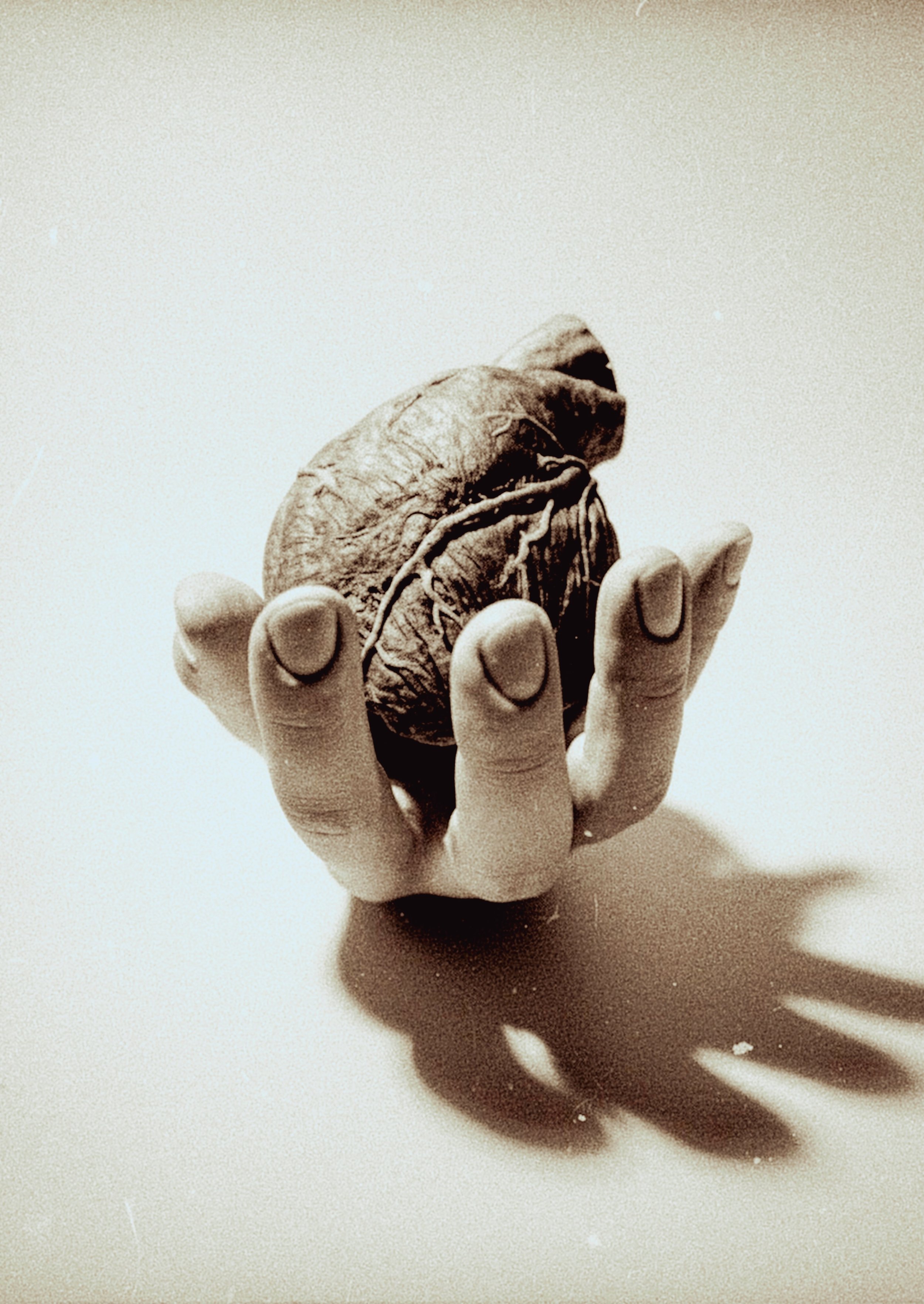
Hand Holding Cardiac Specimen
Marni Fraser, 2026, Canon R
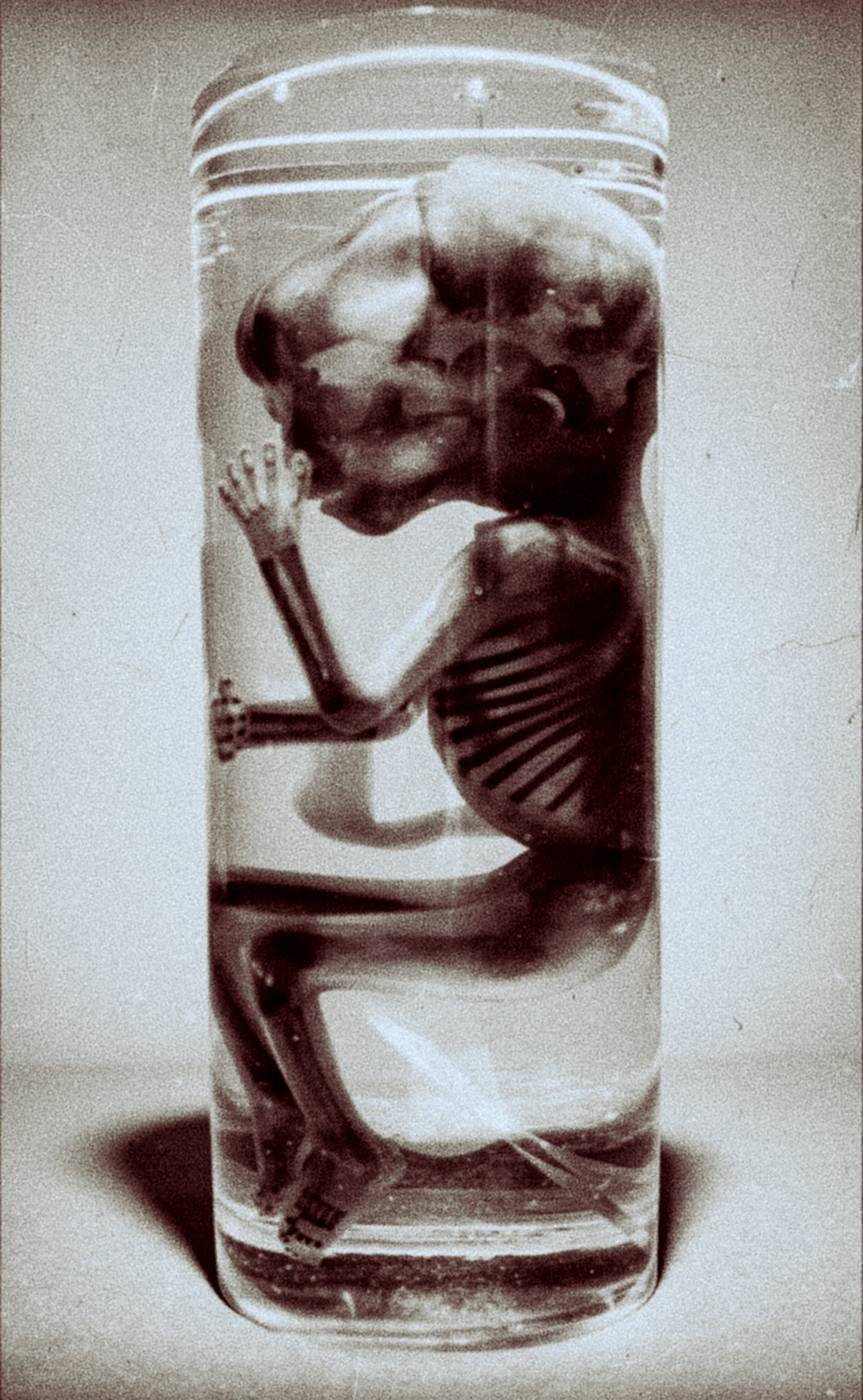
Fetal Specimen, Preserved
Marni Fraser, 2026, Canon R
ESSAY: The Dock Among the Lilies
Back in 2007, I was living far from everything I knew, and outside my country. The person I shared a home with left early for work each morning, and by then I had begun to look forward to those hours alone. There is a particular exhaustion that comes from living beside dishonesty. It settles into the walls, silences, and into the smallest moments of the day. It’s constant.
I was lonely due to the distance between me and friends, or me and family. My friends were thousands of miles away, and my family was also thousands of miles away.
Most days I walked through the countryside, but one morning I made my way to the lake instead. I circled the entire lake’s circumference before finding a small hidden dock tucked among reeds and water lilies. It felt untouched— it was definitely protected from the world beyond it. I sat there with my feet in the water while fish nibbled at my toes and damselflies drifted through the air, moving with such ease that it seemed impossible for them to know speed.
It remains one of the most beautiful memories of my life.
A narrow band of sunlight fell across the dock while the trees held the rest of me in shade. For the first time in a long while, I felt safe. Hidden. Beyond the reach of the person who spent so much of his time diminishing me.
When I think about that afternoon now, what I remember most is not the betrayal but the relief. Even then, before I had the words for it, I was trying to return to myself.
For years I thought that afternoon belonged to an only that chapter of my life. I believed it was a refuge from one difficult relationship, and a brief sanctuary during a season and person I was trying to survive.
What I did not understand was that I would spend the next two decades repeating versions of the same lesson.
The faces changed. The circumstances changed too, somewhat. The countries changed. What remained constant was my tendency to explain away what was directly in front of me.
I have always been more interested in why people become who they are than in judging them for it. If someone behaved badly, I wanted to know what hurt them, thought maybe I can help. If they were dishonest, I wanted to understand what they were protecting. If they were cruel, I searched for the wound beneath the cruelty in an effort to assuage.
There is compassion in that instinct, but there’s also danger.
Eventually one realizes that understanding someone is not the same thing as trusting them. You can see the origin of a person’s suffering and still recognize that they are capable of causing suffering regardless. .
That difference and the lesson of it took me far longer to learn than it should have.
For a long time, I mistook access to people as connection. I believed that being available to people was a form of generosity, and that leaving the door open was evidence of kindness. Looking back, I can see how often I extended trust before it had been earned, confusing potential with character.
Part of that came from optimism, a lot of it came from loneliness. Most of it came from a genuine belief that people could become better versions of themselves if they were seen clearly enough.
And, Sometimes they did.
But, Often they did not.
The hardest realization was not that people lie, disappoint, manipulate, or betray. Human beings have always done those things. The harder realization was understanding how much energy I spent trying to explain those behaviors instead of responding to them. That I actually cared more about their pain than my own survival.
I became an interpreter of other people’s motives. I looked for context, for history, for wounds, for explanations. In doing so, I often overlooked the simple reality of what was happening in front of me.
The consequence was not anger. It was exhaustion. Pain. Sadness that reached into a heavier sorrow.
When I was younger, I thought solitude was something I sought because I had been disappointed by people. Now I think the opposite may be true. Solitude was never an escape. Instead, it was the place where I could hear myself clearly enough to recognize what I already knew.
The older I become, the less interested I am in being surrounded by people and the more interested I am in being surrounded by honesty. The two are not the same thing.
Over the last few years, my world has become considerably smaller, and I no longer view that as a failure. I have stepped away from much of social media, reduced my offline circle, and become far more protective of my attention. What had felt like isolation now feels like stewardship. Self love.
There is a difference between being alone and being at peace.
One is the absence of people. The other is the absence of noise.
At one point I removed thousands of people from my social media accounts. From the outside, it may have looked impulsive, dramatic, or even ungrateful. In reality, it was none of those things. It was the end result of a growing awareness that I could no longer distinguish genuine connection from performance. It had become toxic.
What should have been a place to share my work had become a place where I second-guessed every interaction. There were too many voices, too many projections, too many situations that demanded interpretation. I found myself spending more time wondering about people’s motives than creating the things that mattered to me.
That was never the life I wanted.
The truth is that I care deeply about people. Perhaps too deeply. I have spent my life believing compassion could bridge almost any divide, and patience could mend misunderstandings —that honesty, eventually, would be met with honesty in return.
I still believe those things are possible. But now I think it takes very special people who want to be better than they are. I simply no longer believe they are inevitable.
Some friendships last because two people are willing to meet each other in the same place. Others slowly disappear because one person continues showing up while the other remains hidden behind layers of fear, pride, performance behavior, or confusion.
There is grief to know that sometimes caring for someone is not enough to sustain a friendship.
For a long time I thought I was mourning individual people. What I was really mourning were the possibilities connected to them. The version of things I hoped might exist. The conversations that never happened, or honesty that never arrived. The friendship I believed was standing just beyond the next misunderstanding was what I wanted, but what wasn’t there.
I really thought I had a friend at last.
That sentence is more difficult to write than it should be. I’ve said it too many times, and blamed myself. I didn’t blame myself because friendship is rare, but because genuine friendship requires a level of openness that many people never reach. It asks for honesty even when honesty is inconvenient. It asks for accountability without humiliation. It asks for trust without possession. It asks a person to be known.
Not everyone wants that. Not everyone is capable of it.
And I felt wrong for seeking it.
The older I become, the less interested I am in assigning blame. Most people are carrying burdens I know nothing about. People are doing the best they can with the tools they have. Some are frightened. Some are wounded. Some are simply repeating patterns they have never examined.
Understanding that has brought me compassion. And as a gift for all the suffering my life carries, it has also brought me distance.
There are situations that cannot be fixed by insight, and people who cannot be helped by mere connection. There are stories that will never fully make sense because too many of the people involved are invested in maintaining them.
At some point, wisdom becomes the ability to stop forcing an answer.
I think what I was searching for beside that lake all those years ago was not solitude itself, but permission. Permission to trust my own perception. Permission to stop negotiating with realities I already understood. And most importantly: Permission to leave confusion where it belonged instead of carrying it home with me.
When I remember the dock, I no longer think about the person I was trying to escape.
I think about the woman sitting quietly among the reeds and lilies, listening to the water, unaware that she was practicing for the rest of her life.
She believed she was hiding, but what she was really doing was learning how to remain.
And perhaps that is the lesson that took me the longest to learn: peace is not something another person gives us. It is something we learn, come to value and, protect.
Everything else is a slow corrosion, (a).
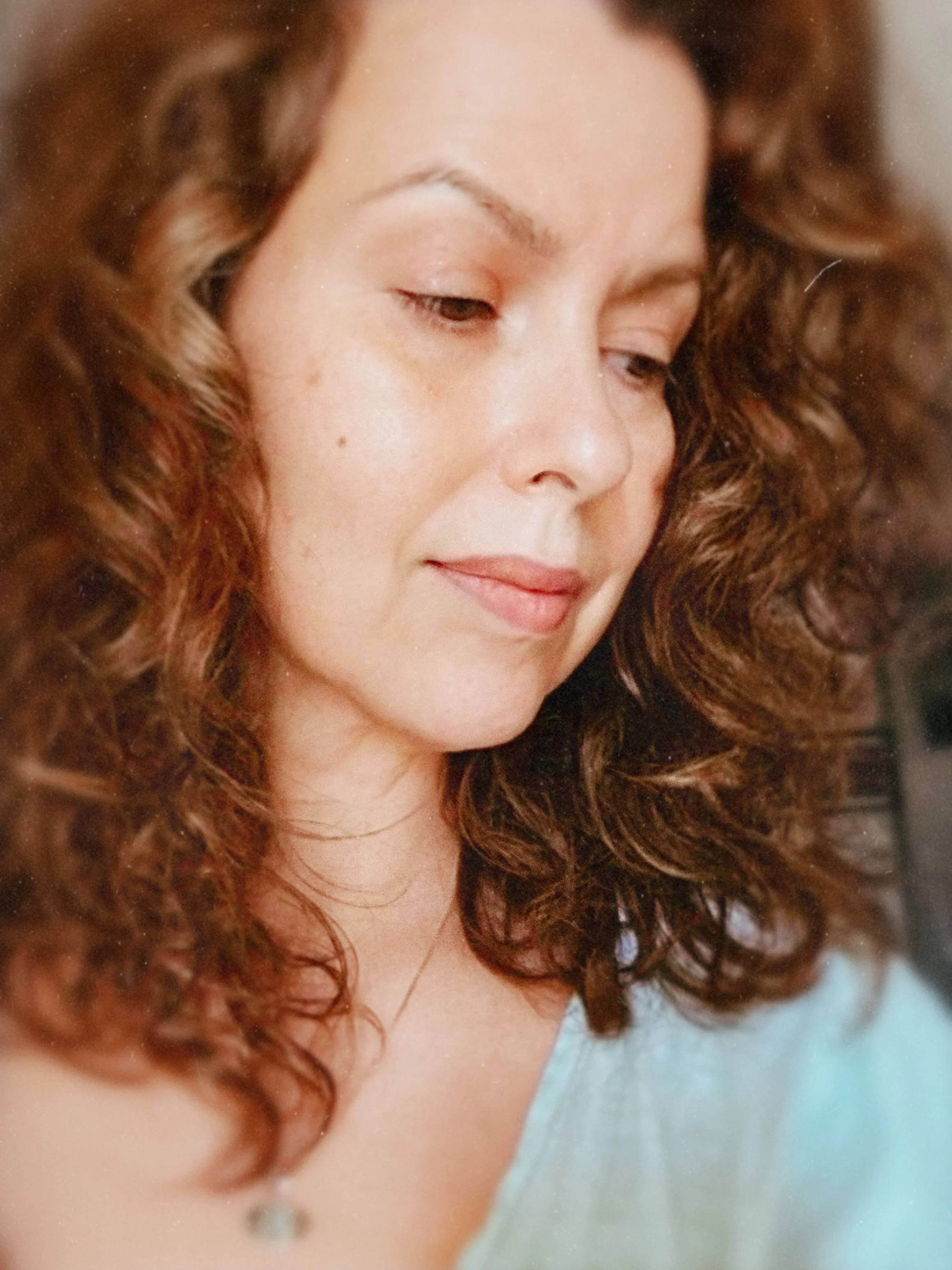
0604 | 2026

♠️ : Monday Morning 9:32am.
The coffee smells richer today. I don't know why. Maybe because I'm paying attention again. Maybe because for the first time in months my mind isn't running down the same corridor of questions, wearing thin grooves into itself. This morning I skip the cream. Black is more myself, sharper. The sugar is also enough to remind me that there is still sweetness in me, because lately that has felt uncertain.
The eggs are almost done. The sausages too. One cat is asleep on the chair beside me while the other makes her usual rounds through the house, stopping occasionally to make sure I am still where she left me. The day is really quite ordinary — calm in a way that reminds me of childhood days. That is the strange thing. The day is perfectly ordinary, and yet I am sitting here trying to explain how a person can lose so much of herself without ever leaving the room.
There was a period where I stopped drawing. It wasn't a complete stop. Just enough to scare me. People who don't make things won't understand that sentence, but artists will:
First you stop looking forward to the work. Then you stop opening the sketchbook. Next, the pencils remain where you left them. Then entire afternoons disappear. Suddenly one morning you realize weeks have gone by and you've spent them staring at a wall instead of making anything at all. That is how something important leaves a person — never in a grand collapse, but slowly, through neglect and confusion and some horrible exhaustion with a thousand tiny cuts that seem insignificant until one day you discover they have carried away something you cannot easily replace.
You've lost your blood.
I have had enough loss for one lifetime already. Loved ones disappeared into homelessness and addiction. Other family I sought for years, died before they ever really met me. My grandmother, the only person who ever loved me with the sort of certainty that makes a child feel safe in the world, is gone. Jan arrived later than I needed her to, but she became one of the most steady people I have ever known. Jon also, and most important, whose wisdom and ceaseless belief in me has made me want to be better than I am.
So when I tell you that friendship mattered to me, I am not speaking casually. I am not talking about collecting contacts or passing time online. I am talking about something that occupied the same territory as trust.
What people misunderstand is that I was never looking for a savior or a therapist. I had hoped for one honest friend. A person I didn't have to translate myself for. One person I could send a sketch to at two in the morning and say, "I think this one is finally working." Someone I could talk to without feeling like every sentence needed armor bolted onto it first. That was all.
And maybe that is why this has hurt as much as it has. Not because I lost an illusion. It hurt because I offered trust after years spent learning how dangerous trust is, and what came back to me was confusion, ambiguity, silence, and questions that nobody would answer directly. The damage wasn't a single event. It accumulated. It settled over everything. It followed me to the desk and into the work. It followed me into rooms where it had no business being.
The strange thing is that none of this began in a dramatic way. There was no thunderclap, nor catastrophe. No moment where I could say, "That was the day everything changed." It began the way many important things in my life have begun. I met somebody, and over time they became important to me.
I think people are often embarrassed to admit that now. We live in a time where every connection is treated with suspicion and attachment is lowered into some ugly explanation. But sometimes another human being enters your life and you simply enjoy them. You enjoy talking and laughing with them. You enjoy hearing what they think, and find yourself looking forward to their messages. You often are wanting to share things — a song, a poem, a photograph, a drawing you just finished, a strange thought you had while making coffee in the morning. There is nothing remarkable about this. It is one of the most ordinary experiences in the world.
What made it remarkable was how rare it had become for me.
By the time this person arrived, I had already lost so much that I had stopped expecting very much from people. The older I get, the more I realize how many relationships are built upon convenience. People drift in and out. They become busy, or disappear. They might move away, or they die. Eventually you stop expecting permanence and begin appreciating whatever time you have with someone while it exists. So when I found a friendship that felt easy, natural, and meaningful, I valued it. Maybe more than I should have.
The truth is that I trusted this person. I trusted them enough to lower my guard and speak honestly. I was comfortable enough to show them parts of myself that I normally keep protected. That may not sound extraordinary to some people, but for me it was. Trust is dangerous when you've spent most of your life learning how fragile it can be.
And then something began changing. I wish I could tell you it was obvious, or that there was a single event, a single betrayal, a single conversation that explained everything. Instead there was a growing sense that something was wrong and nobody was willing to say what it was. The friendship remained, but it no longer felt uncomplicated. Questions appeared where certainty used to be. What troubled me deeply was how things stopped fitting together in ways that started familiar — and I found myself doing what human beings always do when they care about something that suddenly stops making sense.
I tried to understand it.
What followed was not dramatic betrayals. There was no confrontation. Instead there was a slow accumulation — dates, intervals, behavior across months. Accounts that appeared and vanished. Timing too precise to be coincidental. Then the arrival of a network of activity circling something that should have been simple, operating with a consistency and coordination that eventually became impossible to explain away. I needed to trust my own eyes. I compared notes with people whose judgment I trusted. What began as uncertainty eventually became something I could no longer reasonably doubt — though I was under no illusion that I could prove it to anyone else’s satisfaction. That is the strange loneliness of knowing something you cannot fully demonstrate.
The strange thing is that certainty didn't bring relief. I had spent so long trying to understand what was happening that by the time I reached my own conclusions, I was exhausted. Somewhere along the way I realized I had been spending more energy trying to understand the activity around me, than I was in understanding myself. That cost me more than the situation itself.
My friend eventually returned. But by then something fundamental had changed in me. Explanations did not feel honest. I had spent enough time learning truth to recognize when something is off. One of the great advantages of getting older is that eventually you stop arguing with your own instincts. You may not always understand them immediately, but you learn to respect them.
When I look now at the people who spent so much time watching, circling, inserting themselves into something that did not belong to them, I no longer feel threatened. Mostly I feel puzzled. There is a level of insecurity required to organize your life around another person's attention that I simply do not understand. I had known this person only a short while before the interference began — accounts deleting themselves, reappearing under same profiles, different names — or same names, different profile. Possible accounts ran by two persons. Behavior so coordinated it could not have been accidental. And I was told it was resolved. And it was not resolved. Whatever fears were driving those actions were never my issue. I did not cause them by my actions. They belonged to somebody else. The mistake was allowing those fears to become my problem.
I am actually a very uncomplicated person. I do not enjoy competition unless it is friendly and among people I care about. I do not enjoy games unless of the intellectual kind. I do not enjoy power struggles, triangulation, jealousy, or endless psychological maneuvering. The older I get, the faster I leave situations that require those things. There was a time when I would stay and try to understand, or at least try to repair something that was never mine to deal with. That time is long since passed.
The truth is that I had to reclaim my life. Nobody was going to do it for me. So I returned to the things that have always sustained me. Visual art. Books. I filled my home with beauty. I spent time with friends. I went out when every instinct told me to stay home. For somebody as introverted as I am, that was its own act of self-preservation.
And perhaps that is the part nobody expected. Whatever the goal was — distraction, destabilization, confusion, noise — I ended up learning something about myself instead. I learned that I can survive ambiguity. I can survive disappointment. I can survive losing people I once believed would remain in my life. What I could not survive, and would not, was continuing to offer honesty to someone who had chosen not to return it. When you enter a friendship knowing you intend to harm the person inside it, you are a thief. You have stolen the truth from them. And in doing so you have surrendered your own.
Most importantly, I always knew my peace is my responsibility. Once I finally returned to my modus-operandi, everything became much simpler.
The coffee still tastes good. The cats still make their rounds. My sketchbooks are open again. I did the right thing to let go.
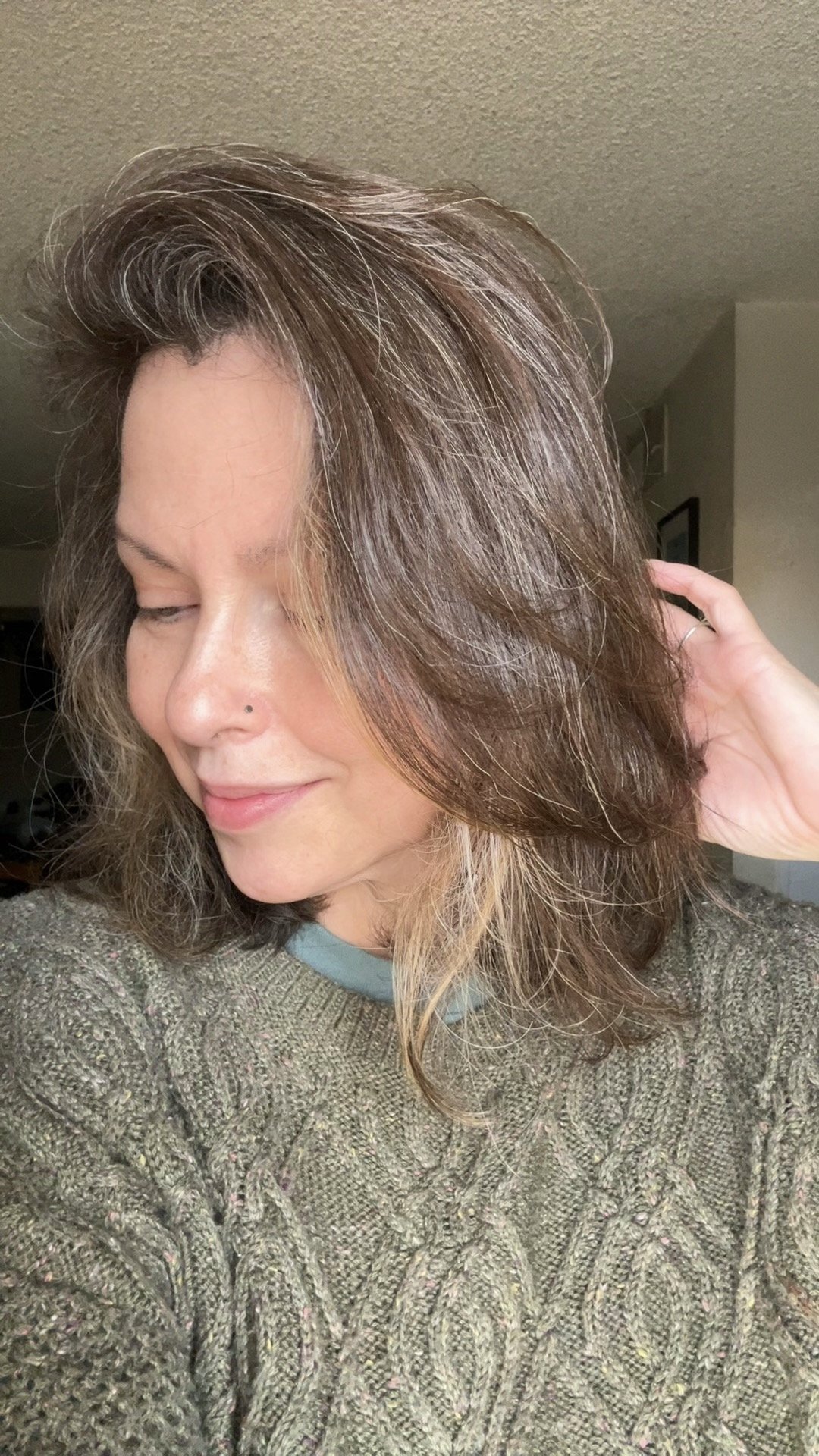
Self | Nov 17 | 2025
Note: Battles
Losing Battles
It's been a while since I felt hopeful. I've never fit anywhere, including among other artists. Too aware. Too impatient. There are a million ways to help yourself and none of them work when you actually need one. I can't remember the last time I was happy. No artist should have to say that. It will kill them.
I'm not sure who cared. I'm not sure I do anymore.
I spent years trying. New habits, new ways of seeing, things sacrificed for self-protection and things risked anyway. I was brave. I gave a great deal and became very tired. The people who seemed, at certain moments, to have answers — they didn't, or they left, or both. The last year and a half have been the worst.
There is physical illness. There always has been. The mind used to compensate — used to steady me, give the work somewhere to go. The writing and painting felt like direction. Now they feel like evidence of something I almost became.
Abusive adults. Partners who hit or lied or simply couldn't stay. Friends who rewrote what happened until I doubted my own memory. I forgave quickly, not because I'm weak but because I understand people. That understanding cost me. They read it as a kind of permission.
At some point you start to think you're the problem. The only consistent variable is the one doing the choosing.
I'm tired. I've said it before and meant it before. There were attempts. One landed me in dialysis for eight hours. I made a rule after that. Never again.
The rule is changing.
Not loudly. Just a quiet shift — maybe, but differently this time. No coming back.
I don't have friends. No family. One person, elderly, who functions more as a parent than anything else. A husband once — we fought badly, him physically. He was a magnificent artist. I miss the artistic rapport we had together. I haven't found that since. Wine and paint nights are not the same thing.
And, my partner now, who deserves better. He’s put up with my complexity better than anyone else. He understands. Still, I’m burdensome.
I'm too serious and then too childlike and people find that difficult to hold. I don't fit. Feeling shunned has become familiar.
I tried therapy for five years. I wanted someone to listen, not prescribe. The prescribed pills made life unrecognizable to myself. I stopped them. I won't go back. What helped, eventually, was one clinician with enough experience to say the truth plainly — situational depression, not me, the weight of everything around me. That distinction mattered.
Then came the harassment. The surveillance. Being watched and mocked during the one period I was trying simply to work and be heard. . . I never harmed anyone. I minded my own life. It left damage anyway.
I doubt anyone can help. I doubt I can receive it even if they tried. I don't know if I believe in love anymore — not as something directed at me. I see beauty still, in small things. That hasn't gone. But love between people, reliable and specific — I've lost the thread of it.
People bore me now. Strangers less so, because there's no history, no accumulated weight underneath every exchange. With strangers I can be patient.
I have two people. I think I make them both miserable.
I've risen before. Many times. From worse, maybe, or at least from different. I know the mechanics of rising, the loop.
I'm not sure I want to do it again.
Broken. Gone. And ready.
M.

•The One Night by Marni Fraser 2026
•Phoenix Arizona | Photoshop Edits
•Arizona Desert Vigil | Edition [4of 10]
PHOTO:Age
Studies on aging gracefully.
Trying to understand the body without punishing it for changing.
There is a strange beauty in watching the self shift over time — in carrying the faces of those before us, and in carrying our age.
Perhaps grace begins there.
You cannot see my hand. It’s hidden in shadow, but beneath the shadow it is badly bruised. My blood has become thin, much more fragile. My bones suffer. Part of the reason I am trying to remove myself from others lives.
I do not lean on people anymore. Perhaps I no longer know how. Perhaps I have grown tired of reaching out, only to feel unseen.
I took these photographs because I am sick, and aging, and because some days I do not meet either reality with grace.
But all living things change. All bodies shift. All faces carry time …eventually.
So perhaps there is something holy in learning to look gently at ourselves as we disappear, and become.


Studies, May 14 2026
ESSAY: Untethered
Untethered
I am alone. But then again, I always was. I love freedom — the latitude of a body unmoored, moving through the world without the slow drag of someone else’s gravity calling itself devotion.
I’ve let something go, and am happier for it. I’ve become a red balloon rising, escaping — not fleeing, ascending — and I win. I don’t take this sordid prize. I win by being honest and possessing integrity, by moving on with my name still intact.
I realize I love people. It’s their lack of courage that breeds dishonesty — that gutless softening, that slow corrosion — that I can’t stand.

Me 2026
ESSAY:
It’s finally the truth. I decided to call it out. And continue with my life.
For those who tampered with my peace. I thought I’d leave off on an honest and perhaps beautiful note — a small essay of sorts. A truth about me.
These are my favorite fish — goldfish, of some sort. Their tails are V-tails, long and trailing, the way certain beautiful things move through the world.
What you cannot see is the most beautiful one I ever laid eyes upon. It was an all-black goldfish. He swam alone in a rather small tank, in Victorville, California — and in that hard, sun-bleached city at the edge of the Mojave, he was all velvet. His scales moved like sullen lightning beneath the water, slow and private and beyond extraordinary. He reminded me of the black goldfish in Fantasia, and I wanted to take him home so badly that I returned to that fish store for a week, just to stand before him and believe what I was seeing.
This goldfish is one of those things that will never tarnish in my mind. He remains fixed there — luminous, and unreachable, and so beautiful. Many things are this way in my life. Many I am longing to return to, or hope against hope will find their way back to me. And there are many that are gone that I find myself still lamenting in quiet rooms, and at odd hours. Anyone who knows me understands: I carry things for a long time. I am faithful to beauty, even when it costs me.
Today I secured the last of these — the most significant of the sad trinkets my heart has gathered. I doubt I will ever be open like this again. I believe this is the most profound heartbreak of my life.
You meet someone so beautiful that the bond becomes indescribable. You are certain it can last a lifetime — the love, the admiration, the loyalty, all of it present in the same moment as the weather gathers before something major transforms. Such friendships are rare. And yet sometimes something prevents what ought to naturally unfold — not out of strength, but out of fear, or smallness, or the quiet failures people carry.
It was out of my hands.
What is more remarkable is this: I hid myself from what I sensed would cause me pain. I did it long before I truly knew them — I left, I closed the door for three years. And still they returned. I know they felt the tie between us. Imagine looking at someone and understanding, in your soul, that this particular beauty will cost you — and running as far from it as your legs will carry you. But if you are meant to know someone, life has a way of folding the distance. That was us, and our strange beginning — intense, humorous, warm — and real.
I could feel this person’s kindness from the beginning, and I trusted it. I still do. But I no longer trust what stands around it, or what shaped the outcome. I cut off the tie.
People do not sabotage what they truly love. Not gently, not quietly, and certainly not over time. That is not love. It is fear wearing love’s face, need dressed as devotion, control calling itself care — a vine that climbs by tightening its hold.
I had beauty, for a little while. A friendship that made my heart sing the way it had not in years. I made some of my finest work in the hope of its bloom — and some of it simply because I wanted to show my care, it’s like leaving flowers without a name. I believed I had a friend.
I hate war. Emotional or otherwise. It is a wilderness I never chose. I’m peace loving.
I thought I left this kind of thing behind decades ago, when I was younger and believed people generally meant what they said, but were undisciplined. I know now that some never learn to mean anything at all.
I felt hurt.
Now I must live with that — and with this vision of beauty, and of a friendship that came so close to being something lasting it was almost unbearable. Perhaps I am mistaken. Perhaps I always have been. But I would rather be someone who loved honestly than someone who avoided feeling altogether.
I have known great beauty —
though I have not often been allowed to keep it.
Thankfully, it is over. If I ever hear from them again, it will mean something real remains — something willing to stand in the open.
Life is too short for cruelty and confusion. It is also too short for the slow diminishment of something that never asked to be involved in dramatics. Last, it is definitely all too short for standing in doorways, blocking out the light, out of fear. And at the end of the day? Geography is a poor excuse.
I did not invite this. I mind my own. AND That was crazy.
I am not ashamed.
I am sad. And I remain, despite everything, astonished — at how difficult it can be for people to choose honesty. Or kindness. How difficult to have integrity and even a little class.
Now I can continue to heal, and carry the quiet hope that one day, courage will meet me where I stand.
I have always admired that.
M.C.F.
April 29,2026

Image by Brian Wangenheim
Masks Fall… Inevitably
There comes a point where anyone who chooses to work a solitary job, must choose between the drama or people, and possibly the work because the work requires a quality of silence that cannot coexist with certain kinds of attention.
I have been withdrawing for some time. Quietly, without saying anything but to a very chosen few.
My site is where I live now. My paintings, manuscript and interior life has always been more honest than anything a feed can hold.
What I am leaving behind is not merely a platform but who I am. I hope those who come across it when I’m gone find value in what I have to offer.
There is something particular happening in digital spaces that I find both fascinating and repelling — the construction of masks on all sorts of levels, from AI to curating full account identities. Personas layered over personas. A whole theater of watching, dressed casually. Deceptively.
I have been watched this way.
I want to say clearly and without drama what this is: it is a form of cowardice so refined it has almost convinced itself it isn’t cruel… Almost.
The person who builds masks to observe someone they cannot approach directly has made a choice — not once, but repeatedly, with full knowledge of what they are doing. That repetition is what transforms curiosity into something darker stalking. Into a kind of possession the possessor would never admit cleanly because naming it would require an honesty they have demonstrated lost to themselves.
It is also, frankly, beneath anyone with an actual interior life.
This is what makes it so bewildering to encounter in people who present as feeling, thinking, and/or complex. The capacity exists. The choice not to use it was made anyway. That gap between what someone is capable of and what they choose is where character actually lives. Or doesn’t.
What has been done here is wrong for reasons that go beyond the personal.
It is wrong because it treats another person’s emotional life as material: a thing to be observed, catalogued, provoked, and used to triangulate one’s own position. The person being watched is not a mirror or weather system for monitoring, but a human being whose interior world deserves the same sovereignty they extend — or should extend — to their own.
It is wrong because it requires sustained lying. Not a single lie, which humans tell and can be forgiven for, but a structural one. A lie built, and with time and thought, into the architecture of how one presents to the world. That kind of lying doesn’t stay contained. It metastasizes. It enters every relationship, perception, and moment of potential genuine contact — further it poisons it at the root. The person who lives this way is not merely deceiving others. They are dismantling their own capacity for truth.
It is wrong because it is a form of war waged on someone who came in peace. Who came, in fact, with unusual honesty — for me that costs something, leaves marks, and is offered very rarely and only to those deemed worthy of it. To meet that with masks is not merely unkind. It is a desecration.
It is wrong because it is childish in the most precise sense — not just young, but stupidly cruel.
It is what a person does when they have not yet learned that what they cannot control, they must release instead. When they have not yet sat with themselves long enough to become square inside their own heads.
The world is burning in many places, and there are people navigating genuine loss, severe danger, and genuine rupture. To spend that same irreplaceable time building digital architecture to surveil someone who wished only to be known honestly — that is a failure of proportion so profound it approaches tragedy.
And it is wrong because someone always slips. Masks multiply. Patterns emerge. The very elaborateness of the construction becomes its exposure. This has happened here. The theater has been seen.
I didn’t even think to look. It came to me.
Nothing about this will be carried forward as a weapon.
It isn’t generosity.
But is self-preservation.
Weapons of this kind require the wielder to remain in proximity to what wounded them, and proximity is no longer something being offered.
What is being said instead is simpler and more permanent.
What is built in full awareness of its impact does not dissipate or get filed away and forgotten by the universe the way it might be forgotten by the people it was aimed at. It accumulates in the one who built it. It marks the architecture of their days in ways they will recognize later, in quieter moments, when there is no more theater to maintain and only the self remains. Three times it marks — in the making, in the living with what was made, and in the reckoning that arrives whether or not it is invited.
This is not a curse. It is a description of how things work.
The work continues. The paintings and poems continue. The singular, protected, carefully tended interior life continues — blessed now for having named what was threatening it.
It is better to be alone with one’s own clarity than in company with someone else’s carefully constructed confusion.
It has always been better.
&
This is also why certain things are non-negotiable.
A three-year block isn’t dramatics. It isn’t someone nursing a wound in a dark room, but a clean answer to a situation that talking would only make worse. Some dynamics don’t improve with engagement — even if they require it and many situations require it. Every word offered becomes fuel for the next round. The only move that actually works is to remove the board entirely. So that’s what gets done.
None of this is paranoia. It’s what you learn after you’ve watched the pattern enough times to recognize it. And somewhere in that confusion a person decides that watching is the same as knowing, and that knowing without asking is a kind of power worth having.
It isn’t. It’s just loneliness wearing a more complicated cover.
The walls exist because the work exists. Because there is something worth protecting in here. And because experience has made it very clear who is likely to protect it and who is likely to, given half a chance, take it apart just to see what happens.
Yours,
Marni Catherine Fraser
Self, April 24, 2026

The Ever Watchful Eye
It astonishes me how easily our perceptions can outrun our awareness. Or a certain habit sneaks in unaware without our noticing.
A year ago, after the hospital — after the light and the fragile hours that changed my life — I discovered a piece of jewelry had gone missing. It was not replaceable, or mislaid but last on my neck. It was rare mosaic evil eye, fashioned from pearl and fine metals, and gifted long ago.
What I remember most vividly is not the object itself, but the memory tied into it: a daughter placing the charm into her blind mother’s hand. The mother tracing its surface with delicate fingers, then turning toward me and saying, with quiet certainty, that I was protected.
When it vanished, I felt something more than loss. I didn’t voice it — instead, I allowed my irritation to search for its culprits. How swiftly the mind seeks a narrative that absolves itself!
And then — a year later — I opened a purse I have used nearly every day since that hospital visit. Nearly “every day”. I had searched it before, I am certain of that. I remember searching. And yet there it was, resting in a quiet interior pocket as if it had been waiting for me to calm down.
The charm returned with gentle irony.
It has unsettled me, in the best way. How easily we can assign fault to the shadows rather than admit we may have simply erred. And we draft villains to protect ourselves from the small humiliation of human mistake. It is not the grand betrayals that undo us most often, but the ordinary reflex of self-justification.
And still — I hesitate to be superstitious — there have been so many good things lately. The air feels altered. The light more airy. It is difficult not to wonder whether the object was not lost at all, but merely patient.
Perhaps protection is not dramatic. Perhaps sometimes it is quiet sleeping in the lining of a bag, putting up with our accusations, until we are worthy of its company again.

ESSAY: What We Are Willing to See
What We Are Willing to See
There is a surge of antisemitism right now, and it is obscuring everything.
Let me be precise about where I stand, because precision matters here. My issue is not with Jewish people. My issue is with Zionism as a political ideology. My issue is with the current Israeli government and what it is doing. That position will not shift until the situation changes. But to take that stance and collapse it into hatred of an entire people — that is not resistance. That is cruelty. And it is lazy. What we actually need, what this moment is crying out for, are more voices from within the Jewish community itself. Visible voices. Courageous ones.
When a crisis becomes undeniable — when you can see it, every day, in real time, on the screen in your hand — it stops being a political opinion and becomes a personal reckoning. You have to decide what you stand for. Not in theory or merely in your affiliations. But in your actions.
And if you call yourself ethical, moral, God-fearing — whatever word you use — then that belief is not a silly category. It is a demand. And demand asks something of you. The teachings people reach for in moments like this — the words of Christ, of the Prophet, of Moses — they were not written to make you comfortable. They were written as instructions. Love your neighbor. Not your convenient neighbor. Not your ideologically aligned neighbor. The one in front of you. The one bleeding from bombs or who just lost a loved one, like any of us has. The one whose name you don't know but whose humanity you cannot deny — unless you choose to.
And that choice is what we are really talking about.
Because somewhere along the way, people stopped questioning what they were being told and started letting others do their thinking for them. Someone seeming more educated. Someone seeming more confident. Someone with a better argument or a smoother delivery. And the moment you surrender your own moral reasoning to someone else's authority — whether that authority is a politician, a preacher, or a ancient text stripped of its context — you don't just become ignorant. You become useful. Useful to the people who need you to not ask questions. Useful to the machinery that depends on your silence.
And what that silence produces is not neutrality.
It produces justification.
It teaches people how to stand in front of suffering — real, human, undeniable suffering — and explain it away. How to look at women and children —and men who have no allegiance to either side, who are simply living their lives the way you and I are living ours, and decide that their lives are acceptable losses. That is not a political position. That is a moral failure. And no scripture, no ideology, no flag absolves you of it. Because at the end of the day, the people pulling these strings are human beings. Not divine. Not infallible. Not beyond question. They have the same DNA you and I have. The moment you decide they know better than your own conscience, you have handed them something you cannot easily take back.
I want to be honest about why this is not abstract to me.
I have people I love trying to survive a war right now. In different countries. I know what it means to wait for a message that tells you someone is still alive. I know what it means to carry that weight while the rest of the world moves through its day.
And long before that, I understood what it looked like when violence becomes background noise. I grew up in gang-related Los Angeles. Drive-by shootings were not news to me — they were weekly. That is a war too. A smaller one, a forgotten one, but a war. And I was asked — more than once, by more than one group — to step into it. I refused. Not because I was above it. Because I understood what it would cost. I understood that those girls on the other side had homes not so different from mine. I understood that choosing violence meant choosing to stop seeing people as people.
The same principle applies now. Just on a larger scale.
What we are watching are decisions being made from a distance, by people insulated from every consequence, treating human lives like pieces on a board. And I want to be clear — this is not chess. Chess requires strategy - it also requires you to think ten moves ahead, to understand the weight of every sacrifice. What we are watching doesn't rise to that, what we are watching is much more crude. It is a first-grade calculation in the language of geopolitics. And the most disturbing part is not the people making those decisions.
It is how many people are willing to accept them.
How quickly they explain it. How easily they look away.
To turn a blind eye is to excuse it. To excuse it is to permit it. To permit it is to become part of it.
I am not here to spread hatred. I am not here to vilify the dead on any side. I am here because I believe that a community is defined not only by what it condemns, but by what it allows. And I believe that every person reading this has a place inside them — before the ideology arrives, before the talking points, and eventual exhaustion of the news with a cycle numbing you into passivity — human beings already know the difference between right and wrong.
I am speaking to that place.
Because if we can witness this level of suffering and still choose indifference — the failure is not only out there in the world.
It is in us. Our hearts.
And we are the only ones who can change that.
Marni C. Fraser
April 16 2026, 5:51pm
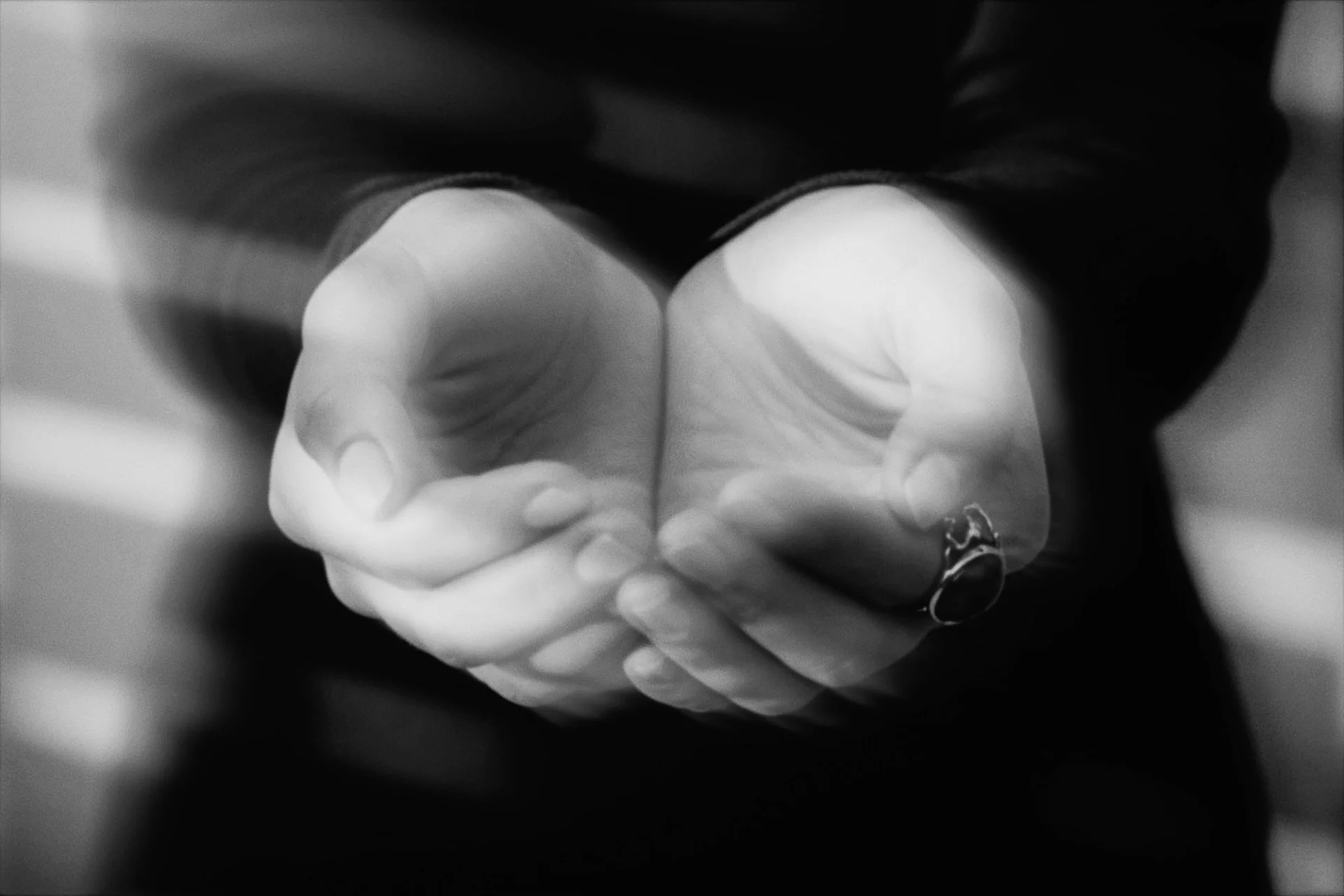
Offering by Marni Fraser April 16, 2026
On Anger
Good morning
I’ve been thinking about an old conversation with a friend—once urgent, once vital. With time, it’s revealed itself as something simpler and more universal: a kind of common knowing we all circle back to, sooner or later.
For anyone who might need it ~ For anyone who might want it.
Wishing you a deeply peaceful week.
“The soul becomes dyed with the color of its thoughts.”
— Marcus Aurelius
#36
I.
Turn your gaze toward your own portion of the matter. Ask whether the discharge of frustrated violence—turned inward or loosed upon another—has ever proven worth the cost of its eruption. I sometimes apprehend how arduous it can be to feel compassion for those devoured by their own agitation; yet more often than not, compassion does not come. What comes to me instead is sorrow—slow, unadorned, and enduring.
⸻
II.
I was once taught that Neptune’s frustration of Odysseus was neither whim nor cruelty, but design. He was pursued and impeded so that he would be driven into thought, pressed into alteration, forced to ripen—so that he might arrive at his teleology, which was Telemachus. Had Odysseus returned to Ithaca without those salt-bitter trials inscribed upon him, the suitors might have undone him, and the work awaiting him would have slipped from his hands.
⸻
III.
I agree—and it is not a gentle demand. Yet this single question forms one of the oldest load-bearing truths of Western civilization, older than the Bible, older than most spiritual scriptures themselves: frustration is the furnace of growth. How you proceed from it belongs entirely to you. Nobility lies in taking suffering into the body and choosing not to enlarge it with a reactionary mind.
I love you.
Marni Fraser
1112.2025

Hope by Marni, 2025
It All Begins Here…
“Who is the hunter and who is the prey?” is hardly a question answered at the start. It is a pursuit—intent sharpened to a point, the illusion of mastery. I move through life as one moves through jungles, believing I am tracking something external: an image, a flash, a configuration of meaning that appears and withdraws. It’s just at the edge of perception, not a memory exactly, but a pressure—one like a touch or caress even—behind thought, heat behind the eyes. I follow it; my patience is a delicious skill. I circle it, again and again, rehearsing the moment of capture, convinced that proximity is proof, that closeness itself confers control. The mind arranges its frames, stretched, clean, and ready, believing the thing pursued will finally be still.
But what I am stalking has already learned my moves. It allows itself to be nearly captured, lets me believe I am the more cunning animal, lets me think endurance matters, that dominance belongs to me. When my hands finally embrace it, what I thought was distance collapses into intimacy, and intimacy becomes consumption. The heat I believed I could hold begins instead to hold me. If I am not devoured suddenly, I am absorbed gradually, dismantled by my own insistence on possession. The image does not fade—it burns, it confronts me. And in that burning, the roles finish rearranging themselves. I recognize, too late, that I have been carried along by hunger, not direction, and that the maw I feared was never ahead of me, but opening from within.
What you don’t know.
Eaten.
Marni Fraser
0104.2026

It all begins here.
About Beauty
How terrible is beauty.
So terrible because it asks us to look at what cannot be kept—something transient, wild, delicate, already on its way out of itself. It lifts us for a moment, loosens something inside us, draws out that involuntary release of breath, and then leaves us with the knowledge that whatever just touched us cannot remain where it was.
We sit with the afterimage of it, often alone, caught in the instant before understanding fully settles in—the instant before we know we cannot touch it, cannot keep it, cannot return to it intact. Beauty is unobtainable not because we fail to reach it, but because it does not consent to staying. Still, the wanting continues. We keep believing that if we search long enough, if we move toward it carefully enough, it will yield, it will finally do what we imagine it might do.
It never does. Even when we think we have captured it, time begins its quiet work, and what remains becomes something thinner, duller, less alive than what first undid our eyes and heart.


On Seizure, Euphoria, and …
On Seizure, Euphoria, and…
On Seizure, Euphoria, and Hearing the Body
An acquaintance asked me recently about seizures and their after-effects, and at their further request I would like to do an essay on this. Someone wanted to know whether the initial release can feel good. It’s a strange question, and a difficult subject—because seizure experience is intensely individual, and because the language we use to describe it often collapses into metaphor long before it reaches understanding.
For most of my life, I did not think of myself as epileptic. I am not someone who grew up with a diagnosis or a long history of seizures. What I did have, beginning in adolescence, were brief episodes where I would wake up, take a few steps, and collapse. These were not seizures. They were likely orthostatic—my body adjusting too quickly from rest, blood pressure shifting, hormones raging through puberty. The episodes lasted about a year and then stopped.
What did persist throughout my life were headaches. Migraines, accompanied by aura—halos, spots, distortions of light. Over time they worsened, stretching into weeks, sometimes months, with only brief breaks of relief. More recently, new warning signs appeared: a sudden drop in the stomach, waves of heat or cold, a deep internal signal that says sit down now. These are not pleasant sensations. They are not euphoric. They are the body speaking in urgency.
The seizure itself—the one that changed my medical record—was severe and complex. It began as a focal seizure and progressed into a generalized tonic-clonic seizure. I walked while unaware, loosing all memory of that period. I have seen footage of myself moving, functioning, until I collapsed, and the second phase was violent and unmistakable: convulsions, loss of consciousness, the body overtaken by a neurological storm.
I was lucky. I have had only one seizure of that magnitude and did not have another within that year, and so far I have not had one again. Repeated generalized seizures can be devastating to the brain, many people live with that risk constantly. I do not take my luck lightly.
What followed—what surprised me—was not fear, but a lot of clarity.
There is a phenomenon in neurology sometimes referred to as Dostoevsky’s epilepsy: a rare form of ecstatic aura or post-ictal state in which a person experiences overwhelming euphoria, unity, meaning, and beauty. This is not a spiritual vision, nor it is not divine revelation. It is a neurological event—documented, studied, and named because the novelist Fyodor Dostoevsky described it with such precision that physicians still recognize it today.
This is what I experience.
When I sense an aura approaching, I listen. I stop. I sit. I breathe. I become quiet inside, though not in a meditative sense, but in a physiological one. Sometimes the episode passes, and when it does, what follows can feel like a profound love-high: a state of intense appreciation, lucidity, and tenderness toward the world. Everything seems beautiful. Everything feels connected. The impulse is not to cling to it, but to share it.
The urge to tell everyone is perhaps the most difficult part, because I know what this is. I know it is neurological, grounded in biology, in the brain’s circuitry, in chemistry and electrical patterns. And yet the feeling itself is so expansive that language strains to hold it.
Historically, experiences like this were often misunderstood. Saints, visionaries, artists—some were likely having neurological events that went unrecognized. Others were not. Retrospective diagnosis is a dangerous game, so I do not claim lineage with prophets or martyrs. I am not comparing myself to them. I am saying only this: the human brain is capable of producing states of meaning so intense that cultures have spent centuries trying to explain them with myth.
Medicine does not debunk the experience. It struggles to understand it and attempts to frame it.
I am an atheist. I do not believe in a supernatural God as it is traditionally described. But I also do not believe there is nothing. I believe everything we need is here—on this planet, in the atmosphere, in the galaxy, and most of all within our bodies. Our medicine, warning systems, capacity for compassion and understanding—they are embodied. We are simply not listening, and worse — we not aware how much we can and “should”.
For me, this seizure was a wake-up call. Not a punishment. Not a miracle. A signal.
In the years leading up to it, I experienced cascading losses: family ruptures, grief, creative paralysis, prolonged stress, and a political climate that felt terrifying in its implications for the world. I went years unable to draw or write—something that had always been as natural to me as breathing. My body eventually said no more.
Now, when stress rises, I slow down, rest. I sleep. I let my mind focus narrowly, sometimes through something as simple as a video game, until the overwhelm recedes. Then I return to my work, and slowly, I am falling in love with my art again. As of today, I cannot imagine how I survived separate from it. I am lucky to be alive.
I am careful when I say this: I manage my condition through vigilance, diet, and deep bodily awareness—but I do not recommend this approach for others. Epilepsy is not one thing, and works for me may be dangerous for someone else. Listening to one’s body does not mean rejecting medicine. It means partnering with it, and what each person needs medicinally is different.
The euphoria I experience does not make me special, not does not make me chosen. It makes me human.
To me, it feels like love stripped of motivation. Love without object. It’s a reminder that kindness, curiosity, self-awareness, and compassion are not moral luxuries, but survival mechanisms. Civilizations endure but never through fear or dominance, but through the capacity to understand one another without hatred, through calm clarity and sound bodies/minds.
I wish I could place my hand on another person and say, feel this. But I cannot. All I can do is speak honestly.
This is what my seizure taught me:
that fear is corrosive, the body keeps its own tally long before the mind admits exhaustion, and that meaning does not require magic to be real.
We are already holding everything we need.
M.
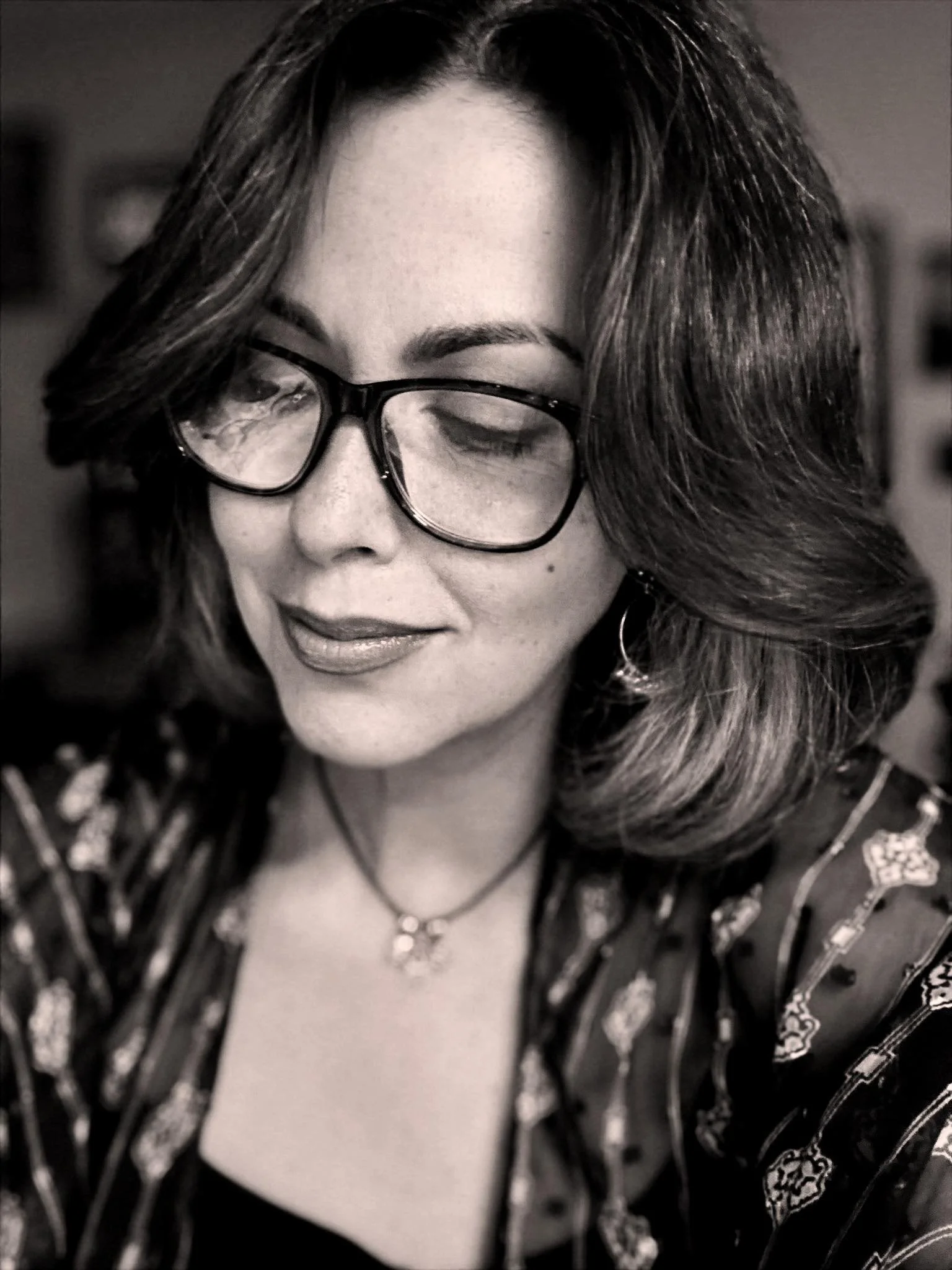
Marni Fraser by Jon Beckmann