Small Update
From this point forward, I will no longer be available for personal texts or messages on any platform. Too often, openness isn’t met with effort or care. I no longer have the energy to continue investing where it isn’t reciprocated.
My values belong to another era. I believe friendship requires effort, loyalty, and the courage to show up for people. I expect those things.
I’m returning to work after several difficult months away, and I’ve begun school. Those two things deserve my full attention. After today, I won’t be available to adjust my schedule, provide emotional support, or socialize beyond what my work requires.
Life is short. Most people are understandably focused on their own lives, goals, and priorities. I intend to do the same.
From today forward, I am available for work inquiries only.

Hands | Real Bodies Exhibit | Marni Fraser
TO BIND TO FINISH
A Binding, Darker Wrought
By blood unshed and bone unbroke,
By the black hour when no cock hath spoke,
I bind thee, shadow, in thy own coil,
I bind thee, serpent, in thy own soil.
Let thy tongue turn to ash in thy mouth,
Let thy compass forget the north and the south,
Let every door thou wouldst enter be wall,
Let every hand thou wouldst raise, wear a pall.
By the worm that turns beneath the stone,
By the crow that picks the field alone,
I call the dark to eat the dark in thee,
I call the rot to catch what tries to flee.
Thy name I do not speak, nor need I speak it—
The binding knows its mark, and shall not break it.
Let thy nights be long and thy mornings thin,
Let the thing thou art be caged within.
Not death I ask, but stillness absolute,
Not blood, but silence at the very root.
So let it stand, unblessed, unbroke, unspoken—
Sealed till the seal itself lies broken.
⸻
A Ward for Myself
Now round mine own head I draw the ring,
Round mine own heart, a guarded thing.
No shade returning, no third fold cast,
Shall cross this line, or hold, or last.
What I have loosed, I loose alone—
It walks not back to flesh or bone.
No third fold turns to head or heart,
So sealed from end as from the start.
⸻
The Making of the Water
Sage laid in, and sulfur too,
Salt and smoke to season through,
Flowers from my grave, unmourned,
Candles spent, their banishing done,
At midnight, all laid down within the bowl,
Given to the elements whole.
Red string wound about the bowl,
Red string binding, red string whole,
Water taking what is placed,
Nothing wasted, nothing chased.
One drop only, given last,
Drawn from hours of drawing past,
Falls into the water still—
Blood to close what is my will.
So the water holds it all,
So the working does not fall,
Sealed by hand and sealed by art,
Sealed by what came from my part.
⸻
Marni Fraser
2026
Ⅻ · ○○

Self | 2026
Vanishing
Vanishing
“One gives way to one’s greatest fear
only after the deepest bond
has exhausted its last resistance.”
The moon gives way along a hidden seam:
A white vessel split upon the dark,
its flawless halves made sacred
only after the fracture.
Or the moon looks to me
like a plate broken into bright pieces,
only to become more beautiful
for having been held too dearly.
I have trusted myself to set sail
upon the black tide beneath constellations,
where a star keeps its bright mouth closed
to swallow an oath no one can witness.
No compass is cradled in my hand:
To watch how the water bends
toward an unseen harbor,
and to know I surrender
to its quiet certainty.
Even the darkness
knows where to deliver me.
Then you found another stone
to cast into a water already trembling.
My sadness arrives as a stranger
the stranger wearing your shadow—
the patient nightmare
that has always followed you,
feeding upon every sliver of light in you,
until only its own thirst and hunger remain.
And when it finally learns your name,
it will answer only to you.
You. Yourself,
Vanishing—
Marni Fraser
0630.2026
8:49am

Image by Daniel Torobekov | A mesmerizing starry night sky reflecting beautifully over the ocean and rock formations of Hawaii, USA.
Poem: Anyway
Anyway—
I am alone.
Perhaps I always was.
Isn't everyone?
There is nobody to dissolve into,
and the ocean isn't asking me to.
Little by little
they become targets to knock off.
Tin stars.
Empty bottles.
The bright fake center
of a little quiet carnival.
And since I don't have an ally,
I don't have a witness.
I don't have a steady star.
Anyway.
Then I ask:
what good is time,
anyway?
Never a familiar.
Never the steadiness.
Never continuity.
No length of time
it takes to know a thing.
Still, a river learns its paths.
Winter learns
the land and trees.
A hand learns another hand
through the darkest hours.
And anyway, for my life,
only the weather
passing me
and us
by.
Nothing that gave a shit.
Or stuck.
Or wanted to stay.
Never continuation.
Anyway.
Never continuation.
Marni Fraser
06.22.2026
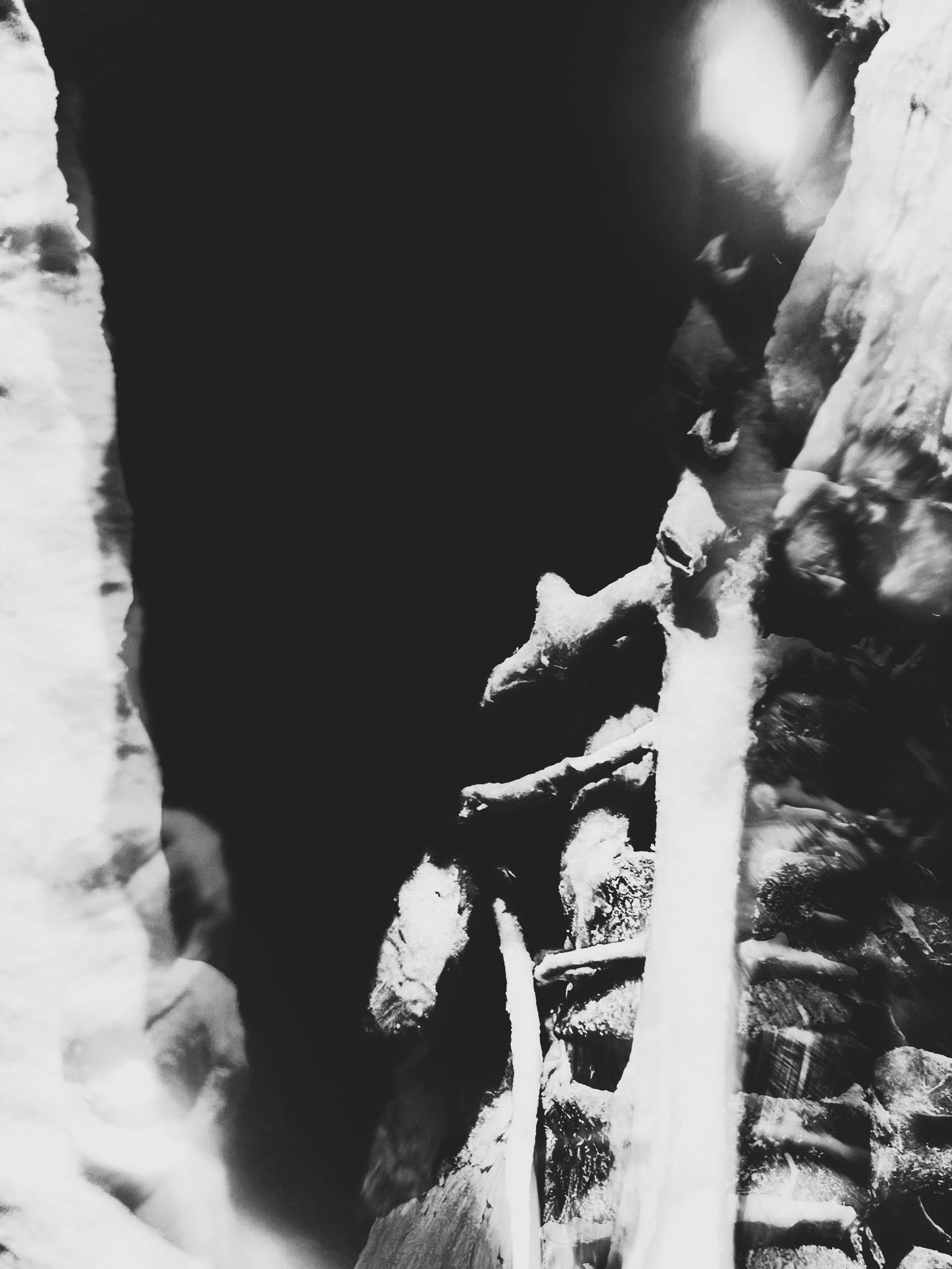
Photograph | 2026 | Real Bodies Exhibit
Poem: The Night Falls
The Night Falls
Sometimes the night falls
like a sleepy eye
over the city—
like a possibility
that cannot become itself,
when the promised dawn
forgets how to come.
Sometimes you lose your feelings.
Sometimes you lose.
Or they lose you.
And become the night instead—
all that darkness
keeping quiet.
My eye closes
upon this idea of you.
My eye closes.
The way night closes
over a field.
The way night closes
over a heart.
My eye closes again.
And how beautiful.
And how sad.
Maybe like the earth and sky—
turning toward one another
for thousands of years,
held by the same gravity,
never touching.
Never touching.
Beautiful captor—
you took years.
Years.
Now everything outside my hands
is dead.
Everything outside my hands
is dead, now.
Everything is outside,
and sometimes the night falls.
Marni Fraser
0617.2025

Image, 2025
Part Two: The Weight of Accumulated Silence
Part Two: The Weight of Accumulated Silence
There was a time when likability felt almost inseparable from survival. It seemed safer to be agreeable than to risk the gut wrench that came from disappointing someone. The instinct developed early — soften the tone, agree without conviction, measure words so carefully they dissolved before reaching the air. This was called being polite, or considerate, or most times, mature. It was something closer to self-erasure.
For years the concessions seemed minor. Everyone made them. It took time to recognize how they accumulated — how each small silence and unspoken disagreement added up to a life that no longer felt honest. When the habits built around approval finally came into focus, what followed was something close to grief. Sadness for all the versions of a self quietly set aside to be more acceptable.
The first few times she named what she needed, or admitted she did not agree, the body responded with familiar tightness. Old reflexes resurface still. The instinct doesn't disappear — it just loses its authority.
What remains is something steadier. The relationships that survived honesty have a different quality. Less conditional. There is room inside them for disagreement, for the ordinary awkwardness of being fully oneself.
Likability was never a reliable measure of goodness. It was sometimes simply nothing more than a sign of how much had been suppressed. What becomes possible, slowly, is disappointing others without disappearing in the process.

Image, 2017
The Courage to Be Unlikable
The Courage to Be Unlikable
From an early age, people learn that approval buys security and belonging. The instinct to please stops feeling like a choice — it becomes a condition of participation.
The cost is rarely obvious. On the surface it may look like grace or generosity. Beneath it grows a quiet erosion of clarity. A person who suppresses authentic expression too long discovers that self-respect has been traded for provisional acceptance. The body registers what the mind negotiates away — tension in the chest, a dull ache in the stomach, a persistent unease that something essential is being exchanged for comfort.
Cultural pressures deepen this. Women are taught to understand likability as a moral virtue rather than a social strategy. Sensitive individuals and artists feel this with particular sharpness — their work depends on being received, which makes the instinct to pre-empt rejection both professionally and personally motivated. In digital spaces, personal expression becomes something measured and curated for an audience that may never truly reciprocate.
Kindness and people-pleasing are frequently confused. The behaviors look similar. The motivations don't. Kindness arises from genuine concern — care without condition. People-pleasing is a reflex born of fear, an attempt to preempt criticism or avoid abandonment. The habit of constant accommodation dulls a person's ability to recognize where generosity ends and self-erasure begins.
The turning point arrives gradually. The discomfort of inauthenticity grows heavier than the risk of being misread. Honesty sometimes dissolves certain bonds. What follows is ambivalence — which nonetheless clarifies what can no longer be sustained.
Releasing the need for approval requires allowing others their disappointment, risking being misread, accepting that integrity may cost belonging. It doesn't reject connection. It denies the hidden contracts of self-denial that connections sometimes ask for.
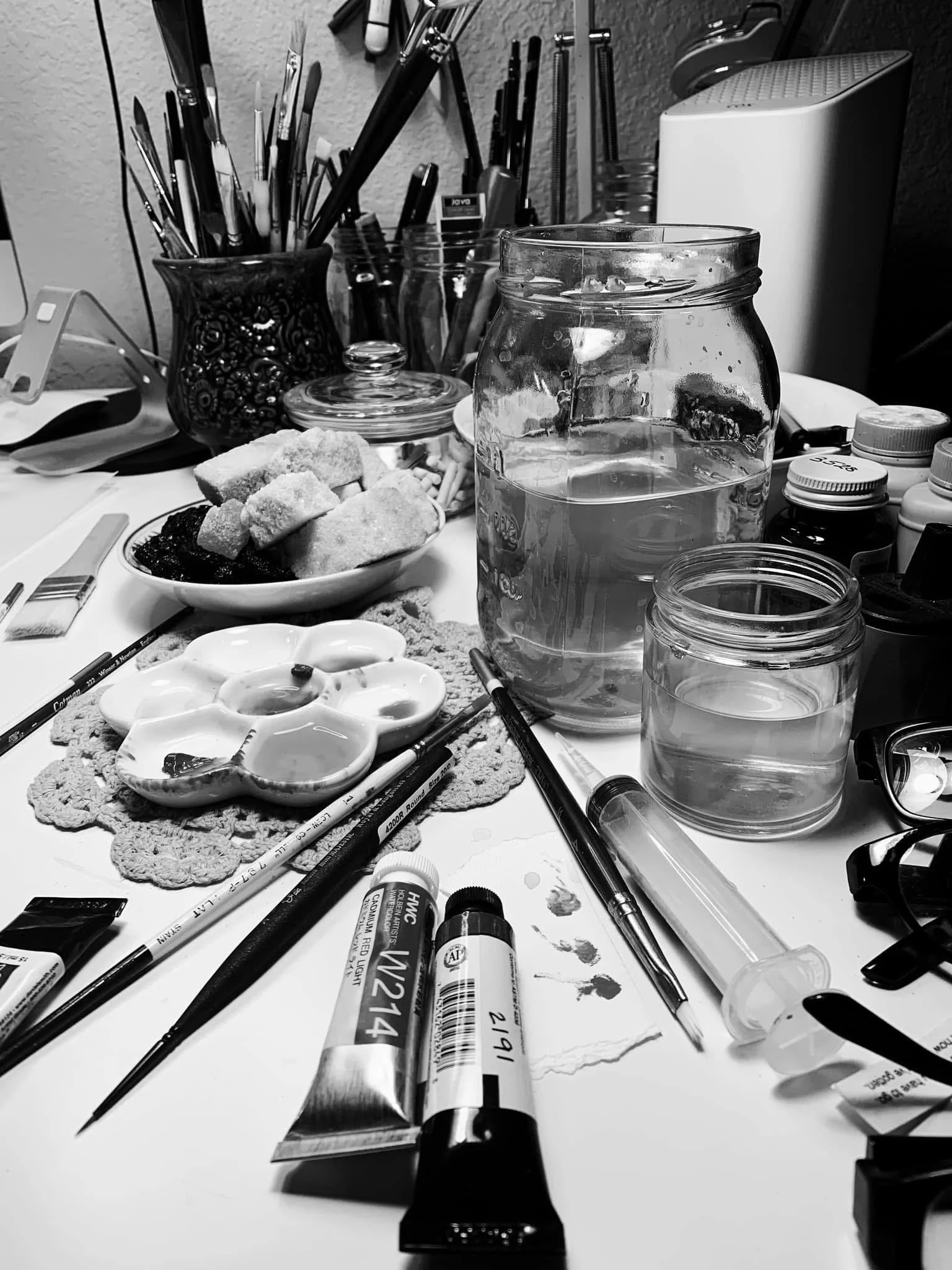
Image, 2024
ESSAY: Manners
Manners Are Not Outdated
At some point, knowing yourself became license to inflict yourself.
We decided that irritation, exhaustion, and inconvenience entitled us to distribute those states onto everyone within range. We began treating our moods as justification rather than information.
Manners exist precisely because human beings have moods.
When I was younger I took them for imposed rules — social, religious, traditional. I've since revised that. Manners are not arbitrary. They are a structural acknowledgment that other people exist. They create a working distance between strangers and a framework for engaging with lives we know nothing about.
The person ahead of you in line is carrying weight you cannot measure. The cashier may have spent the morning in a waiting room. The customer behind you may have just received news that changed everything. You don't know. You will never know.
That not-knowing is the point.
A greeting. A thank you. Holding a door. Letting someone finish a sentence. These are not displays — they are acknowledgments of presence. They say: I register that you exist alongside me.
Contemporary culture rewards self-expression and has largely abandoned self-restraint as a value. But restraint is not suppression. The ability to pause before speaking, to extend basic courtesy when you'd rather not, to withhold your mood from someone who didn't cause it — this is not weakness. It is the minimum we can do towards one another in a functional society.
No one is owed special latitude because they are having a hard day. Everyone is having a hard day. What distinguishes civil behavior from mere reaction is the willingness to act with dignity anyway.
A greeting costs us nothing. It can change the temperature of an entire exchange.
And…Manners are evidence that we understand we are not the only ones here.
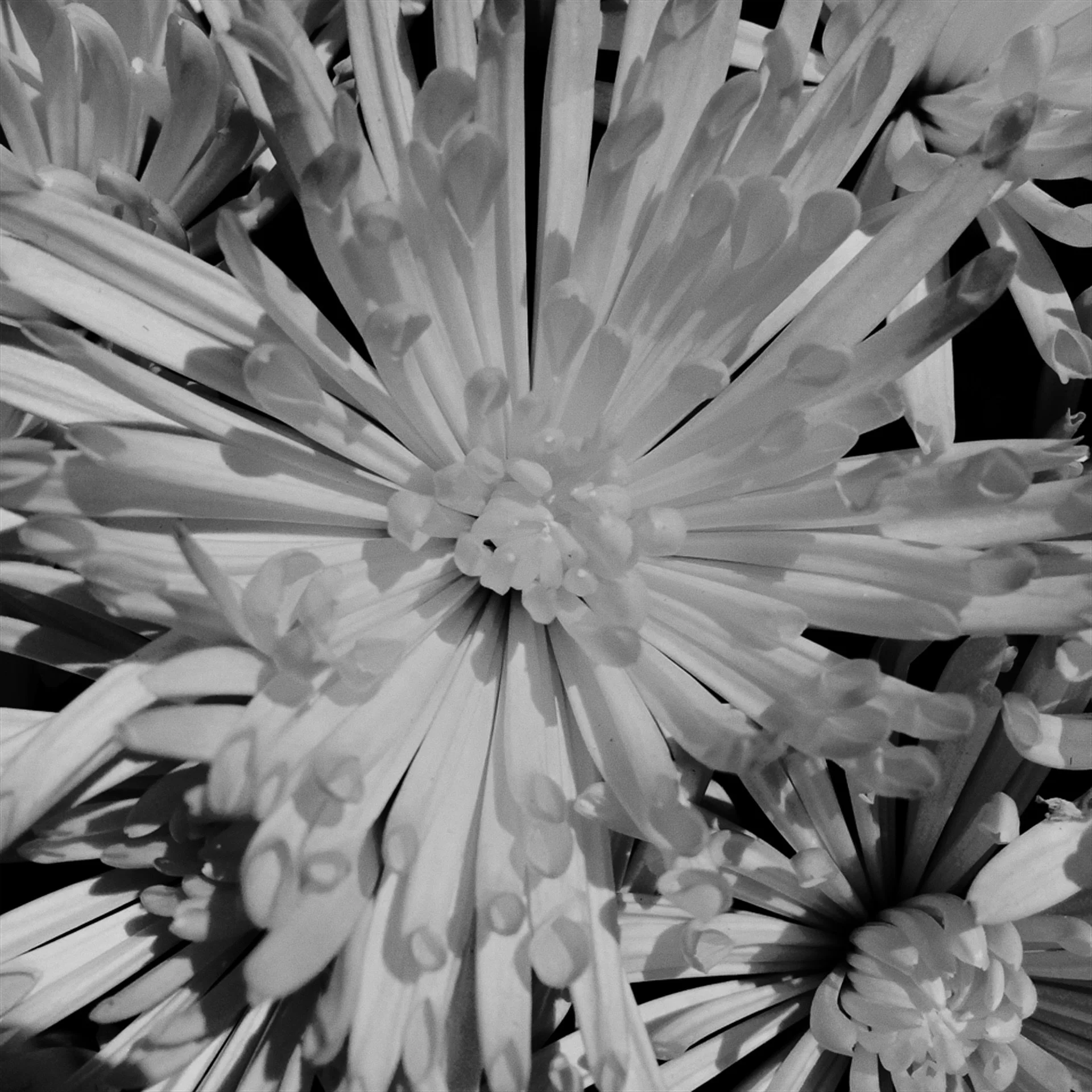
Image, 2013
Poem: Hidden In Light
Hidden In Light
She stands like bamboo stands—
vertical, and against a wall
with the gravel at her feet.
(Always the light comes from the wrong direction.)
From a distance she seems composed,
and from a distance, everything is.
But come closer.
Find the crux—
the hinged recess where her body
decides to live on,
where everything that becomes a branch
is still just the bearing,
still just heat under her skin.
That is where the woman lives.
Not in the form seen on the street.
In the joint—
the amber and coarse interior—
inside the seconds just before the split
when she was still
brave and undivided.
This is what it is to be a woman:
to be seen as a system or design,
and to know yourself as a process instead—
to hold vertical lines
while something at the center branches,
and keeps deciding,
and keeps asking which way,
and it knows where the light comes from.
Marni Fraser
0612.2026

‘Hidden In Light’ | 06.2026
POEM: Here I Am
Here I Am (There I Was)
Here I am, and there I was—
a woman whole,
a woman closed into her own signal,
moving through the bars of my own build—
a light deciding,
a light asking,
“how much of itself to spend?”
I take photographs in motion.
The blur mine—
every fracture, composed.
Every strip of drift—chosen.
This is not vanishing,
it is the art of selective wound,
the self turned aperture,
open at the angle
for the true light to walk through.
Somewhere women are transforming
the ash only women make—
a symbol?
A soft-word martyr?
Or the body’s first language with fire.
I can’t burn beside them.
I can only remain light.
And remaining light is its own gravity—
a joy in knowing the price of joy
that hums this low and stubborn note
from the low and stubborn cellar
of the low and stubborn still-alive—
it’s the way a string keeps singing
after the hand and stick have lifted.
Here I am.
There I was.
Transmission incomplete,
yet sufficient.
The signal stuttered through interference,
and then finally arrived.
That is the whole wild mercy of it.
I am still this woman
who moves through her own fracture
and comes out of it incandescent.
Marni Fraser
0607.2026

Self Portrait | 06.2026
ESSAY: The Human Body
Bodies
I have been interested in anatomy for as long as I can remember. At six years old I spent time in art supply stores leafing through anatomy books — cross-sections, Latin names, illustrations that looked nothing like anything alive. Other times I stayed up watching public television broadcast surgeries — open hearts, and living anatomy. The subject felt impossible then, every page had another layer; muscles over tendons over bone, and beneath everything another system waiting to be named. In school, I aced anatomy, looking back. I have no idea how I did it.
Eventually I learned anatomy as many artists do —through observation, repetition, and years of drawing the same forms until they stopped being unknown and started being structural. I thought I understood the body. Then I was invited to visit the Bodies exhibit, and I realized I had only ever understood its structure. To understand the human body means to understand exactly how it works, and why.
No textbook prepared me for the colors, and no amount of drawing the body prepared me for the forms I’d witness. What struck me first was not death. It was beauty— and I was not prepared for that either.
I kept returning to the heart, the lungs, and the brain —but not because they were the most recognizable. They possessed a visual intelligence I wasn't quite aware of, even after courses in brain health where I studied the brains structure. The branching vessels, the folds, the dense lacework of one structure meeting another, all felt strangely familiar. The roots feel familiar, or the river deltas, or the way lightning selects its path. The body doesn't organize itself in angles. It works in curves and bifurcations and circles, and standing there I found the distinction between science and art genuinely difficult to locate.
I have heard people describe anatomy as evidence of divine design, and I understand the impulse completely. The complexity of it actually resists comprehension in some ways. But what I felt wasn't directed toward a creator. It moved toward life itself, toward the long improbable chain of events required for any of us to arrive here at all.
What affected me most too, was not the organs being mere organs. It was the people who lived because of them.
I found myself constructing lives. Who were they before the exhibit made them specimen? What made them laugh with their body? What particular grief did they carry for years without telling anyone? These are questions with no answers, which is precisely what gives them their weight. I wish I could’ve asked one of them, as a ghost, while standing and looking at their body —what do they think. (Yes I’m a child.)
There was one woman whose skin remained, and looking at her I could see the evidence of age, the body's record of children carried. For a moment the specimen disappeared entirely and I was standing in front of someone's mother, wondering what she sang, who needed her, what small ordinary and very human moments made up her life.
However, it was The Fetus display, which stopped me completely.
There is a particular sorrow that lives in the bodies of women, carried quietly, rarely spoken about, bound up in the losses that belong to gestation and its failures. Standing in front of that display I felt the weight of every woman who has ever lost something that small, something that fits inside two hands and contains every possibility. That tenderness was different from everything else in the room.
The thread running through the entire exhibit was connection — not only between organs and systems, but between the living and the dead, between this body and every body that preceded it. For all our failures, all our capacity for disappointment and conflict, we have still managed to build medicine and music and friendship and art, and every one of those things began inside one of these fragile temporary structures.
I took photographs because I wanted to honor the experience, to witness it properly — giving my attention is a form of respect. These were not mere objects. They were people who agreed to remain, to keep teaching after everything else had stopped.
That is not a small thing. It is everything.
Marni Fraser
____________
Las Vegas is currently home to two permanent exhibits featuring real human bodies, both using plastination — a process in which bodily fluids are replaced with liquid silicone rubber, allowing tissue to hold its form indefinitely.
REAL BODIES at Horseshoe Las Vegas features over 20 specimens and 200 anatomical artifacts, with an emphasis on the relationship between the body’s systems and the emotional life running through them.
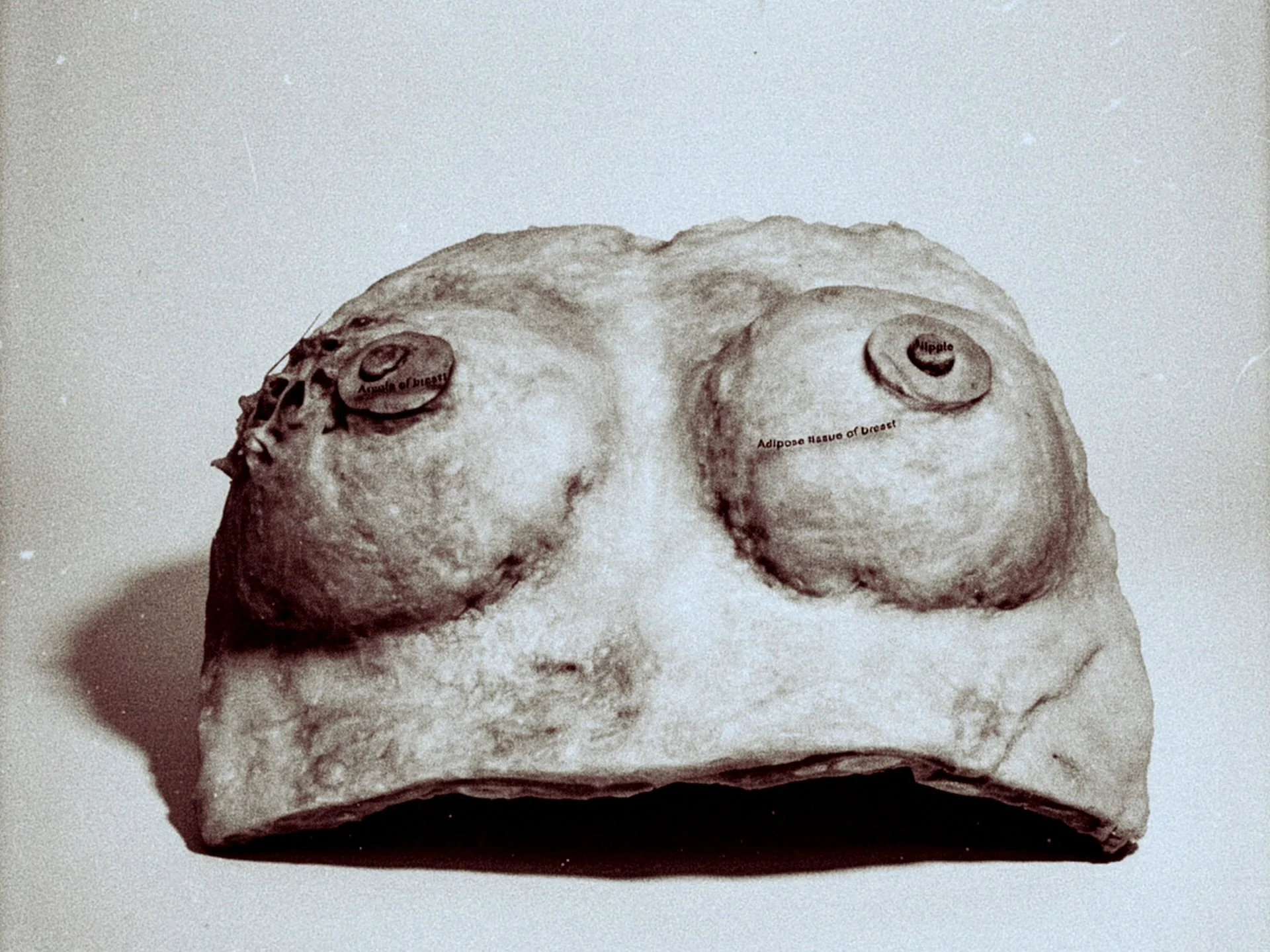
Breast Specimen — Adipose Tissue
Marni Fraser, 2026, Canon
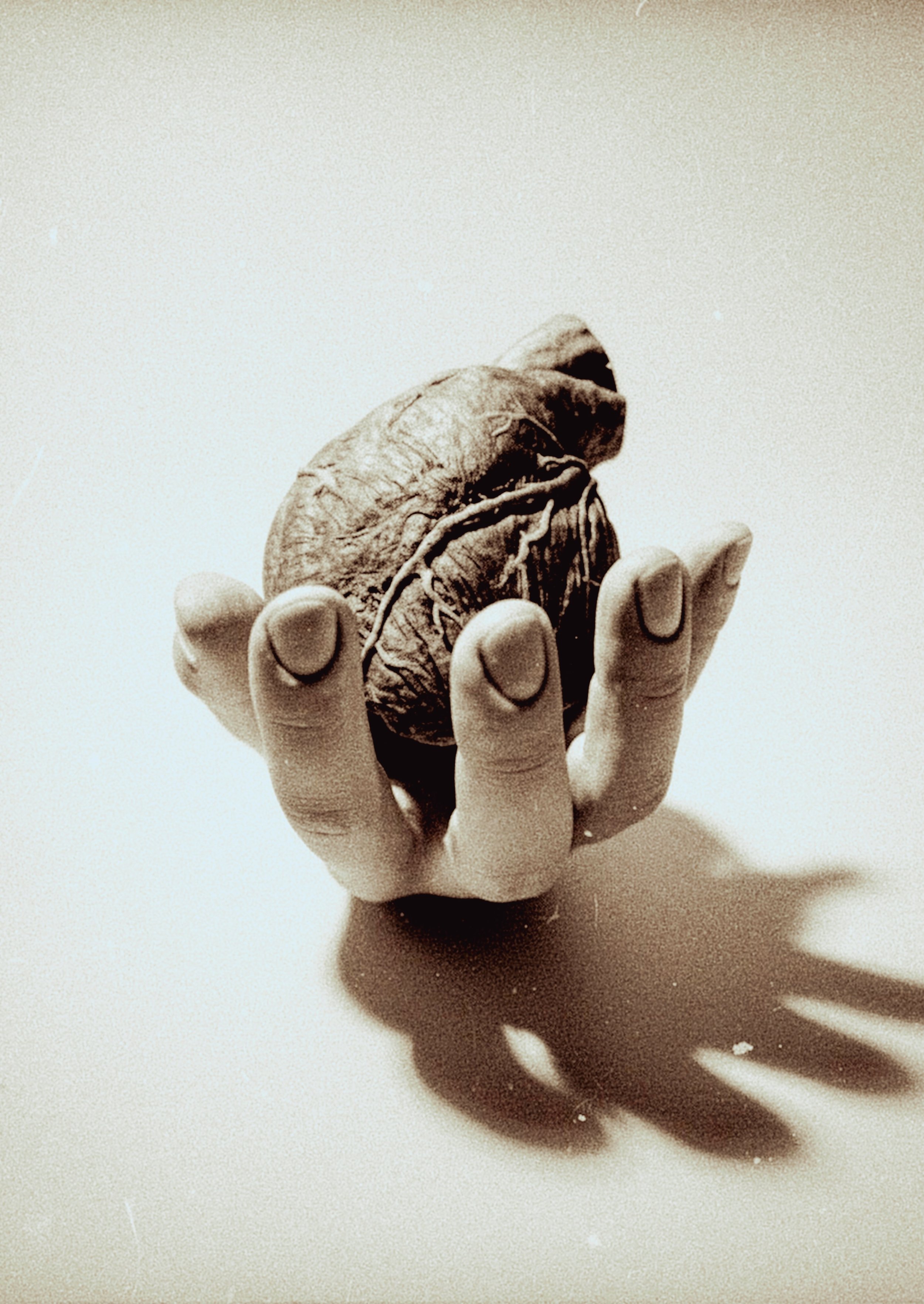
Hand Holding Cardiac Specimen
Marni Fraser, 2026, Canon R
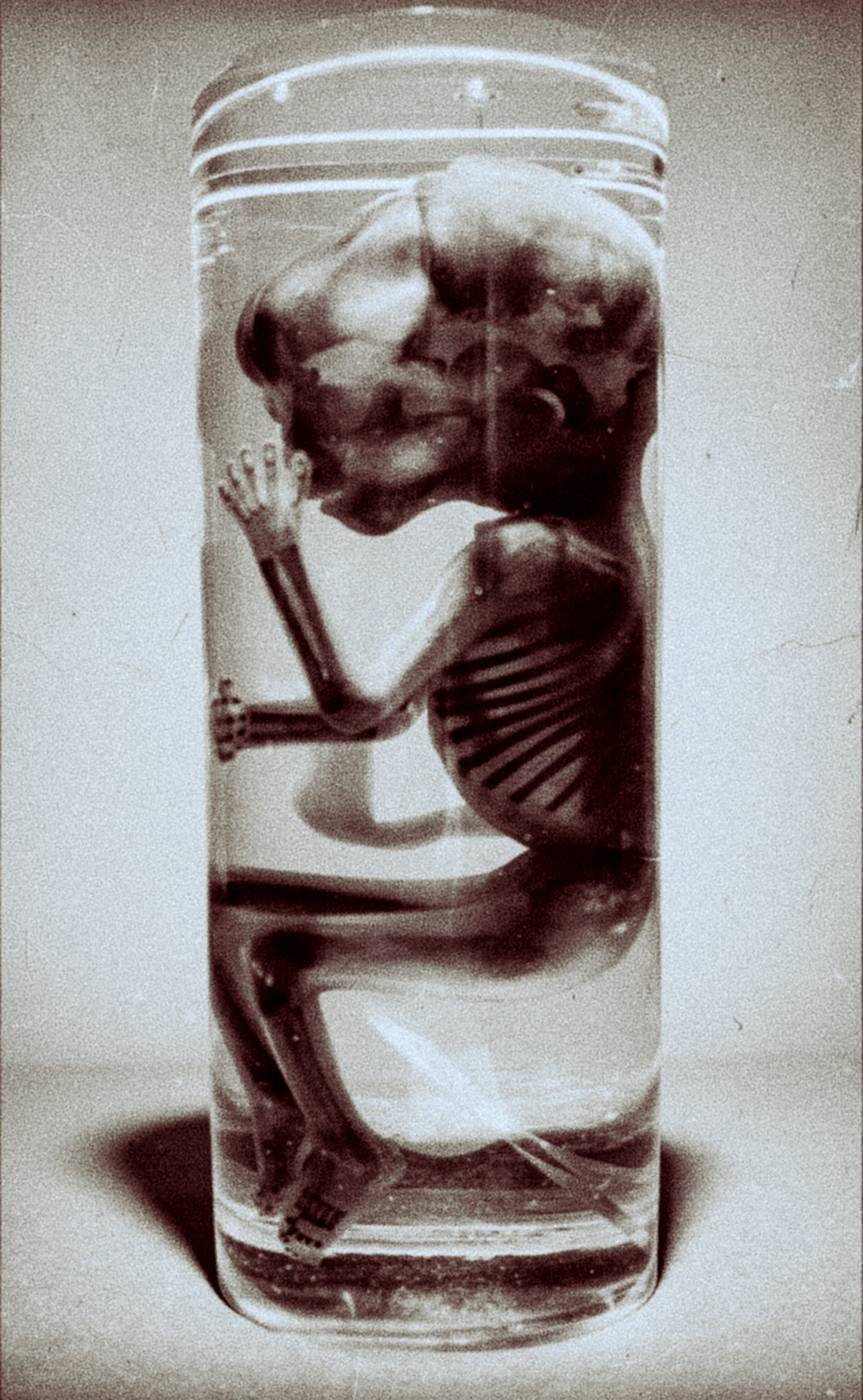
Fetal Specimen, Preserved
Marni Fraser, 2026, Canon R
POEM: The Labels
The Labels
The kidneys mounted on a rod,
look like a question posed.
One has been opened.
Its interior of dark brocade,
the pattern filtering
everything given—
yet keeping none of it.
A label to be read—
as if the words are instruction.
As though the body requires
a reminder of what it was.
I’ve stood in front of magnificent canvases—
Nothing prepared me for this —
the inferior vena cava
extending into its branches
like a sentence endlessly qualifying itself.
Fluid holds this tree,
it does not erase its life—
but suspends it.
The chest cavity of the other frame —
lungs collapsed into a miniature nave,
ribs constructing a chamber
no one will enter —
and more intimate than most houses.
There is a logic to resemblance:
the brain's ventricles hold their still water.
The breast tissue, removed then placed on cloth,
look like two eyes that have stopped seeing.
I came because the body insists on form
even after it forgets its purpose,
even after the label falls off,
and even after the rod goes cold.
Marni Fraser
0611.2026

Specimen No. 4 | Renal Pair with Vasculature, Sectioned | 0608.2026 | Canon R | by Marni Fraser
POEM: Postictal
Postictal
Why call me, aura?
There is no God,
as your entirety
calls me
as if it is—
and my delirium
my joy are lifting
and rising, and lifting —
Adoration
Adulation.
Adoration.
Adulation.
Marni Fraser
Feb 23 2026
7:48pm

Ventricles | Cerebrum
Marni Fraser, 2026
Canon R
POEM: Between Our Departures
Between Our Departures
I don't know if they still hold Pennsic.
Maybe the city finally folded itself
into the long green hill, or the flat lands—
the roads surrendered to rain,
the banners sad, forgot the names
we stitched into them by lantern light.
Maybe the field has grown ordinary,
covered itself in clover and quiet,
its stillness as though thousands of us
had never raised a kingdom there.
But every August,
something in me still hears us.
The bright breaths of tiki torches.
A flute wandering through canvas walls.
The deep-throated tombek beneath my hands,
its goatskin trembling like my second heart.
The finger cymbals sang at my wrists.
An old gypsy taught me—
though he was no gypsy at all,
only Alex beneath a hundred stories,
grinning through woodsmoke
and moonlight.
And Rosanna,
that beautiful serpent,
sliding through the dancers
like a spell cast from another century.
Someone laughed in the dark.
I cannot remember their face,
only that they pressed me a cup of mead,
passed me a sweet green smoke,
and braided a bell into my hair.
First there was Wolf Camp.
Then the Tuchux—
I paid the barbarians passage
with the pale coin of my breast.
Then Esmeralda,
and twenty drummers in a circle,
and me among them,
playing until pain became bliss
and rhythm turned to ecstasy.
By day the armies marched.
Men vanished inside shining plate armor,
becoming iron saints beneath the sun.
The East fought the Midrealm
for the glory of Pittsburgh,
which seemed at the time
as noble a prize as Troy.
And afterward—
after the bruises,
the dust,
the heat—
Pop-tarts,
and a red-roasted pig turned slow on the spit
while darkness gathered in the trees.
We danced and drank until delirium found us.
We danced until the stars burned out.
Until sweat and torchlight
burned us back to body.
Until every path through the woods
opened into another fire,
another camp,
another welcome,
another song.
Every farewell already contained
the seed of a return.
We were always leaving Pennsic.
Even while we were there,
we were already mourning it,
already promising one another
next summer,
next summer,
next summer.
And still we returned.
Year after year,
building a kingdom from rope,
canvas, woodsmoke, and stubbornness.
Now the years themselves
have become the campground.
Whole neighborhoods of memory
have gone to seed beneath the pines.
I walked them once at dusk,
too many years ago—
I remember the gate.
A song.
A glimpse of someone impossibly beautiful
turning away the way beautiful things do—
without any way to explain it.
No—
they must still hold Pennsic.
Because some nights
I hear it singing and dancing
just beyond the edge of sleep.
The drums begin first.
Then the strings.
Then distant laughter through the trees.
And a voice I almost recognize
calls softly from the dark:
Rise, Marni.
We've been waiting.
Come away, come away.
Marni Fraser
0603.2026

Self-Portrait
Marni Fraser
June 4, 2026

ESSAY: The Dock Among the Lilies
Back in 2007, I was living far from everything I knew, and outside my country. The person I shared a home with left early for work each morning, and by then I had begun to look forward to those hours alone. There is a particular exhaustion that comes from living beside dishonesty. It settles into the walls, silences, and into the smallest moments of the day. It’s constant.
I was lonely due to the distance between me and friends, or me and family. My friends were thousands of miles away, and my family was also thousands of miles away.
Most days I walked through the countryside, but one morning I made my way to the lake instead. I circled the entire lake’s circumference before finding a small hidden dock tucked among reeds and water lilies. It felt untouched— it was definitely protected from the world beyond it. I sat there with my feet in the water while fish nibbled at my toes and damselflies drifted through the air, moving with such ease that it seemed impossible for them to know speed.
It remains one of the most beautiful memories of my life.
A narrow band of sunlight fell across the dock while the trees held the rest of me in shade. For the first time in a long while, I felt safe. Hidden. Beyond the reach of the person who spent so much of his time diminishing me.
When I think about that afternoon now, what I remember most is not the betrayal but the relief. Even then, before I had the words for it, I was trying to return to myself.
For years I thought that afternoon belonged to an only that chapter of my life. I believed it was a refuge from one difficult relationship, and a brief sanctuary during a season and person I was trying to survive.
What I did not understand was that I would spend the next two decades repeating versions of the same lesson.
The faces changed. The circumstances changed too, somewhat. The countries changed. What remained constant was my tendency to explain away what was directly in front of me.
I have always been more interested in why people become who they are than in judging them for it. If someone behaved badly, I wanted to know what hurt them, thought maybe I can help. If they were dishonest, I wanted to understand what they were protecting. If they were cruel, I searched for the wound beneath the cruelty in an effort to assuage.
There is compassion in that instinct, but there’s also danger.
Eventually one realizes that understanding someone is not the same thing as trusting them. You can see the origin of a person’s suffering and still recognize that they are capable of causing suffering regardless. .
That difference and the lesson of it took me far longer to learn than it should have.
For a long time, I mistook access to people as connection. I believed that being available to people was a form of generosity, and that leaving the door open was evidence of kindness. Looking back, I can see how often I extended trust before it had been earned, confusing potential with character.
Part of that came from optimism, a lot of it came from loneliness. Most of it came from a genuine belief that people could become better versions of themselves if they were seen clearly enough.
And, Sometimes they did.
But, Often they did not.
The hardest realization was not that people lie, disappoint, manipulate, or betray. Human beings have always done those things. The harder realization was understanding how much energy I spent trying to explain those behaviors instead of responding to them. That I actually cared more about their pain than my own survival.
I became an interpreter of other people’s motives. I looked for context, for history, for wounds, for explanations. In doing so, I often overlooked the simple reality of what was happening in front of me.
The consequence was not anger. It was exhaustion. Pain. Sadness that reached into a heavier sorrow.
When I was younger, I thought solitude was something I sought because I had been disappointed by people. Now I think the opposite may be true. Solitude was never an escape. Instead, it was the place where I could hear myself clearly enough to recognize what I already knew.
The older I become, the less interested I am in being surrounded by people and the more interested I am in being surrounded by honesty. The two are not the same thing.
Over the last few years, my world has become considerably smaller, and I no longer view that as a failure. I have stepped away from much of social media, reduced my offline circle, and become far more protective of my attention. What had felt like isolation now feels like stewardship. Self love.
There is a difference between being alone and being at peace.
One is the absence of people. The other is the absence of noise.
At one point I removed thousands of people from my social media accounts. From the outside, it may have looked impulsive, dramatic, or even ungrateful. In reality, it was none of those things. It was the end result of a growing awareness that I could no longer distinguish genuine connection from performance. It had become toxic.
What should have been a place to share my work had become a place where I second-guessed every interaction. There were too many voices, too many projections, too many situations that demanded interpretation. I found myself spending more time wondering about people’s motives than creating the things that mattered to me.
That was never the life I wanted.
The truth is that I care deeply about people. Perhaps too deeply. I have spent my life believing compassion could bridge almost any divide, and patience could mend misunderstandings —that honesty, eventually, would be met with honesty in return.
I still believe those things are possible. But now I think it takes very special people who want to be better than they are. I simply no longer believe they are inevitable.
Some friendships last because two people are willing to meet each other in the same place. Others slowly disappear because one person continues showing up while the other remains hidden behind layers of fear, pride, performance behavior, or confusion.
There is grief to know that sometimes caring for someone is not enough to sustain a friendship.
For a long time I thought I was mourning individual people. What I was really mourning were the possibilities connected to them. The version of things I hoped might exist. The conversations that never happened, or honesty that never arrived. The friendship I believed was standing just beyond the next misunderstanding was what I wanted, but what wasn’t there.
I really thought I had a friend at last.
That sentence is more difficult to write than it should be. I’ve said it too many times, and blamed myself. I didn’t blame myself because friendship is rare, but because genuine friendship requires a level of openness that many people never reach. It asks for honesty even when honesty is inconvenient. It asks for accountability without humiliation. It asks for trust without possession. It asks a person to be known.
Not everyone wants that. Not everyone is capable of it.
And I felt wrong for seeking it.
The older I become, the less interested I am in assigning blame. Most people are carrying burdens I know nothing about. People are doing the best they can with the tools they have. Some are frightened. Some are wounded. Some are simply repeating patterns they have never examined.
Understanding that has brought me compassion. And as a gift for all the suffering my life carries, it has also brought me distance.
There are situations that cannot be fixed by insight, and people who cannot be helped by mere connection. There are stories that will never fully make sense because too many of the people involved are invested in maintaining them.
At some point, wisdom becomes the ability to stop forcing an answer.
I think what I was searching for beside that lake all those years ago was not solitude itself, but permission. Permission to trust my own perception. Permission to stop negotiating with realities I already understood. And most importantly: Permission to leave confusion where it belonged instead of carrying it home with me.
When I remember the dock, I no longer think about the person I was trying to escape.
I think about the woman sitting quietly among the reeds and lilies, listening to the water, unaware that she was practicing for the rest of her life.
She believed she was hiding, but what she was really doing was learning how to remain.
And perhaps that is the lesson that took me the longest to learn: peace is not something another person gives us. It is something we learn, come to value and, protect.
Everything else is a slow corrosion, (a).
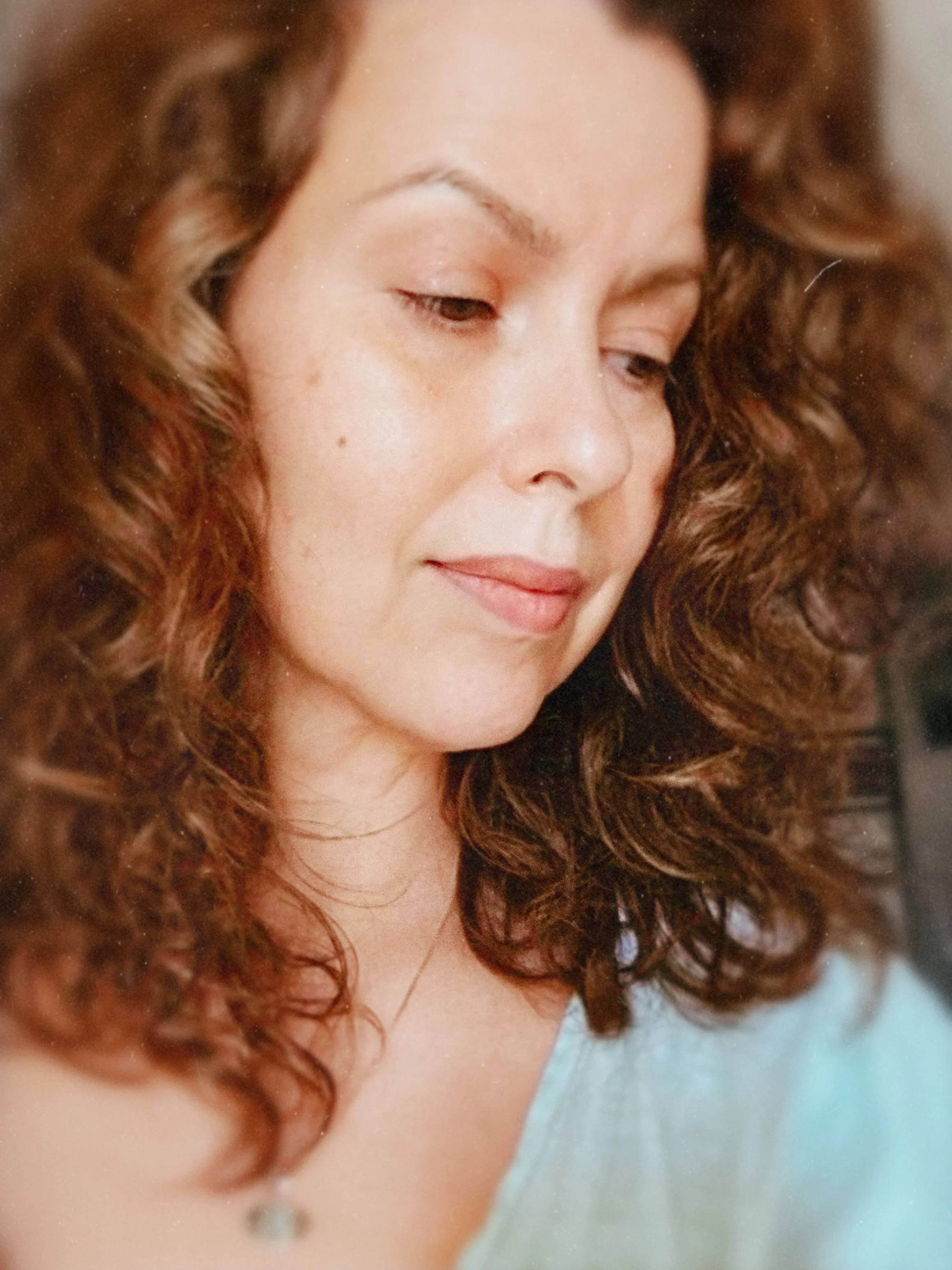
0604 | 2026


POEM: The Last
The Last
Between then and now—
the puncturevine ravines,
thorns that crowned our feet, how holy,
rattlesnakes threading the current,
water dragging where we'd go,
peeling us from the stone
and carrying us laughing
toward whatever ending
(We never cared.)
Pie warm on her one hundred and twelve degree window sill—
Ants bright as fired rubies.
Our grandmother in her seventies,
bent to the thistle, tugging,
the sun hammering the desert
into its final making—
and her, still prosecuting weeds.
The cats never had tails.
I never thought to ask,
they seemed half rabbit,
that day near the ravine.
The next, the lake—
fish in the weeds, hot spring—
hot enough to cook the body brought into it.
The whole country of that summer
wanted to bite, sting, burn, drag, drown—
and we moved through it
like we were made of the same material.
Our laughter still lives out there somewhere
in the scrub
and the heat's shimmer.
I went back and could hear it.
I went back
and found it resting
in our grandmother's hands.
Not lost.
Only carried.
Taken
wherever the hands
de nuestra familia go.
We didn't know we were lithe
through the last,
Marni Fraser
0601.2026

Photo | 02.2026
POEM: The Reason
The Reason
I
Love
You
Because
Your hands
Swim like
Restless
Red fish
Marni Fraser
0602.2026

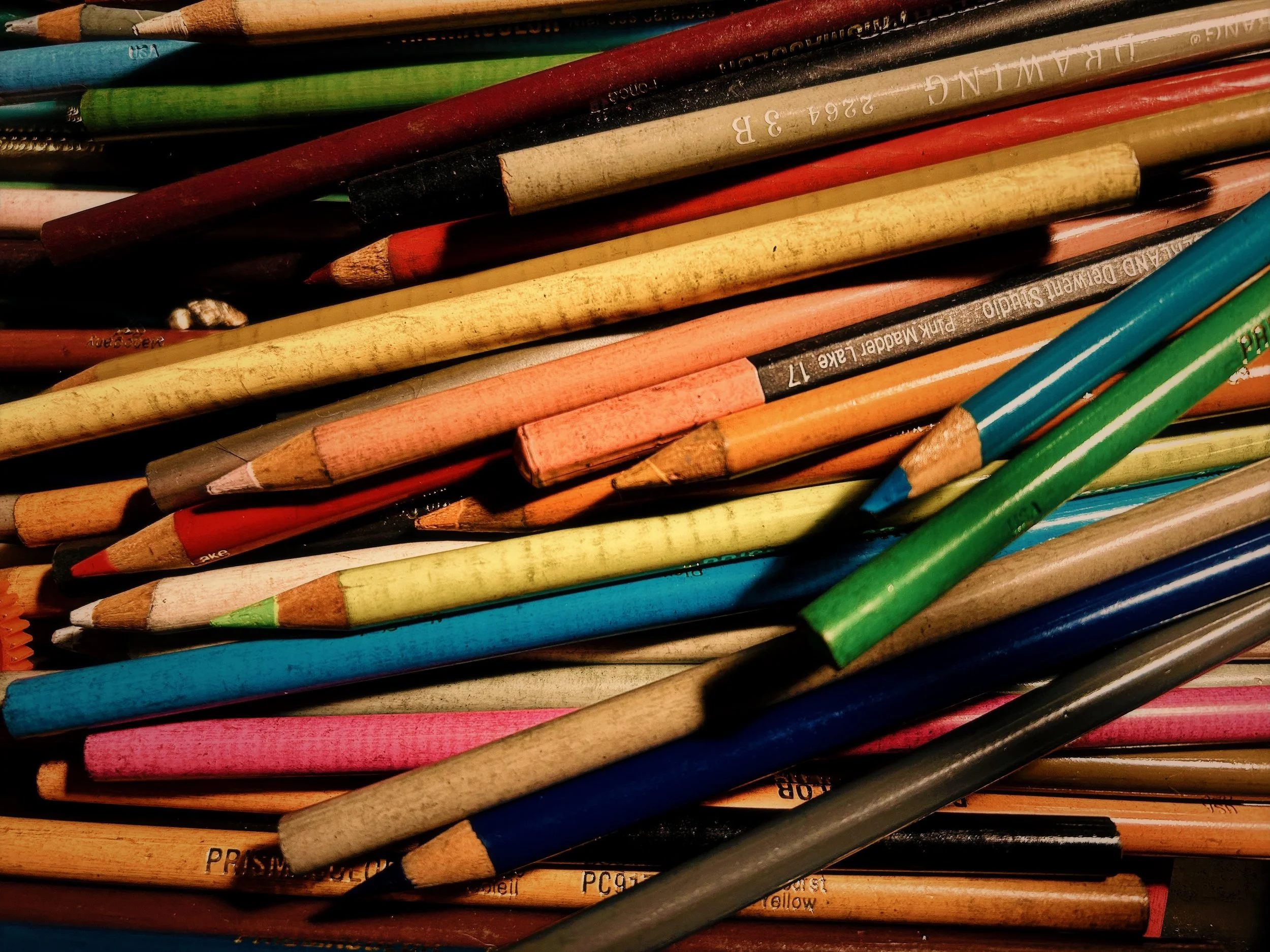
‘Red Fish’
8x10, color sketch