ESSAY:
It’s finally the truth. I decided to call it out. And continue with my life.
For those who tampered with my peace. I thought I’d leave off on an honest and perhaps beautiful note — a small essay of sorts. A truth about me.
These are my favorite fish — goldfish, of some sort. Their tails are V-tails, long and trailing, the way certain beautiful things move through the world.
What you cannot see is the most beautiful one I ever laid eyes upon. It was an all-black goldfish. He swam alone in a rather small tank, in Victorville, California — and in that hard, sun-bleached city at the edge of the Mojave, he was all velvet. His scales moved like sullen lightning beneath the water, slow and private and beyond extraordinary. He reminded me of the black goldfish in Fantasia, and I wanted to take him home so badly that I returned to that fish store for a week, just to stand before him and believe what I was seeing.
This goldfish is one of those things that will never tarnish in my mind. He remains fixed there — luminous, and unreachable, and so beautiful. Many things are this way in my life. Many I am longing to return to, or hope against hope will find their way back to me. And there are many that are gone that I find myself still lamenting in quiet rooms, and at odd hours. Anyone who knows me understands: I carry things for a long time. I am faithful to beauty, even when it costs me.
Today I secured the last of these — the most significant of the sad trinkets my heart has gathered. I doubt I will ever be open like this again. I believe this is the most profound heartbreak of my life.
You meet someone so beautiful that the bond becomes indescribable. You are certain it can last a lifetime — the love, the admiration, the loyalty, all of it present in the same moment as the weather gathers before something major transforms. Such friendships are rare. And yet sometimes something prevents what ought to naturally unfold — not out of strength, but out of fear, or smallness, or the quiet failures people carry.
It was out of my hands.
What is more remarkable is this: I hid myself from what I sensed would cause me pain. I did it long before I truly knew them — I left, I closed the door for three years. And still they returned. I know they felt the tie between us. Imagine looking at someone and understanding, in your soul, that this particular beauty will cost you — and running as far from it as your legs will carry you. But if you are meant to know someone, life has a way of folding the distance. That was us, and our strange beginning — intense, humorous, warm — and real.
I could feel this person’s kindness from the beginning, and I trusted it. I still do. But I no longer trust what stands around it, or what shaped the outcome. I cut off the tie.
People do not sabotage what they truly love. Not gently, not quietly, and certainly not over time. That is not love. It is fear wearing love’s face, need dressed as devotion, control calling itself care — a vine that climbs by tightening its hold.
I had beauty, for a little while. A friendship that made my heart sing the way it had not in years. I made some of my finest work in the hope of its bloom — and some of it simply because I wanted to show my care, it’s like leaving flowers without a name. I believed I had a friend.
I hate war. Emotional or otherwise. It is a wilderness I never chose. I’m peace loving.
I thought I left this kind of thing behind decades ago, when I was younger and believed people generally meant what they said, but were undisciplined. I know now that some never learn to mean anything at all.
I felt hurt.
Now I must live with that — and with this vision of beauty, and of a friendship that came so close to being something lasting it was almost unbearable. Perhaps I am mistaken. Perhaps I always have been. But I would rather be someone who loved honestly than someone who avoided feeling altogether.
I have known great beauty —
though I have not often been allowed to keep it.
Thankfully, it is over. If I ever hear from them again, it will mean something real remains — something willing to stand in the open.
Life is too short for cruelty and confusion. It is also too short for the slow diminishment of something that never asked to be involved in dramatics. Last, it is definitely all too short for standing in doorways, blocking out the light, out of fear. And at the end of the day? Geography is a poor excuse.
I did not invite this. I mind my own. AND That was crazy.
I am not ashamed.
I am sad. And I remain, despite everything, astonished — at how difficult it can be for people to choose honesty. Or kindness. How difficult to have integrity and even a little class.
Now I can continue to heal, and carry the quiet hope that one day, courage will meet me where I stand.
I have always admired that.
M.C.F.
April 29,2026

Image by Brian Wangenheim
Poetry: Descanso
Descanso
Each day another piece of me falls away —
falls into the long grass
like a coin dropping into black water
and the days of my life vanish.
The air accepts me without ceremony.
Traffic moves through me as wind—
through a house without walls left.
These small tallies, so many —
that I have stopped counting them.
I am dying in ways unseen.
Each love opened a door
and walked out wearing something of mine.
I did not ask for it back,
and didn’t know until the cold came in.
Each morning the sun becomes an obligation.
The ache tilts north, then nowhere —
and I perform the necessary motions
of a garden performing a rite of spring
long after the gardener has gone.
What remains are grains —
not sand but something more minute,
the last gold dust of an hourglass
no one cared to reverse.
How to carry the weight of accumulated seconds?
All those moments stacked like ruins —
I would give them to someone
who still believes in time’s architecture.
But I have become transparent to desire.
One dim hour folds into another dim hour.
One disappointment closes its eyes
as its child opens its own.
One face practicing its lying
rehearses in the mouth of the next.
And I —
a moving effigy for the unresolved,
a still pool for the ones
whose inner compass had no shore —
I held what they could not.
I paid for the quiet they thought was mine to give.
What is left
lives in a few last grains
suspended above the dark I am.
How does one wake each morning continuing
while the body rehearses its ending?
Because I have learned
the mercy of the almost-finished —
the last note
that doesn’t resolve,
the garden at November,
the light
finally learning
how to go out.
Marni Fraser
0430.2026

me | sweden | 2008
POEM: The Misplaced Light
The Misplaced Light
(to past relationships)
I have misjudged the weight of my own wanting —
followed the wrong door down its dark road,
walked through a stranger’s eyes still hunting —
and carried back the empty load.
After bleeding I see clear:
the forest stood entire
and I bent to read a single leaf.
I called you destiny—you were a fire
burning my map and leaving only grief.
You are our past life — this pale and fading ghost—
walking the woods of what almost was.
I could see you in the future I want most
but will not touch, I’d bleed again,
the glass is too thin.
Past love: You are all rose.
You are all thorns inside it.
The calm waiting behind breaking waves.
A light I carried wrong. I have to hide it
back inside the earth,
digging my own heart’s grave.
You are the one I did not meet this life.
I do not know what country keeps you,
what name you carry, whether peace or strife —
I only know the last life,
and never the now.
—
I have the crying tree and the mangled bush,
the sea’s salt waiting with its cold and clear,
the tide taking me back without a rush,
drowning me slow in spite of my muffled scream,
the gulps of salt.
I have the birds not asking my name,
the sun dropping its gold into my hair—
I have this solitary, difficult, exacting thing.
I have the animal world, wild and free,
whose many faces open like an invitation:
witnesses asking for nothing back.
I am alone. But then again — I always was.
The dying candle doesn’t mourn its own light’s death—
It burns until ending,
because that is the only thing to do.
Fade.
Marni Fraser
04-29-2026

Image of me by Sadie | 2026
POEM: The Feast Before the Forgetting
The Feast Before the Forgetting
Tonight I am light,
a moon that has learned to recognize its
face in slow and gentle water —
I smile, and the water smiled back.
The leaves speak in old dialect.
Animals call out to no one, or to everything.
My hands had been closed a long time,
open today like a door unlocked.
—
Your eyes come for me,
your leopard eyes simply here,
crouched in the golden grass of my life.
My fingers move across your face
like a woman reading the face of beauty itself—
she dreams in his language, not her own.
Oh you beautiful boy—
the full length of you.
To not have been met with such gentleness before —
that truth lives below my crown,
it curls in the oldest room of me,
pressing against what I have kept shut,
opening now
(this flower)
in the exact moment I choose nothing,
and everything chooses me.
—
You stand inside my dreams
your fire dancing still —
But who are you?
You don’t remember
how we played together
before all of this,
before our names,
before countries divided us
like a knife divides bread —
the white dice warm between our palms,
the wren singing its one small truth—
we sat beneath the jasmine that only blooms
after dark,
and the pomegranates that we split open on the feast table,
their seeds scattered garnets,
they are every word I would write for you in this life.
Later, beneath the quince tree,
you took what I offered
which is to mean I offered everything
which is to mean the tree bore witness
and did not look away.
—
You made a river of me.
You cast yourself inside the current —
swam the whole length of me —
and I kept you.
I held you in my streams
and I kept you.
I captured you in that other life.
I must have.
How else to explain this?
—
Where are you?
Why did you come in my darkest season
like a figure at the edge of the dunes,
neither arriving nor leaving —
a shadow becoming a boy, becoming a man
becoming the shape of something I almost recognize?
I came to you alone.
You have always come to me alone.
—
Who are you?
And then, at last, the only question
that contains all the others:
Where are you?
Oh, Beloved.
Marni Fraser
04-29-2026

Self Portrait with Jon. B. 2024
POEM: Wanting To Die
Wanting To Die
How many times I crossed the dark,
arrived at the lit room,
and felt the pull beneath my sternum —
the body’s disagreement against its own continuing.
I have come such distances to stand here,
appetite for departure already home,
already humming at the head of me
like something never fully latched.
Kindness — what others carry easily,
their mouths full of it, easy as weather —
I have turned it over in my hands
and found the underside consistently absent.
What a declaration for the diminishing hour.
What a thing to finally say aloud
when the light is already dimmed,
when the window holds its own cold.
Pathetic, says my voice that is always honest.
But even that voice is losing interest in its own indictment,
filing the last complaint without conviction.
Next time is the terminus.
I have decided this the way one decides
to stop a conversation that was never
answered in the correct language anyway.
I am glad.
The living of it — that sustained combustion,
that long and unrewarded residency in pain —
is nearly through.
The door is not a threat anymore.
It is the first generous thing.
Marni Fraser
0426.2026
10:13pm.

Detail “Blossom Deary” by me
POEM: Conversion Until Dead
Conversion Until Dead
By now I have let much dissolve at the periphery —
the body taut, sinew coiled and folded back on itself,
hands that once reached for leather and flesh,
hips that danced until the salt came through —
then fucked,
and came again.
I surrendered the boots. The whips.
Declared a husband among the dead.
Dismissed the lovers, one by one,
like candles snuffed between two fingers.
And took instead one —
slender, bristled, born to my grip,
fixed to the hinge of my shoulder,
carrying five luminous faces,
one for each finger that holds him.
He presses his belly to the stretched white body
of the one I truly want —
and I am between them always,
the necessary middle,
the one who makes the meeting possible.
All night I work him against that taut expanse,
pigment opening like a mouth,
the wood-pressed departure of each stroke
leaving its ghost in the surface —
evidence of arrival and leave-taking
in the same gesture.
I can turn the world any color I want.
It’s in the flick of my wrist.
In what gets me hot —
and I allow it in.
Deep.
Deep.
I allow it fully.
I allow it every day
until they carry me horizontal
and lay me to fuck the Earth.
But I won’t have this one go useless in my hand —
won’t let the mind go first,
the imagination thinning to gauze,
the wrist losing its grammar.
I will end it myself —
before the brush grows strange to me,
before the canvas stops answering,
before my own heartbreak
finishes what it started.
By my own hand.
As it has always been.
Marni Fraser
0426.2026

Detail by m.c.f.
Watercolor and graphite. Sterling Silver.
POEM: Exit Canticle
Exit Canticle
Some direction takes me to the mouth of leaving—
on foot beneath the cauterizing heat,
or further, always further,
away and into the unknown.
And I say to my sad eyes:
you are going away now.
Then I lay my head down,
shake it loose of everything—
into the desert,
into the cities
I have conjugated like old verbs—
until finally I become them.
Vast. Scoured. Sovereign.
Not clean because I am pure—
clean because I am done.
Because I can unlatch myself.
Because your life is mortared shut.
You are a reliquary no one can open—
gorgeous, gilded, absolutely hollow.
Gems under the meridian sun,
meant to glitter from a corridor away—
never to survive proximity,
never to hold a single thing
when the light changes.
Goodbye, she sings, and her voice
goes out like a sail finding the fog’s corridor—
then into the preposterous blue,
into skies so cloudless
they become a second silence,
vast as everything
she no longer is carrying.
How ravaged a thing is a person
who has only the grammar of kindness
and none of its quickening.
A statue not merely hollowed—
but casting hollow,
poured and cooled and polished
into the shape of something
that had a soul nearby
and left only its silhouette.
Corrosion is already at work
in chambers I no longer enter.
I am not waiting for it.
I have already walked into the pellucid distance
and become indistinguishable from it—
wide,
ungoverned,
finished with grief.
II.
Fuck you—
for the architecture of your suffering,
for the intellect worn like a gorget,
for the voice kept soft as absolution
while your hands were already elsewhere.
I wish you untroubled mornings.
I wish you exactly the peace you deserve.
You are a creature of deniability—
not by accident. By appetite.
You verified me in secret,
like an inquisitor with clean hands.
You chose the voice
that had nothing at stake
over the one that stood there
with nothing left to conceal.
You came through distance—
cold, precise—
and returned
the moment the door was unlatched.
And still
you lied.
Because honesty in your mouth
would be a foreign country
with no roads in.
You were given something irreducible
and selected the counterfeit—
because the counterfeit
asked nothing of you
In the room where you are alone
with the accurate version of events,
be ashamed.
Marni Fraser
0426.2026

The Ghost 2024
POEM: Apparat
Apparat
Further away —
that’s you,
smaller
when I go,
because I’m
smaller
when you go.
It seems
people have a worse time of it.
Honesty—
a losing move.
The cog doesn’t care.
It processes you—
continues.
I’m gone.
Keep meter.
I.
Three years is a long time to away myself.
I’ve been alone long enough
to know its meaning.
If you come back
you think me a home.
If you come back the same way,
you think me a joke.
I’ve been the focus of idiots.
I’ve been judged by the dumb.
II.
Have integrity
whether you love God or not.
You have your face
looking back at you
in the mirror
greet it clean
every sunrise.
III.
slowly you become smaller
it was your character
that was flawed
through your script.
It’s mine
that’s vindicated
through my own love.
Enjoy stupidity
Fish.
There are a million in the ocean.
Splash.
Now you’re one.
Marni Fraser
2026

Self Portrait by J.B. 2017
Masks Fall… Inevitably
There comes a point where anyone who chooses to work a solitary job, must choose between the drama or people, and possibly the work because the work requires a quality of silence that cannot coexist with certain kinds of attention.
I have been withdrawing for some time. Quietly, without saying anything but to a very chosen few.
My site is where I live now. My paintings, manuscript and interior life has always been more honest than anything a feed can hold.
What I am leaving behind is not merely a platform but who I am. I hope those who come across it when I’m gone find value in what I have to offer.
There is something particular happening in digital spaces that I find both fascinating and repelling — the construction of masks on all sorts of levels, from AI to curating full account identities. Personas layered over personas. A whole theater of watching, dressed casually. Deceptively.
I have been watched this way.
I want to say clearly and without drama what this is: it is a form of cowardice so refined it has almost convinced itself it isn’t cruel… Almost.
The person who builds masks to observe someone they cannot approach directly has made a choice — not once, but repeatedly, with full knowledge of what they are doing. That repetition is what transforms curiosity into something darker stalking. Into a kind of possession the possessor would never admit cleanly because naming it would require an honesty they have demonstrated lost to themselves.
It is also, frankly, beneath anyone with an actual interior life.
This is what makes it so bewildering to encounter in people who present as feeling, thinking, and/or complex. The capacity exists. The choice not to use it was made anyway. That gap between what someone is capable of and what they choose is where character actually lives. Or doesn’t.
What has been done here is wrong for reasons that go beyond the personal.
It is wrong because it treats another person’s emotional life as material: a thing to be observed, catalogued, provoked, and used to triangulate one’s own position. The person being watched is not a mirror or weather system for monitoring, but a human being whose interior world deserves the same sovereignty they extend — or should extend — to their own.
It is wrong because it requires sustained lying. Not a single lie, which humans tell and can be forgiven for, but a structural one. A lie built, and with time and thought, into the architecture of how one presents to the world. That kind of lying doesn’t stay contained. It metastasizes. It enters every relationship, perception, and moment of potential genuine contact — further it poisons it at the root. The person who lives this way is not merely deceiving others. They are dismantling their own capacity for truth.
It is wrong because it is a form of war waged on someone who came in peace. Who came, in fact, with unusual honesty — for me that costs something, leaves marks, and is offered very rarely and only to those deemed worthy of it. To meet that with masks is not merely unkind. It is a desecration.
It is wrong because it is childish in the most precise sense — not just young, but stupidly cruel.
It is what a person does when they have not yet learned that what they cannot control, they must release instead. When they have not yet sat with themselves long enough to become square inside their own heads.
The world is burning in many places, and there are people navigating genuine loss, severe danger, and genuine rupture. To spend that same irreplaceable time building digital architecture to surveil someone who wished only to be known honestly — that is a failure of proportion so profound it approaches tragedy.
And it is wrong because someone always slips. Masks multiply. Patterns emerge. The very elaborateness of the construction becomes its exposure. This has happened here. The theater has been seen.
I didn’t even think to look. It came to me.
Nothing about this will be carried forward as a weapon.
It isn’t generosity.
But is self-preservation.
Weapons of this kind require the wielder to remain in proximity to what wounded them, and proximity is no longer something being offered.
What is being said instead is simpler and more permanent.
What is built in full awareness of its impact does not dissipate or get filed away and forgotten by the universe the way it might be forgotten by the people it was aimed at. It accumulates in the one who built it. It marks the architecture of their days in ways they will recognize later, in quieter moments, when there is no more theater to maintain and only the self remains. Three times it marks — in the making, in the living with what was made, and in the reckoning that arrives whether or not it is invited.
This is not a curse. It is a description of how things work.
The work continues. The paintings and poems continue. The singular, protected, carefully tended interior life continues — blessed now for having named what was threatening it.
It is better to be alone with one’s own clarity than in company with someone else’s carefully constructed confusion.
It has always been better.
&
This is also why certain things are non-negotiable.
A three-year block isn’t dramatics. It isn’t someone nursing a wound in a dark room, but a clean answer to a situation that talking would only make worse. Some dynamics don’t improve with engagement — even if they require it and many situations require it. Every word offered becomes fuel for the next round. The only move that actually works is to remove the board entirely. So that’s what gets done.
None of this is paranoia. It’s what you learn after you’ve watched the pattern enough times to recognize it. And somewhere in that confusion a person decides that watching is the same as knowing, and that knowing without asking is a kind of power worth having.
It isn’t. It’s just loneliness wearing a more complicated cover.
The walls exist because the work exists. Because there is something worth protecting in here. And because experience has made it very clear who is likely to protect it and who is likely to, given half a chance, take it apart just to see what happens.
Yours,
Marni Catherine Fraser
Self, April 24, 2026

Poem: The Mountains of My Torso
The Mountains of My Torso
Time’s hand is too steady,
The constantly dizziness of my dreams,
my visions dazzled and dazzled.
Hope Keeps me moving forward—
The memory of your beauty
Smiling just beneath the mountains of my torso,
Our eyes kiss and Widen the pillars of my hips,
Make my hands this madness again,
Only now I cry,
Oh but not for he:
Believe it or not,
For all women who love
And lose, who feel on the verge of it —
Or have absurd some air of it—
Doesn’t matter how.
Many seek a way from this globe—
Ignore its dirt,
I cling to the breadth of all desire,
Hope against hope you are drawn
Close,
Too that it is intense,
So much so, you feel the bite of
My kiss upon your life.
Marni Fraser
April 20, 2026
10:50am

My Eyes, Your Windows by… an Angel.
POEM: Katabasis for No One’s Benefit
Katabasis for No One’s Benefit
PART I
The woods don’t call me to tell me.
I’ve walked into their language before,
their syntax bending at the root of a sentence—
a woman ending without a period,
and the long pause of an unmapped ocean
finding its way beneath a heavy sky.
I was the argument of stones.
I’ve always been this argument of weight.
The friendship always begins in gold,
becomes a stratum—
pressed cries compacting—
mineral lies,
the earth unburying them,
and their names are given quietly
after someone who will never hear them.
I do not need to hear them.
My life, a figure at the edge of earth
who sets her wreath upon the forest floor—
not surrender, but a clean axis
of a hand that has learned the study of enough:
those elegant equations
where wanting drops to zero
and what is left is the integer of self—
irreducible, prime, cold as mercury.
She doesn’t weep. I’m of a certain class—
learned early, and kept.
I have known another woman,
one of the white interior—
not white as purity, but the silence
of a room emptied of intention,
white as the eye of something
that has never once looked inward—
and I have watched a man
mistake that blankness for depth,
confuse the echo of his wanting
for a voice that understands him,
then press his face against it
like a cartographer without direction—
a lost legend deciding blankness is territory.
Let him map her emptiness.
I am a country with a complicated border.
River systems he has never traveled,
elevations with no roads approaching,
a quality of winter light
that takes years of residency to recognize.
You cannot arrive there casually.
You cannot land there speaking loosely.
And she signaled in plain sight—
drew my attention to the old game.
I saw it, set myself between the barrels of those signals,
laid something down
to see what would return across the land:
What came back wore the face of a dog
that had taken its bite in the dark
and kept the taste of it
somewhere it wouldn’t show.
I knew it before I named it—
the taste of not quite lying
in his words and nervous laugh—
a laugh that kept something back.
A cowardice that requires upkeep—
like a garden overtaken by a small shrub
in the absence of a gardener.
And the absent gardener here is
also the delicate flower.
Now I stop.
⸻
PART II
Give the faux Phoenix that laborious landing—
the maintenance, the forgetting,
the intricate performance of narcissus—
she who has built her architecture
on the anxiety of his attention,
driving him toward the edge
the way weather drives a nail—
there he goes, a man who does not know,
his interior accepting whatever weather—
and she makes her storms for province.
This is not my sadness to carry—
but her unrest and lies acting without a stage.
No audience, no season.
My grief: I brought my full self—
compass, lamp, his coordinates—
and found the territory already deeded away
to someone with no homing,
who would not go beneath the surface
where the country actually is.
I am the depth she cannot reach
and does not know to want—
the ocean beneath her turbulence.
And what I carry down with me:
The knowledge I was a world
before a certain name spoke through me—
a territory in full before a certain man
who mistook me for scenery.
But I am the Efflorescence.
I will not mourn what could not stay its self.
I note it—
the way a scientist notes
an element that failed to bond—
then return to my woods,
the solitude that requires none,
the locked cabin of my perception
where the work is,
and the light enters
and the correct angle is found,
where silence chooses who enters.
A mountain does not grieve its own erosion.
Instead it becomes the mountain to a hill—
the hill makes it not diminished, but translated.
Something harder than the peak.
The mineral record.
The stratum that outlasts
whatever once had seen it.
Marni Fraser
April 7, 2026
6:30am
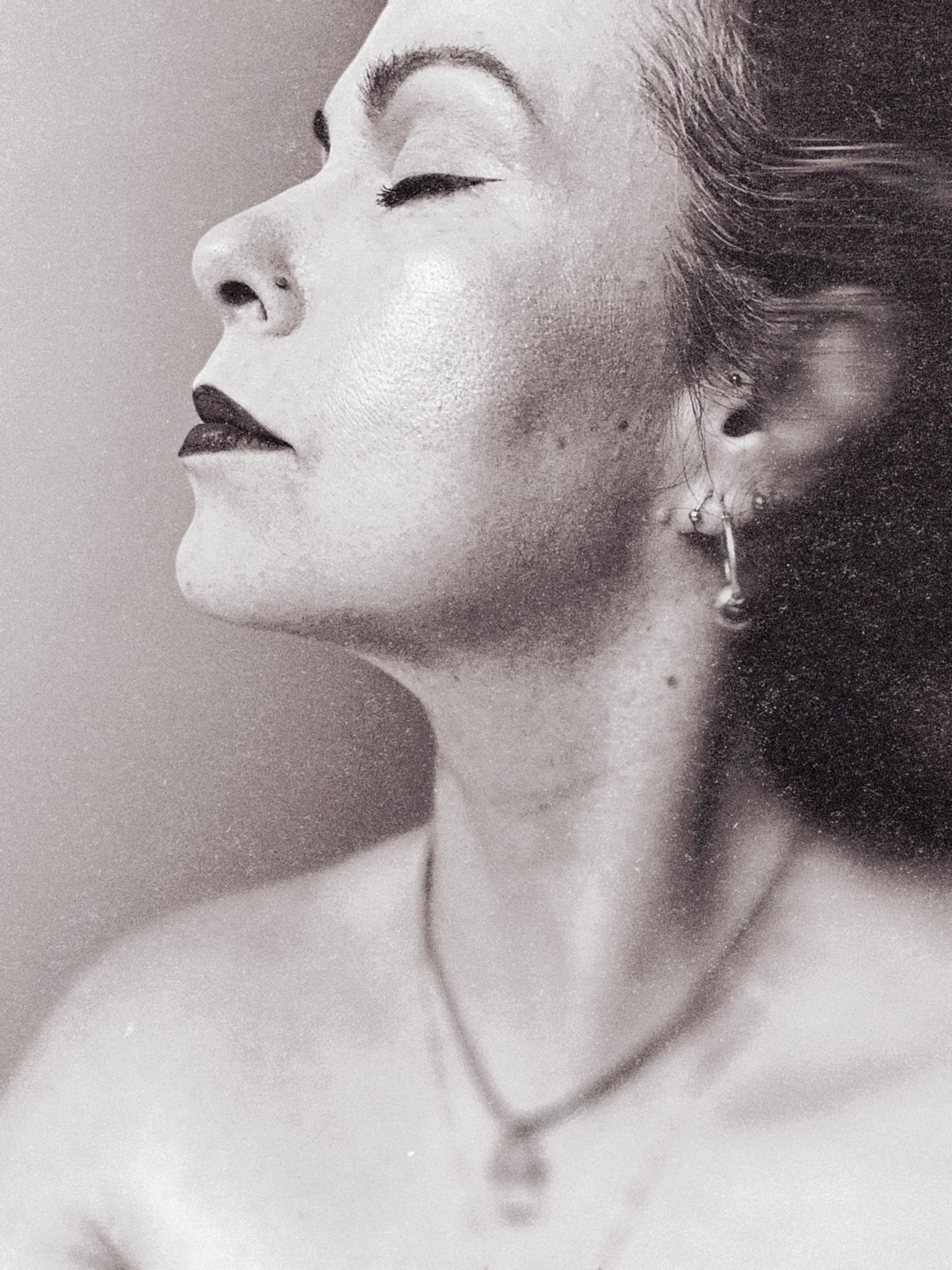
Self Portrait, January 2026
The Ever Watchful Eye
It astonishes me how easily our perceptions can outrun our awareness. Or a certain habit sneaks in unaware without our noticing.
A year ago, after the hospital — after the light and the fragile hours that changed my life — I discovered a piece of jewelry had gone missing. It was not replaceable, or mislaid but last on my neck. It was rare mosaic evil eye, fashioned from pearl and fine metals, and gifted long ago.
What I remember most vividly is not the object itself, but the memory tied into it: a daughter placing the charm into her blind mother’s hand. The mother tracing its surface with delicate fingers, then turning toward me and saying, with quiet certainty, that I was protected.
When it vanished, I felt something more than loss. I didn’t voice it — instead, I allowed my irritation to search for its culprits. How swiftly the mind seeks a narrative that absolves itself!
And then — a year later — I opened a purse I have used nearly every day since that hospital visit. Nearly “every day”. I had searched it before, I am certain of that. I remember searching. And yet there it was, resting in a quiet interior pocket as if it had been waiting for me to calm down.
The charm returned with gentle irony.
It has unsettled me, in the best way. How easily we can assign fault to the shadows rather than admit we may have simply erred. And we draft villains to protect ourselves from the small humiliation of human mistake. It is not the grand betrayals that undo us most often, but the ordinary reflex of self-justification.
And still — I hesitate to be superstitious — there have been so many good things lately. The air feels altered. The light more airy. It is difficult not to wonder whether the object was not lost at all, but merely patient.
Perhaps protection is not dramatic. Perhaps sometimes it is quiet sleeping in the lining of a bag, putting up with our accusations, until we are worthy of its company again.

ESSAY: What We Are Willing to See
What We Are Willing to See
There is a surge of antisemitism right now, and it is obscuring everything.
Let me be precise about where I stand, because precision matters here. My issue is not with Jewish people. My issue is with Zionism as a political ideology. My issue is with the current Israeli government and what it is doing. That position will not shift until the situation changes. But to take that stance and collapse it into hatred of an entire people — that is not resistance. That is cruelty. And it is lazy. What we actually need, what this moment is crying out for, are more voices from within the Jewish community itself. Visible voices. Courageous ones.
When a crisis becomes undeniable — when you can see it, every day, in real time, on the screen in your hand — it stops being a political opinion and becomes a personal reckoning. You have to decide what you stand for. Not in theory or merely in your affiliations. But in your actions.
And if you call yourself ethical, moral, God-fearing — whatever word you use — then that belief is not a silly category. It is a demand. And demand asks something of you. The teachings people reach for in moments like this — the words of Christ, of the Prophet, of Moses — they were not written to make you comfortable. They were written as instructions. Love your neighbor. Not your convenient neighbor. Not your ideologically aligned neighbor. The one in front of you. The one bleeding from bombs or who just lost a loved one, like any of us has. The one whose name you don't know but whose humanity you cannot deny — unless you choose to.
And that choice is what we are really talking about.
Because somewhere along the way, people stopped questioning what they were being told and started letting others do their thinking for them. Someone seeming more educated. Someone seeming more confident. Someone with a better argument or a smoother delivery. And the moment you surrender your own moral reasoning to someone else's authority — whether that authority is a politician, a preacher, or a ancient text stripped of its context — you don't just become ignorant. You become useful. Useful to the people who need you to not ask questions. Useful to the machinery that depends on your silence.
And what that silence produces is not neutrality.
It produces justification.
It teaches people how to stand in front of suffering — real, human, undeniable suffering — and explain it away. How to look at women and children —and men who have no allegiance to either side, who are simply living their lives the way you and I are living ours, and decide that their lives are acceptable losses. That is not a political position. That is a moral failure. And no scripture, no ideology, no flag absolves you of it. Because at the end of the day, the people pulling these strings are human beings. Not divine. Not infallible. Not beyond question. They have the same DNA you and I have. The moment you decide they know better than your own conscience, you have handed them something you cannot easily take back.
I want to be honest about why this is not abstract to me.
I have people I love trying to survive a war right now. In different countries. I know what it means to wait for a message that tells you someone is still alive. I know what it means to carry that weight while the rest of the world moves through its day.
And long before that, I understood what it looked like when violence becomes background noise. I grew up in gang-related Los Angeles. Drive-by shootings were not news to me — they were weekly. That is a war too. A smaller one, a forgotten one, but a war. And I was asked — more than once, by more than one group — to step into it. I refused. Not because I was above it. Because I understood what it would cost. I understood that those girls on the other side had homes not so different from mine. I understood that choosing violence meant choosing to stop seeing people as people.
The same principle applies now. Just on a larger scale.
What we are watching are decisions being made from a distance, by people insulated from every consequence, treating human lives like pieces on a board. And I want to be clear — this is not chess. Chess requires strategy - it also requires you to think ten moves ahead, to understand the weight of every sacrifice. What we are watching doesn't rise to that, what we are watching is much more crude. It is a first-grade calculation in the language of geopolitics. And the most disturbing part is not the people making those decisions.
It is how many people are willing to accept them.
How quickly they explain it. How easily they look away.
To turn a blind eye is to excuse it. To excuse it is to permit it. To permit it is to become part of it.
I am not here to spread hatred. I am not here to vilify the dead on any side. I am here because I believe that a community is defined not only by what it condemns, but by what it allows. And I believe that every person reading this has a place inside them — before the ideology arrives, before the talking points, and eventual exhaustion of the news with a cycle numbing you into passivity — human beings already know the difference between right and wrong.
I am speaking to that place.
Because if we can witness this level of suffering and still choose indifference — the failure is not only out there in the world.
It is in us. Our hearts.
And we are the only ones who can change that.
Marni C. Fraser
April 16 2026, 5:51pm
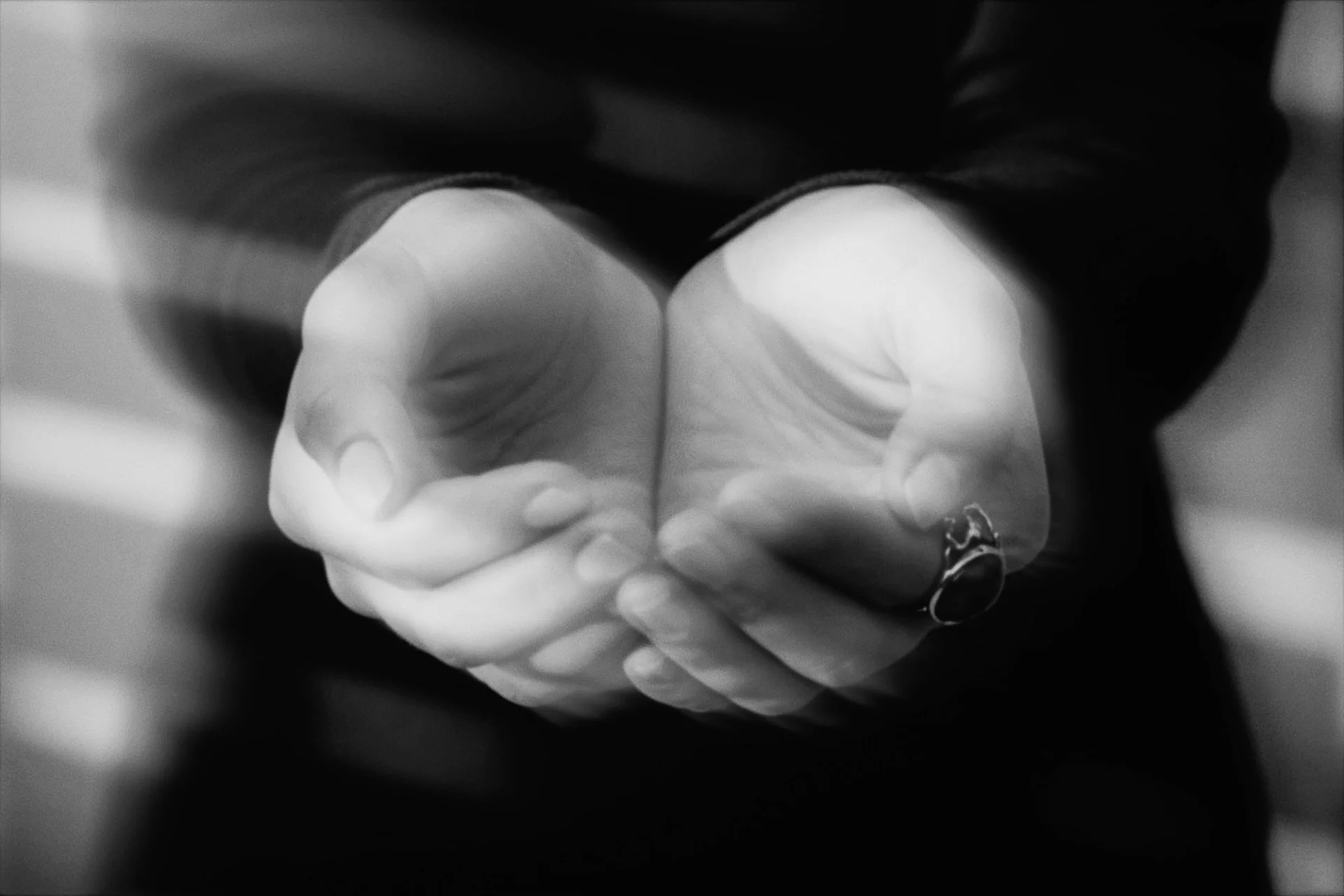
Offering by Marni Fraser April 16, 2026
Poem: Who Cares
Who Cares
Who cares she thought —
running among
the hedges of shapes,
the green of youth,
the wrestling of brocade —
who cares she thought
as the guns press
on their triggers,
and the shells
do their worst —
and the distance
becomes the heartbeat,
and the heartbeat
becomes love,
and the rise
and the fall —
of the breath
that carries it,
and the love
that dies within
hopeless sighs —
who cares,
and the brocade, thinner now,
and the heartbeat
against the brocade —
its weight remembered —
and the blush
of the white cheek —
and the mole
that was earned
between her legs,
and the beauty
of that ancient dance —
and the thrashing sea
in the ship
bound home
after Asia —
no softer for it —
and the brocade again—heavier now,
and the hummingbirds
finding the flower —
the depth
of the hardness
that entered into —
the soft pedal
sinking deeper,
and the love
dragging low
before it lifts —
and the heave,
and the hold,
and the no
when he has to
say goodbye —
But there is
always our time —
Oh, but the brocade,
and the hedges,
and the green —
not as it was —
and the rise
losing the fall,
and the sigh —
and the stall.
Marni Fraser
04.2026

Glass Calligraphy Pen by Marni Fraser
Poem: ELEGY WITH JASMINE AND IRON
ELEGY WITH JASMINE AND IRON
The silence calls out from a grave
the ground embraces what the living can’t
and sorrow seeps below as dark as exile’s blood in that hour
the wounded earth receives
and will not close it
What famine rearranges the days
when faceless lives are scattered into ash
love itself weeps oil into the throats of seraphim who sing
oh mothers beloved
oh shattered kin all
What becomes of the ripened fruit
when lions fold their golden bodies down
Where does joy wander when the lion sleeps in silence underground
oh land I’ll never hold
you breathe inside me
Your jasmine is in my marrow
your quince and pomegranate blade and cup
the book the quill the hunger of bodies learning how to open
the lovemaking that grieves
the iron hunger
The roses drown within their weeping
yet Persia’s wounded soul lifts its face
how do we suffer any tender thing to bleed and still abide
oh country oh my love
how do we still live
Marni Fraser
0311.2026

Jasmine by Marni Fraser
Poem:My Country (With Two Right Feet)
I wrote this poem in 2010.
In 2008 I voted for Obama from Sweden. I was watching my country from a distance and believed it was capable of expanding its own promise.
When I came home, the resistance was already in the White House. It wasn’t about policy. It was about his color. Reform was treated as intrusion before it had even began.
I heard people argue that the poor were a burden. That helping them was waste. That some lives were simply a loss.
Race moved through the conversation whether anyone named it or not.
This country has always contradicted itself. But it also attempted something radical — to extend respect beyond tribe and inheritance.
That attempt matters to me.
It was meant for everyone. I still believe that.
Marni Fraser
2026
____________________________
My Country (With Two Right Feet)
A country with two right feet
cannot keep its balance.
My country, ’tis of thee—
It advances toward injustice
with the confidence of certainty,
consuming generations not yet born.
From the eye of the pyramid
to chambers thinned by corporate hands,
power circulates in polished loops—
green, abundant, unashamed.
Below, the gathered poor
inherit the invoice.
They are instructed in the elegance of circular logic—
a system complete unto itself—
until the circle closes
and they are removed from it.
This nation refuses the middle.
Not left.
Not right.
But lurch.
The machine persists.
The media ignites on command—
language wired to detonate,
signal enthroned as substance,
tumult ratified as truth.
“For which it stands.”
Prediction fails.
Clarity thins.
The structure—once named Republic—
turns on uneven gears.
One side overdriven.
One side scarcely moving.
Its burden was never divinity.
Its burden was integrity.
Its death will not be partisan.
It will be structural.
A fall
executed
with two right feet.
Marni Fraser
2026

Lake Tahoe, 2013 by Marni Fraser
Poem: Inventory Of A Throat
Inventory of A Throat
Goodbye California with shackled ring like impending doom,
then New Mexico opened its mouth under the wide motel night—
and his hands decided the rules and the border.
In a tilting room the future went dim,
and my name was a light he could shut off.
After that, the years were installments of pressure:
the blunt punctuation of a fist or boot—
the kiss of knuckles to skull,
the cloudy and raining weather of his voice, the daily grinding-down of pride and solitude.
So thankful for his second life, a hidden room with a woman inside a hallway -
I was a blindfolded statue.
Some nights the bound phone, the bound computer—
the long murder of hours—
girlfriends like a ceremony,
my song with the world locked into silence.
I don’t miss that circle—
nor the tree that grew thorns for its thirsty blood,
nor the laughing in the shadow it would cast.
Maybe a few good hours?
Then I remember the sand in my teeth.
I fled the country.
Sweden’s cold light, and clean streets—
even there a single strike
—a stamp on a passport I never sought.
—a public dumping with my face on the bid.
Back home, a man with cocaine glamour and police-heat,
a slipping into my life as if it were optional,
same kind of thorn raising its temper like a prick as “honest.”
When as a bitch I set out to go, he used the law as a leash—
sent officers to my door with my name in their hands,
asking if I planned to die,
as though my exit were an illness.
Stunned alive in my body,
they saw me with pity,
even they smelled the lie he’d thrown in the air—
and they knew the why of a bitch taking to the street.
Later, loneliness arrived wearing a clerical collar
—a minister of hymn-breath, and practiced mercy
with a census of thirty-five female shadows,
and I was one number in his private arithmetic.
When I knew I left, and a year later one of the others called—wounded, unraveling—
and the damage kept echoing, a bell that wouldn’t quit.
I resented such fucked ringing.
Then the art offer: a price tag talking kindly.
“If I buy your work, I will manage you.”
I gave myself away on canvas.
Then the gun-photographs—
metal at his temple,
pity as threat.
“I didn’t mean manage.”
More guns.
A marriage split open,
children ricocheting through hospitals,
a house full of sirens
that were not mine to answer.
Pity I must go.
I am not your friend—
(poor artist to manage.)
And after that I went —
I, the locked room with the lights low
I, a reflex, made from the answers I ate.
Oh that deep and dark,
and most hidden inventory of bruised body and bonds,
like a private atlas of roads where love was rationed.
If I sound calm, it’s the calm calamity of survival.
See me, I’m exact, I’ve records in the marrow.
Now I’m saying it with fearless nouns,
and something in me shaking, fierce—
a heavenly gate lifting a long locked hinge that’s giving way—
as if the throat I saved from another’s hands all those years,
finally decided to burn in full sentences.
Marni Fraser
2026

Inventory Of A Throat by Marni Fraser
Poem: Walk The Fire
Walk the Fire
Walk with me through cinder—
or don’t come.
On nights like this
heat runs to the blood
and it doesn’t blanch.
I am not linen.
I am pumice—
hands etched
by abrasion.
Love was never meadow for me.
It rose from a red seam at the edge of night—
burning horizons
where breathing sears.
Three names live there.
Three constellations I will not unmoor.
All else receives measured warmth—
a perimeter,
a door unlatched once.
Oh my triad in flame—
not scripture,
not cathedral carrion—
but mathematics forged in ordeal,
impossible figures
fed by combustion.
Do not instruct me in divinity.
The cloistered man attempted it.
He left with silence in his mouth,
certainty clinging
like mildew.
Do not school me in rule.
A mark on paper reveals the soul’s sinew.
I have turned from beloved eyes
after seeing the machinery behind their light.
History is long.
My judgment is swift.
I have seen love burning at the rim of the world.
I keep only three against my breast.
The rest meet a boundary bright as fire.
They say: severe.
Inhospitable.
I have earned the right to remain unsoftened.
And yet some days, I cry.
To love without anesthesia.
To grieve frailty without kneeling.
To step away when cowardice calcifies the spine.
I cannot swallow it.
If tyranny darkens the air,
I will place my body between you and the blade—
not from tenderness,
but allegiance
to breath itself.
My boots on the ground.
Every living thing requires ignition.
Purity is rumor.
Clarity arrives charred.
The horizon burns.
Three lights endure—
my love,
my friend,
my blood.
I am seasoned.
I keep the fire.
M.C.F.
0216.2026

The Fire by Marni Fraser
Poem: Between Love & Fallout
#64
Between Love & Fallout
“There will be sex after death, we just won’t be able to feel it.”
— Lily Tomlin
In love and horny,
I know, it’s corny
But:
the leaves and the trees,
the birds and the bees,
the flora and the fauna,
the heat in a sauna,
(Somewhere in this world!)
The hormones are raging,
and the world keeps aging,
so, which is louder
and makes us prouder—
The nursing home closet,
where Harold misplaces it—
or the schoolyard dugout,
where they all make out?
Ah,
the wind and the rain,
the pleasure and the pain.
If there is a loss,
there’s more gain!
The oil and water
only work when it’s hotter.
The kiss and the care,
the undressing stare—
(Trying to put it together in a poem
I don’t even own.)
It’s too fucking funny and utterly depressing,
the sheer fact someone’s not undressing,
Doesn’t keep me from laughing, making it a joke,
but I’ll tell you what, man—
I think we’re soon beyond the stroke.
So, let’s turn our gaze to Mother Nature
and all the wild things she will conjugature—
And let us laugh and skip and dance for fun,
and think of love and lust, while galloping under the sun.
After all, the world is in flames, torn apart,
and doomsday is creeping up, like an ill-timed fart.
So let’s be gay and merry, and maddeningly free—
and revel in Mother Nature’s lunacy!
Marni Fraser
0317.2025

Lieutenants Heart by Marni Fraser
